
Successful gardening rarely starts on planting day. Long before seeds or seedlings go into the ground, the condition of the soil determines how well plants will grow, how deep their roots will reach, and how much they will ultimately produce.
Preparing planting holes ahead of spring is a quiet but powerful practice that allows natural processes to work in your favor. Instead of rushing soil preparation at the last moment, this method builds fertility slowly and deeply, creating ideal conditions beneath the surface.
When soil is prepared early, time becomes an ally. Microorganisms, moisture, and temperature fluctuations all contribute to breaking down organic matter and improving soil structure. By the time spring arrives, what looks like ordinary soil from above is, underneath, rich, active, and ready to support vigorous growth.
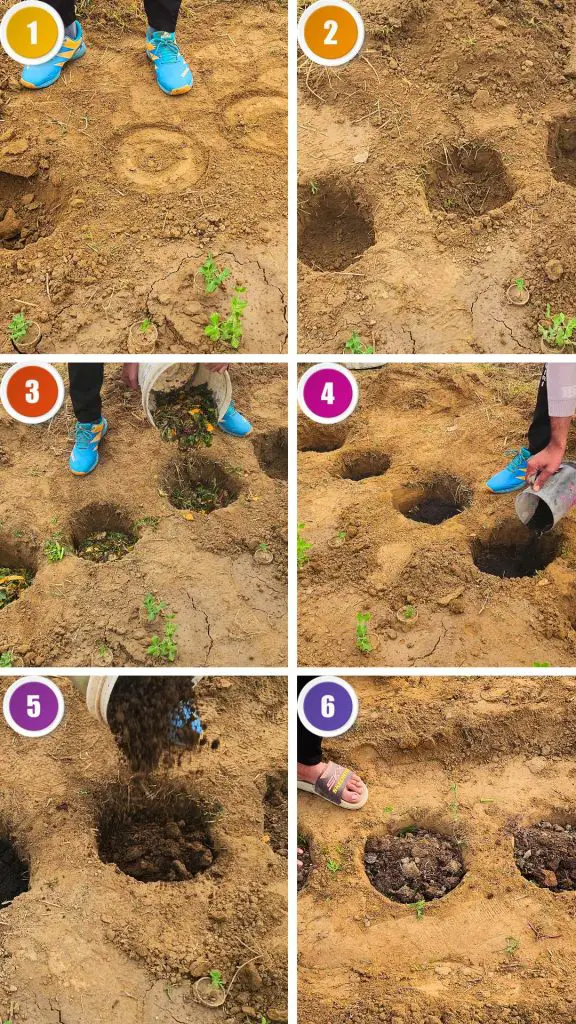
Cleaning and Resetting the Growing Area
The first step is clearing the space where planting will happen. Old plant debris, weeds, stones, and compacted patches interfere with soil airflow and nutrient movement. Removing them resets the bed or ground to a neutral starting point. This process also reduces the chance of pests and diseases carrying over from the previous season.
A clean surface allows for accurate spacing and easier digging. It ensures that organic material added later stays where it is intended—below the planting zone rather than mixed unevenly across the surface. This foundation step may seem simple, but it directly affects how evenly nutrients distribute later on.
Marking Planting Spots With Proper Spacing
Spacing is not just about neatness; it is about future plant health. Each plant competes for water, nutrients, and light. When planting spots are marked properly, roots have room to grow without interference, and leaves can receive adequate airflow. Marking the spots early also brings clarity to the layout of the garden, especially when working with multiple crops.
The correct distance between marks depends on what will be grown, but the principle remains the same: give each plant enough space to fully develop. Proper spacing also ensures that the prepared planting holes serve a single plant rather than being drained by multiple root systems.
Digging Deep and Creating Feeding Zones
The planting holes should be deeper and wider than standard holes used for direct planting. These are not just openings for seedlings; they are long-term feeding zones. Deeper holes encourage roots to grow downward rather than staying close to the surface. Plants with deeper roots are more stable, more drought-tolerant, and better at accessing nutrients stored lower in the soil.
Digging deep also breaks up compacted layers, allowing water and air to move more freely. This improves drainage while preventing water from running off the surface. Over time, roots follow these pathways, strengthening the plant from below.
Using Fruit and Vegetable Peels as a Nutrient Source
Kitchen waste is often underestimated in gardening, yet fruit and vegetable peels are packed with minerals, sugars, and organic compounds. When buried deep in the soil, these materials decompose slowly, feeding soil organisms that convert them into plant-available nutrients.
Unlike surface composting, burying peels in planting holes keeps them hidden from pests and prevents unpleasant odors. As decomposition progresses, worms and microbes are attracted to the area, further improving soil structure. The result is a localized zone of fertility that plants can tap into over an extended period.
The Purpose of Crushed Charcoal in Soil
Charcoal plays a unique role in soil preparation, but only when used correctly. Crushing the charcoal is essential because it increases surface area. More surface area means more microscopic pores, and these pores act as storage spaces for nutrients, water, and beneficial microorganisms.
Large chunks of charcoal do little beyond occupying space. Crushed charcoal, however, absorbs nutrients released during decomposition and holds them in place. Instead of being washed away by rain or irrigation, nutrients remain available near plant roots. Over time, this creates a more stable and resilient soil environment.
Adding Manure or Compost for Balance
After placing organic scraps and crushed charcoal into the hole, covering them with manure or compost creates balance. Compost acts as a buffer, preventing raw organic matter from directly contacting plant roots later on. It also introduces beneficial microbes that speed up decomposition.
Fully decomposed compost is ideal, but partially decomposed material works just as well when planting is delayed. Given enough time, natural processes complete the breakdown. This layer also helps blend the contents of the hole with surrounding soil, creating a smooth transition zone for roots.
Allowing Time for Natural Decomposition
Time is the most overlooked ingredient in soil preparation. When planting holes are prepared weeks or months in advance, microbial activity quietly transforms raw materials into stable organic matter. Heat generated during decomposition helps reduce harmful pathogens, while beneficial organisms multiply.
During this waiting period, soil structure improves. Organic matter binds soil particles together, increasing aeration and water retention at the same time. By the time planting begins, the soil is no longer just dirt; it is a living system.
How Early Preparation Improves Root Development
Roots respond directly to their environment. When they encounter loose, nutrient-rich soil, they grow deeper and spread more efficiently. Prepared planting holes guide roots downward, where moisture levels are more stable and temperature fluctuations are less extreme.
Stronger root systems support healthier above-ground growth. Plants become less dependent on frequent watering and better able to withstand stress. This foundational strength often translates into improved flowering, fruiting, and overall yield.
Concentrated Fertility Versus Broad Fertilizing
One of the major advantages of this method is efficiency. Instead of fertilizing an entire bed and losing nutrients to runoff, fertility is concentrated exactly where plants will grow. This targeted approach reduces waste and ensures that nutrients are accessible when plants need them most.
Concentrated fertility also encourages roots to stay within the prepared zone, maximizing nutrient uptake. Over time, this method can reduce the need for additional fertilizers while maintaining or increasing productivity.
Improving Soil Structure Over Time
Soil structure is just as important as nutrient content. The combination of organic matter, charcoal, and microbial activity creates soil that holds moisture without becoming compacted. Air pockets remain open, allowing roots to breathe and microorganisms to thrive.
Repeated use of this method improves soil year after year. Each season builds upon the last, gradually transforming poor or tired soil into a rich growing medium. The benefits compound, making gardening easier and more productive over time.
Recent Posts
Planting Tomatoes This Way Changed Everything – Deep Hole Method for Bigger Tomato Plants
Before planting a new crop, it is always a good idea to prepare the bed properly. In this case the bed was previously used for growing sweet peas. The plants produced well and once the harvest was...
48-hour seed test that reveals which cucumber seeds are alive — try this tonight
Germinating cucumber seeds is an important first step for any gardener. Starting seeds before planting them in soil ensures higher success rates and saves time. By germinating seeds first, you can...