
We have this garden bed, and it’s full of weeds. Instead of buying new soil or starting another bed, I’m going to clean this one and get it ready for vegetables. I’ll use banana peels, apple peels, garden soil, compost, and some sawdust for mulching. We already have most of these materials, so there’s no need to spend much money.
The fruit peels will go underneath the soil, and I’ll leave the bed for at least two weeks before planting. The peels won’t disappear in that time, but they’ll start breaking down and continue decomposing underground.
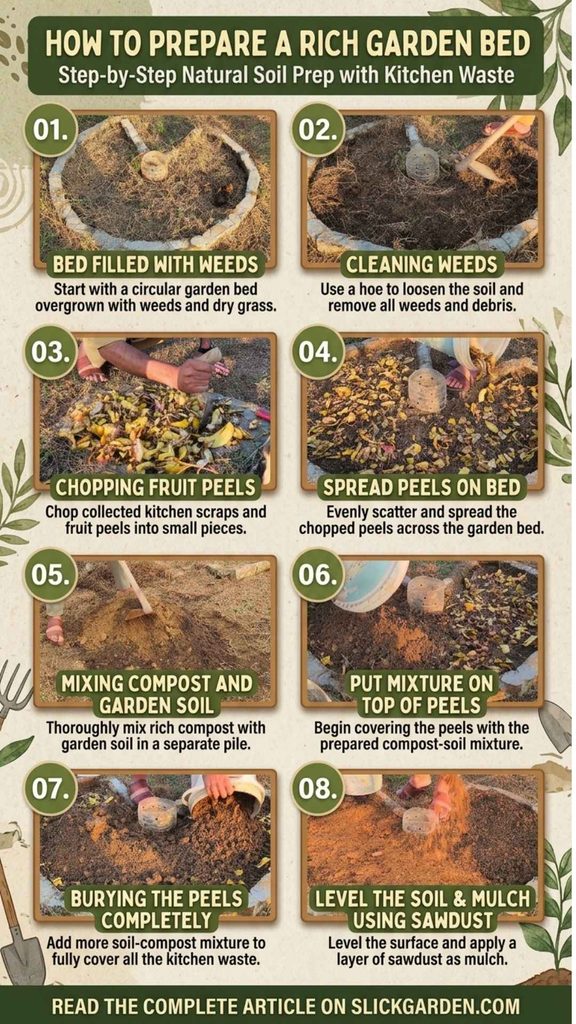
Remove All the Weeds
First, pull out all the weeds growing in the bed. Some will come out easily, while others have roots that are harder to remove. Try to get as much of the root system out as possible, especially if you’re dealing with weeds that keep coming back.
If you cover these weeds with fresh soil without removing them, some may grow through the new layer. It’s better to spend a little time pulling them out now than to find them growing among your vegetables later.
You can remove small weeds by hand and use a garden tool for the ones with stronger roots. There’s no need to dig up the entire bed. Just loosen the soil around stubborn weeds and remove as much of the root system as you can.
Once you’ve cleared the bed, remove any large roots or unwanted plant material left on the surface. Now it’s ready for the fruit peels.
Chop the Banana Peels and Apple Peels
I’m using banana peels, apple peels, and other fruit scraps from the kitchen. Rather than throwing them away, I’ll use them in the garden.
Before spreading them over the bed, chop the peels into smaller pieces. You don’t need to cut them into tiny bits. Just make them smaller so they can break down more easily.
Whole fruit peels take longer to decompose than smaller pieces because less of their surface is exposed to moisture and the organisms that break them down.
If you’re collecting fruit scraps over several days, keep them in a covered container until you’re ready to use them. In warm weather, they can start smelling unpleasant if left sitting around for too long.
Use plain fruit scraps rather than waste mixed with cooking oil, sauces, or large amounts of salt. If you have a lot of fruit peels, you can also put them in a compost pile and let them break down there first.
Spread the Fruit Peels Over the Bed
Once you’ve chopped the peels, spread them across the garden bed.
Try to distribute them evenly instead of leaving a big pile in one corner. There’s no need to cover the entire surface with a thick layer of fruit waste. A moderate amount is easier to cover with soil and less likely to create a soggy patch as it starts decomposing.
Banana peels and apple peels contain organic matter and various nutrients, but plants can’t make full use of those nutrients straight away. The peels need time to break down before much of their nutrients become available.
That’s why I chop them into smaller pieces and spread them across the bed rather than putting everything in one place. They’ll gradually decompose under the soil.
Mix 70% Garden Soil With 30% Compost
For the soil layer, I’m mixing 70 percent garden soil with 30 percent compost.
You can measure both materials with an ordinary bucket. Take seven buckets of garden soil and three buckets of compost, then mix them together. If you’re preparing a smaller bed, use smaller containers but keep the same ratio.
Give everything a good mix so the compost is spread throughout the soil instead of sitting in separate clumps.
I’m using more garden soil because we already have plenty of it. The compost adds organic matter and helps improve the soil, which is useful when preparing a bed for vegetables.
Make sure your compost is well decomposed. Fresh manure or unfinished compost isn’t a good choice when you’re planning to plant soon because these materials may still be breaking down and can create problems for young roots.
If your garden soil is reasonably good and drains properly, adding mature compost can help prepare it for planting. If the soil is extremely heavy, very sandy, or stays waterlogged after rain, you may need to improve those conditions separately.
Cover the Peels With the Soil Mixture
Now spread the soil and compost mixture over the fruit peels.
Cover the peels completely rather than leaving them exposed on the surface. This helps keep fruit scraps away from flies and other pests and gives them contact with the moist soil where decomposition takes place.
Spread the mixture across the whole bed. Add more where needed, then use a rake to level the surface.
There’s no need to press the soil down hard. Just spread it evenly and break up any large clumps. Make sure there’s enough soil for the vegetables you plan to grow, particularly if you’re planting crops that need plenty of room for their roots.
Keep the fresh fruit scraps buried beneath the soil rather than placing them directly against the roots of newly planted seedlings. The scraps are still decomposing, so give them some time to break down.
Mulch the Bed With Sawdust
For mulching, I’m using sawdust that we already have available.
Spread a thin layer over the soil. Don’t pile it up too thickly, and don’t mix large amounts of fresh sawdust into the soil.
The sawdust will help the bed hold moisture for longer and keep the soil surface covered. It may also reduce the number of small weeds that come up.
Use sawdust from untreated wood only. Avoid material from painted or chemically treated timber, as well as manufactured boards that may contain adhesives.
There’s one more thing worth knowing about sawdust. It contains a lot of carbon, and when soil organisms break it down, they can temporarily use nitrogen from the surrounding soil. This can leave less nitrogen available to plants.
That’s why I’m leaving the sawdust on top instead of mixing it into the growing soil. Keep the layer thin enough for water to pass through, and check the bed after watering to make sure the soil underneath is getting wet.
If you don’t have sawdust, dry leaves or clean straw can also be used for mulching.
Leave the Bed for at Least Two Weeks
Once the soil and sawdust are in place, leave the bed for at least two weeks before planting.
The soil can settle during this time, and the fruit peels will begin breaking down. They won’t turn into finished compost in two weeks, but they don’t need to. They’ll continue decomposing underground after planting.
Check the bed occasionally. If the soil starts getting too dry, give it some water. It should remain slightly moist, but don’t keep it soaking wet, especially if water tends to collect in your garden after rain.
After two weeks, check the soil before planting. If the bed looks and smells normal and the soil is in good condition, you can plant your vegetables.
If you’ve added a large amount of fruit scraps and the bed smells rotten or sour, leave it for longer. That smell can mean the scraps are breaking down without enough air.
You don’t need to wait until every piece of peel has disappeared. Just keep the scraps covered and avoid putting young seedlings directly into areas containing large amounts of fresh fruit waste.
Preparing the Bed for Another Growing Season
When it’s time to use the bed again, check the soil before adding more materials. If it’s still loose and has plenty of organic matter, a little compost may be enough. If the soil level has dropped or the surface has become hard, add more garden soil and compost.
You can keep collecting fruit peels throughout the year and compost them separately if you have space. This gives the scraps more time to break down before you use them in the garden.
If you prefer adding them directly to a bed, use a moderate amount and spread the scraps out. Too much fresh fruit waste in one place can become wet and smelly, especially in warm weather.
Keep an eye on weeds, too. A few new ones may appear even after you’ve cleaned and mulched the bed. Pull them out while they’re small, before they spread across the growing area again.
After two weeks, I’ll check the soil and decide whether the bed is ready for planting. The fruit peels will take longer to break down completely, but they’ll keep decomposing under the soil while the vegetables grow.
Recent Posts
You don't need to buy a lot of compost or fertilizer to prepare a good garden bed. If you have leaves, kitchen scraps, and other plant waste, you can use them to improve your soil and feed future...
I had an old rice storage sack that I wasn't using anymore, so I decided to turn it into two small raised garden beds. I cut the sack in half, used some bamboo sticks to hold everything in place, and...