
A productive garden bed does not need expensive materials or special tools. It can be made using what is already available in your own garden. A hugelkultur style bed usually uses logs and wood at the base, but that is not always easy to find.
A very practical alternative is to use overgrown vegetables, woody stems, leaves, and other garden waste. These materials break down over time, improve soil structure, and help the bed hold moisture for longer. The result is a healthy, fertile growing space that keeps feeding your plants season after season.
This method is especially useful for small home gardens and for people who want a low-cost, sustainable way to grow food. Instead of throwing away old plants and trimmings, everything goes back into the soil where it belongs. The bed slowly turns into rich organic matter while supporting strong plant growth on the surface.
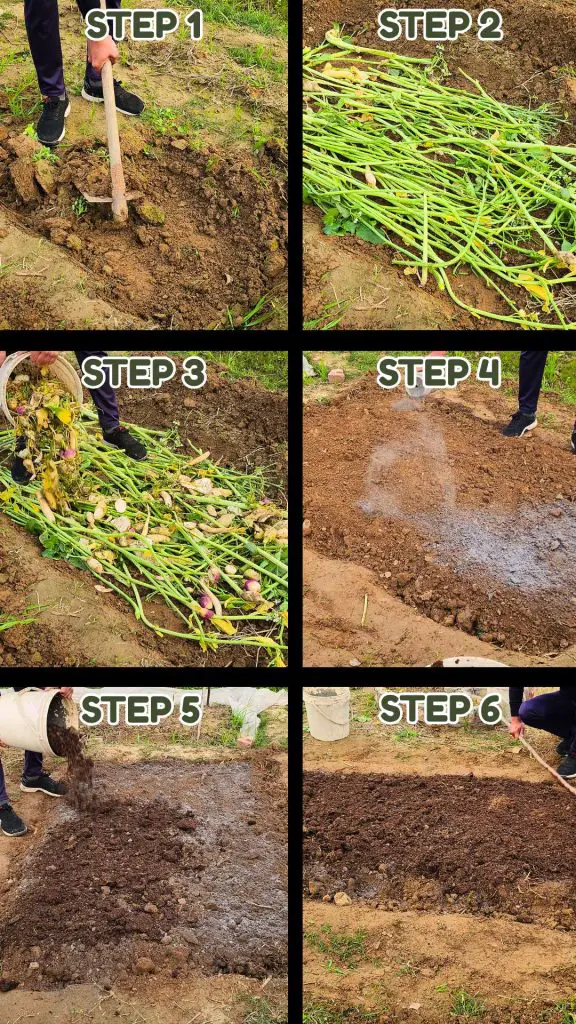
Preparing the Area for the Garden Bed
The first step is to prepare the ground where the bed will be made. There is no need to build a very high raised bed. A shallow, slightly sunken bed works very well and helps keep moisture inside, which is important in hot climates.
Choose a spot that gets good sunlight for most of the day. Clear away any weeds or unwanted plants. After that, remove a few inches of topsoil from the area. Keep this soil to one side because it will be used again later. The shallow trench you create will act as the base for all the organic layers.
This small digging step has two advantages. It helps anchor the bed so the materials do not shift, and it also allows water to collect and stay in the bed rather than running off the surface. Even a few inches can make a big difference in how well the bed holds moisture.
Using Woody Vegetable Stems as the Base
Instead of logs or branches, woody vegetable stems can be used as the bottom layer. When vegetables like white radishes or carrots bolt, their stems become quite hard and fibrous. These stems take longer to break down and act in a similar way to wood in a traditional hugelkultur bed.
Spread these woody stems evenly across the base of the trench. Try to cover the entire area so that the layer is consistent. This bottom layer is important because it will slowly absorb and store water like a sponge. During dry days, the stored moisture will be released back into the soil, helping plants survive with less frequent watering.
Using woody stems also gives a second life to plants that would otherwise be thrown away. It is a simple way to reduce waste and build fertility at the same time.
Adding a Layer of Chopped Vegetable Waste
After placing the woody stems, the next step is to add softer plant material. Overgrown vegetables that are no longer good for eating can be chopped into small pieces and spread over the base layer. Chopping the material helps it break down faster and creates a more even layer.
This layer fills the gaps between the woody stems and begins the process of turning garden waste into rich organic matter. As these soft plant parts decompose, they release nutrients back into the soil, feeding the crops that will grow above.
Any vegetable matter can be used here. Leaves, stems, spoiled fruits, and trimmings from the garden all work well. The idea is to use what is already available, so there is no need to buy anything extra.
Creating a Green Layer for Balance
On top of the chopped vegetable waste, add a layer of green material. This can include fresh leaves, plant trimmings, or even weeds that have not produced seeds. Green material is rich in nitrogen, which helps balance the carbon-heavy woody stems at the bottom.
This balance between carbon and nitrogen is important for healthy decomposition. When both types of material are present, the breakdown process happens smoothly, creating rich, dark soil over time.
Spread this green layer evenly so that it covers the entire bed. It does not need to be very thick, but it should be enough to provide a good mix with the layers below.
Covering Everything With Soil
Once all the organic materials are layered, it is time to cover them with soil. Use the same soil that was removed from the area at the beginning. Spread it evenly over the bed, making sure all the plant material underneath is fully covered.
If the removed soil is not enough to cover everything, additional garden soil can be added from another area. The important thing is that no organic material is left exposed. Covering the layers helps them break down properly and prevents pests from being attracted to the bed.
The soil layer also creates a stable surface for planting. Seeds and seedlings need direct contact with soil to grow well, so this top layer forms the foundation for future crops.
Adding Wood Ash for Extra Minerals
If wood ash is available, a light sprinkle can be added over the soil. Wood ash contains useful minerals such as potassium and small amounts of other nutrients that can benefit plant growth.
Only a thin layer is needed. Too much ash can change the soil balance, so it is best to use it lightly. If there is no wood ash available, this step can simply be skipped. The bed will still perform very well without it.
This optional addition is just a small boost, not a requirement. The main strength of the bed comes from the layered organic material underneath.
Finishing With a Compost Layer
The final layer on top of the bed is compost. This is the layer where planting will take place. Compost provides immediate nutrients and supports strong early growth for seedlings.
Vermicompost, well-rotted manure, or any finished compost can be used. Spread it evenly across the entire surface of the bed. This top layer should be soft, rich, and ready to support plant roots.
Over time, as the layers below continue to break down, they will feed into this compost layer, making it even more fertile. This creates a long-lasting system where the bed improves with age instead of becoming weaker.