
Healthy soil is the foundation of a thriving garden. Without proper nutrients, even the most resilient plants struggle to grow. While chemical fertilizers are widely available, they often harm the soil and disrupt natural microbial life.
Natural fertilizers, on the other hand, enrich the soil, support microbes, and provide long-term benefits to plants. Using ingredients like eggshells, charcoal, and compost, you can create a nutrient-rich fertilizer that helps plants flourish naturally. This approach is sustainable, inexpensive, and highly effective for both vegetable gardens and flower beds.
The Benefits of Using Eggshells
Eggshells are often discarded as waste, but they are packed with calcium, an essential nutrient for plants. Calcium strengthens plant cell walls, prevents blossom-end rot in fruits and vegetables, and supports root development.
When dried and ground into a fine powder, eggshells release calcium slowly into the soil, providing a consistent nutrient supply. This slow-release property ensures plants get the calcium they need over time without the risk of over-fertilization. Additionally, eggshell powder helps balance soil pH slightly, which is beneficial for many types of plants.
Charcoal as a Soil Enhancer
Charcoal is more than just a fuel source—it is an excellent soil enhancer. When crushed into small pieces or powdered, charcoal improves soil aeration, retains moisture, and acts as a natural filter for nutrients. It absorbs excess salts in the soil, preventing nutrient burn in sensitive plants, and provides a home for beneficial microbes.
These microbes play a vital role in breaking down organic matter and making nutrients available to plants. Charcoal’s porous structure allows it to store water and nutrients, slowly releasing them to plant roots, which helps maintain a balanced and fertile soil environment.
Compost: The Microbial Powerhouse
Compost is the heart of any natural fertilizer. It is rich in organic matter and contains millions of beneficial microorganisms that break down nutrients, making them available to plants. Well-decomposed compost not only feeds plants but also improves soil structure, increases water retention, and prevents erosion.
Mixing compost with eggshell powder and charcoal creates a synergistic effect: the compost feeds microbes, the charcoal holds nutrients, and the eggshells provide calcium. Together, they form a powerful fertilizer that nourishes plants while supporting a healthy soil ecosystem.
Making a Dry Fertilizer Mixture
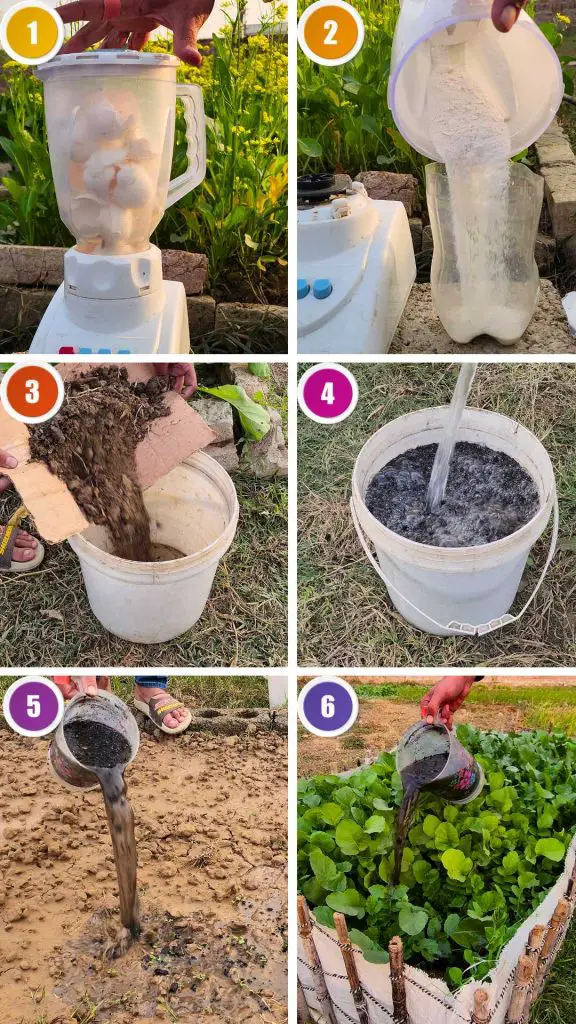
Creating a dry fertilizer mixture is simple and effective. Start by drying eggshells completely and grinding them into a fine powder. Crush charcoal into small pieces or powder. In a large bucket, combine the eggshell powder, crushed charcoal, and decomposed compost.
Mix thoroughly to ensure even distribution of nutrients. This mixture can be applied directly to garden beds by making small trenches between plants or holes near roots. Lightly sprinkle the mixture and cover it with soil. Watering after application is essential because moisture activates microbial activity and helps release nutrients gradually.
Transitioning to Liquid Fertilizer
While the dry mixture is highly effective, converting it into a liquid fertilizer provides additional benefits. Liquid fertilizers allow nutrients to penetrate the soil quickly and can be applied to both new beds and established plants. To make a liquid fertilizer, add non-chlorinated water to the dry mixture of eggshell powder, charcoal, and compost. Stir the mixture well and cover it loosely.
Over the next 24 hours, water extracts soluble nutrients from the compost and eggshells, while charcoal absorbs minerals and provides a habitat for microbes. This process creates a living solution rich in calcium, trace elements, and beneficial microorganisms.
Preparing Soil for Liquid Fertilizer Application
Before applying liquid fertilizer, it is important to prepare the soil. Start with garden beds that are compacted, nutrient-deficient, or showing signs of weak growth. Lightly water the soil to ensure it is moist. Moist soil helps microbes in the liquid fertilizer move and establish themselves effectively.
When applied to prepared soil, the liquid fertilizer penetrates the root zone efficiently, delivering nutrients directly where plants need them most. Regular application every 10 to 15 days ensures consistent nutrient availability and promotes a healthier garden overall.
Application Techniques for Liquid Fertilizer
Liquid fertilizer can be applied in multiple ways depending on plant type and soil conditions. For new beds, pour the liquid evenly across the surface, allowing it to soak into the soil. For established plants, carefully pour the fertilizer around the base to target the root zone.
Avoid excessive contact with leaves, as high nutrient concentrations can sometimes burn foliage. Using a watering can or a garden sprayer ensures even distribution. This method encourages deeper root growth, improves soil fertility, and supports stronger, more resilient plants.
The Role of Microbes in Fertilizer Efficiency
One of the key advantages of this natural fertilizer is its ability to boost microbial life in the soil. Microbes break down organic matter in compost, release nutrients, and improve soil structure. The combination of eggshells, charcoal, and compost creates an ideal environment for microbial activity.
Charcoal provides a stable habitat for microbes, while compost feeds them, and the liquid solution helps them move through the soil efficiently. Healthy microbial populations not only improve nutrient availability but also enhance plant immunity and help plants resist disease naturally.
Timing and Frequency of Fertilization
Consistency is important for maximum benefits. Applying liquid fertilizer every 10 to 15 days provides a steady supply of nutrients to plants without overwhelming them. Over time, soil structure improves, microbial life thrives, and plants develop stronger roots, healthier leaves, and more robust growth.
Observing plant responses can help fine-tune application frequency. Some plants may benefit from slightly more frequent fertilization, while others may require less, depending on soil conditions, plant type, and weather.