
The first step in making compost is selecting the right area. Ideally, pick a spare garden bed or a small patch where you can spread your materials evenly. The more surface area you provide, the faster microbes can reach every part of the compost.
A flat, well-drained area works best. Avoid places that stay waterlogged, as excess moisture can slow down decomposition and create unpleasant smells. If you have limited space, you can use a raised bed or even a large container, but make sure there’s enough room for layers and airflow.
Preparing Your Materials
Before you start layering, gather all your materials. You’ll need nitrogen-rich items like chopped vegetables, leafy greens, and fruit peels. You also need carbon-rich materials such as dried leaves, grass clippings, or shredded paper.
A little compost or well-rotted manure will help introduce more microbes and kickstart the decomposition process. Having everything ready makes layering faster and ensures that each layer is balanced properly.
Layering Nitrogen-Rich Materials
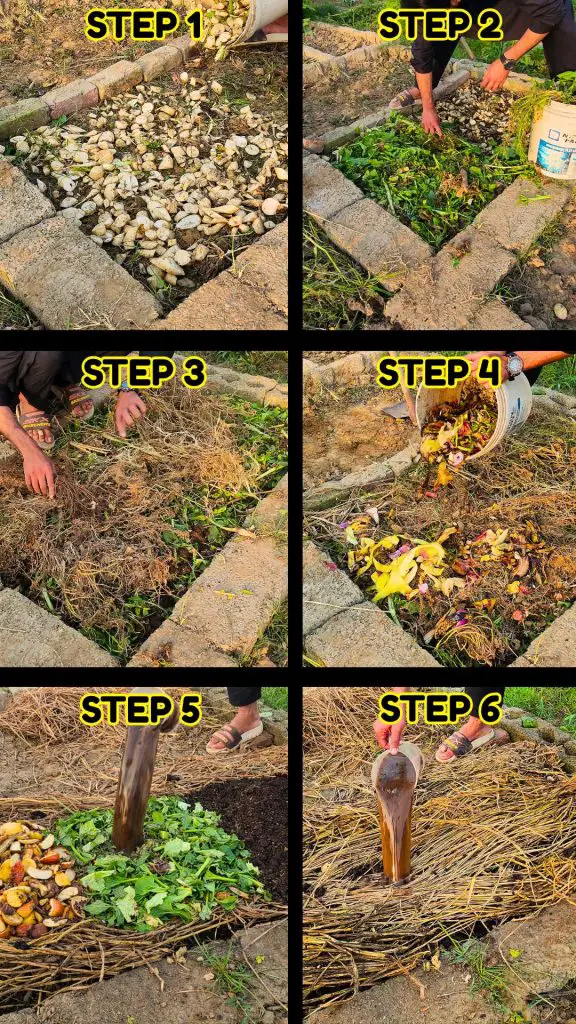
The first layer should always be nitrogen-rich. Chopped vegetables from your kitchen or garden work best. This layer gives microbes plenty of food to start working. Sprinkle a small amount of compost or manure over the vegetables. This adds beneficial microbes and extra nutrients, helping the decomposition process start immediately. Make sure the layer is spread evenly and not too thick.
The second layer can include vegetables again or fallen tree leaves. Leaves may look dry, but they contain nutrients and are an essential part of balancing the compost. Sprinkle a little compost on top again to keep microbes active. Alternating nitrogen and carbon layers ensures that the pile stays healthy and decomposes quickly.
Adding Carbon-Rich Materials
After the nitrogen layers, it’s time to add carbon-rich materials. Dried leaves, dry grass, straw, or shredded cardboard work well. Carbon-rich materials provide structure, helping airflow and moisture retention. On top of this, add a layer of garden soil.
Soil is naturally full of microbes, and it helps to speed up the composting process while maintaining the right environment for decomposition. Sprinkle a little compost over this layer to give microbes extra nutrients.
Incorporating Fruit Peels
Fruit peels are nutrient-dense and attract a variety of beneficial microbes. Banana peels, orange peels, apple cores, and other leftover fruit scraps work perfectly. Spread them evenly over the carbon-rich layer, then sprinkle a small amount of compost on top.
Avoid adding too many citrus peels in one layer, as strong citrus can sometimes slow down microbial activity. Balancing fruit scraps with other organic materials is key to fast decomposition.
Covering with Mulch
Once all layers are in place, cover the pile with mulch. Mulch helps retain moisture, protects the pile from direct sunlight, and keeps it from drying out. It also prevents pests from digging into your compost. Materials like straw, shredded leaves, or grass clippings make excellent mulch. Mulch keeps the compost at a stable temperature, which is essential for microbes to thrive and work efficiently.
Making the Magical Liquid
The secret to faster composting is a simple homemade liquid called compost tea. To make it, take a bucket of rainwater and add a handful of compost. Let it sit for 24 hours, stirring occasionally to keep the microbes active.
After a day, pour this liquid over the compost pile. This introduces millions of beneficial microbes directly into the layers, accelerating the breakdown of organic material. Compost tea is easy to make, cost-effective, and dramatically speeds up the composting process.
Maintaining Moisture
Moisture is crucial for a healthy compost pile. Think of it as a wrung-out sponge – moist but not soggy. Too much water can create anaerobic conditions, slowing decomposition and causing unpleasant odors. Too little water and microbes become inactive. Check the pile regularly and sprinkle water or more compost tea if needed. Covering with mulch helps maintain the right moisture level, but occasional monitoring ensures optimal results.
Turning the Pile
Turning your compost helps introduce oxygen and redistributes microbes, speeding up the decomposition process. You can turn the pile once a week or every two weeks using a garden fork or shovel. If turning is difficult, pouring more compost tea over the pile will still help microbes work efficiently. Regular turning keeps the pile aerated and prevents compacting, which is important for healthy microbial activity.
Balancing Green and Brown Materials
A key to fast composting is maintaining the right balance of nitrogen-rich “green” materials and carbon-rich “brown” materials. Greens include vegetables, fruit scraps, and grass clippings. Browns include dried leaves, straw, paper, and cardboard. Too many greens can make the pile wet and smelly. Too many browns slow down decomposition. By alternating layers and adding a little compost between each, you create the perfect environment for microbes to thrive.
Avoiding Common Mistakes
Certain items should not go into your compost. Avoid meat, dairy, oily foods, and diseased plants, as these attract pests and can create odors. Also, don’t overpack layers; compacting reduces airflow and slows decomposition. Citrus peels are fine in moderation but should not dominate the pile. Regularly checking moisture and turning the pile prevents many common composting issues.