
Molasses made from brown sugar is an underrated and affordable tool for gardeners who want to boost soil life and improve plant health naturally. Unlike refined sugar, molasses contains complex carbohydrates and trace minerals that serve as an excellent food source for beneficial soil microbes.
Feeding these microorganisms helps unlock nutrients already present in the soil, improves soil structure, and supports stronger, more resilient plants. This guide explains how to make molasses from brown sugar, what it does for the soil, how to use it safely, and how to integrate it into a practical garden program for long-term results.
Why molasses matters for soil biology
Molasses feeds soil microbes in a way that simple sugars cannot. Beneficial bacteria and fungi need carbohydrates to multiply and perform essential functions like decomposing organic matter and converting nutrients into plant-available forms.
Molasses provides a slow-release energy source that keeps microbial populations active for longer periods, which promotes a stable and diverse soil ecosystem. When the microbial community thrives, nutrient cycling improves, organic matter breaks down more efficiently, and plants gain access to a broader pool of nutrients.
In addition, microbes produce enzymes and organic acids that help mobilize locked-up minerals, so the plants benefit indirectly from the microbial workforce.
Nutrients and minerals in molasses
Molasses is more than a sugar source. It contains trace minerals such as iron, magnesium, calcium, potassium, and sulfur, plus small amounts of micronutrients that aid metabolic processes in both microbes and plants. These minerals aren’t a substitute for a balanced fertilizer program, but they complement biological activity by supplying elements that microbes can transform into plant-accessible forms.
Molasses also contains complex organic compounds that provide a sustained energy feed, rather than the quick spike associated with refined white sugar. That steady energy helps maintain healthy microbial populations instead of causing boom-and-bust cycles.
Making molasses from brown sugar
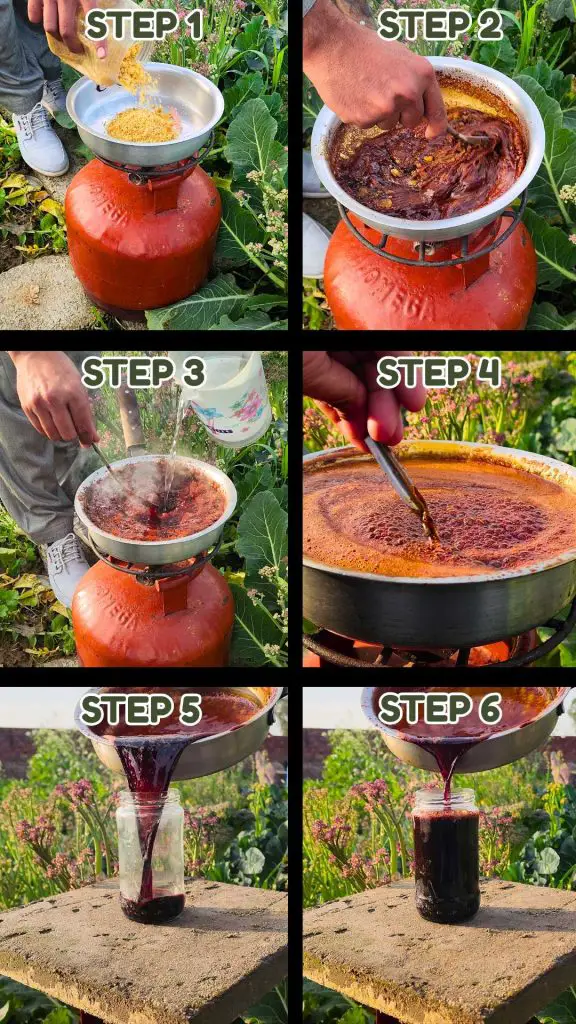
To make molasses at home, start with about 500 grams of brown sugar. Place the sugar in a pan and heat it on low. Stir constantly to prevent burning; a wooden spoon or heat-resistant spatula works well. The sugar will first become grainy and then begin to melt into a smooth syrup. As the color deepens, add a small amount of water—just enough to keep the mixture fluid while it simmers.
Be cautious because the mixture will bubble when water is added. Continue stirring and simmer for roughly 10 to 15 minutes until the liquid thickens and darkens. Once you reach a thick, syrupy consistency, remove the pan from the heat and pour the hot molasses into clean glass jars. Pouring while hot keeps it pourable; as it cools it will thicken into a honey-like texture that stores well.
Safety and handling tips
When heating sugar, always work on low to medium-low heat and keep a careful eye on the pan—sugar burns quickly and sugar burns are severe. Wear oven mitts when pouring the hot syrup into jars and use heatproof equipment. Keep children and pets away from the cooking area.
Wipe up spills promptly with warm water to prevent sticky buildup, and clean utensils thoroughly before reuse. Label jars with the preparation date and keep them sealed when not in use to reduce contamination.
How molasses improves nutrient availability
A lot of soil nutrients are present but locked in forms that plant roots cannot easily access. Active microbes break down organic matter and mineralize nutrients such as nitrogen and phosphorus, turning them into forms that plant roots can absorb.
Molasses stimulates these microbial processes by providing the energy microbes need to proliferate and function. The result is improved nutrient availability and more efficient use of existing soil fertility—often translating into healthier growth and better yields. Over time, repeated, modest applications can reduce the need for synthetic nutrients because biological cycling becomes more effective.
Using molasses in liquid fertilizers and compost tea
Molasses is commonly used as a microbial feed when making liquid fertilizers or compost teas. Add a measured amount of molasses to a compost tea recipe to feed and multiply beneficial organisms during the brewing process. Typical dilution rates are low—using a tablespoon or two of molasses per gallon of water in a compost tea batch is common practice.
The goal is to boost beneficial populations without creating an imbalance that favors unwanted organisms. When using molasses in soil drenches, dissolve it thoroughly in warm water before application. For foliar applications, use much lower concentrations and test on a few leaves first; avoid leaving sticky residues on foliage.
Timing and application strategies
Use molasses-amended fertilizers during active growing periods when plants are taking up nutrients rapidly. Spring and early summer are ideal seasons for encouraging microbial activity and root development.
Applying microbial-rich solutions before transplanting or during early growth stages primes roots to access nutrients more effectively. For established plants, periodic applications every few weeks can sustain soil biology. Avoid overapplication; balance is essential. A well-timed, modest dose supports life and nutrient cycling without creating anaerobic conditions or encouraging pests.
Effects on soil structure and water retention
Microbial activity supported by molasses contributes to better soil aggregation. Microbes produce sticky polysaccharides and other compounds that help bind soil particles into aggregates. Improved aggregation enhances aeration and water infiltration while reducing compaction.
Soils with good structure retain moisture more evenly and allow roots to expand with less resistance. Over time, this translates directly into more resilient plants that cope better with drought and fluctuating moisture conditions.