
In many households, small mud pots are a common sight in the kitchen. They are used for cooking because clay holds heat well and gives food a unique flavor. But these simple pots can also serve a completely different purpose outside the kitchen. Instead of cooking meals for people, they can quietly cook nutrients for the soil.
By placing a modified mud pot in a garden bed and filling it with kitchen scraps, it becomes a small composting chamber right inside the soil. Over time, fruit peels, vegetable scraps, and other organic materials break down and turn into rich nutrients. These nutrients slowly move into the surrounding soil where plant roots can easily absorb them.
This method is simple, low-cost, and perfect for gardeners who want to recycle kitchen waste while improving soil fertility.
Why Kitchen Waste Should Not Be Thrown Away
Every day, kitchens produce organic waste. Fruit peels, vegetable skins, leftover plant parts, and other scraps are usually thrown into the trash. But these materials are actually full of nutrients that plants need.
Banana peels contain potassium, vegetable scraps contain nitrogen and other minerals, and fruit waste adds organic matter to the soil. When this material is sent to landfills, those nutrients are lost.
Using kitchen waste in the garden returns these nutrients back to the soil. Instead of becoming garbage, they become plant food. This not only helps reduce waste but also improves soil health naturally.
For gardeners who want healthier plants without relying on chemical fertilizers, recycling kitchen scraps is a practical solution.
Why Glazed Mud Pots Need Small Modifications
Clay pots are often used in gardening because they are breathable. Unglazed clay allows air and moisture to move through its walls. However, glazed pots are different.
A glazed mud pot has a sealed surface. The glaze prevents moisture from passing through the pot walls. While this makes the pot good for cooking or holding liquids, it also means nutrients cannot easily move from the inside of the pot into the surrounding soil.
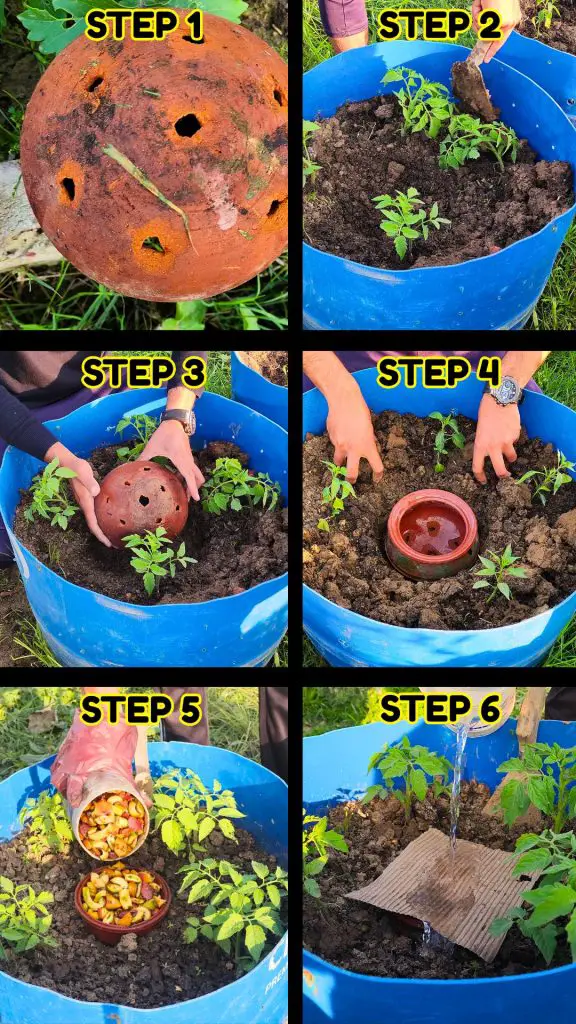
To solve this, small holes must be added to the pot. These holes allow liquids, microorganisms, and earthworms to move between the pot and the soil. Once these openings are created, the pot becomes a slow-release compost container buried right where plants grow.
The holes do not need to be large. Their purpose is simply to create small pathways for nutrients and soil life.
The Importance of Wetting the Pot Before Making Holes
Before making any holes in a glazed mud pot, the pot should be soaked in water. This step is important because clay and ceramic materials can be brittle when they are completely dry.
When a dry pot is drilled or struck, the pressure can cause cracks or even break the entire pot. By soaking the pot in water first, the clay absorbs moisture and becomes slightly less fragile.
Keeping the pot wet during the process reduces the chances of damage. It also makes the drilling or hole-making process smoother and safer.
Taking a little extra time to soak the pot can prevent frustration and save the pot from breaking.
Creating the Right Holes for Soil Life
Once the pot is properly wet, small holes can be added around the sides and near the bottom. These openings allow the composting process inside the pot to interact with the soil outside.
The holes create access points for earthworms and beneficial microbes. These organisms play an important role in breaking down organic matter. As they enter the pot, they feed on the kitchen scraps and help turn them into nutrient-rich compost.
At the same time, liquid produced during decomposition can slowly move out of the pot through these openings. This liquid carries dissolved nutrients that spread into the surrounding soil.
Spacing the holes around the pot helps distribute nutrients more evenly into the garden bed.
Placing the Compost Pot in a Garden Bed
After the pot has been prepared, the next step is installing it in the garden. The pot can be used in a traditional garden bed, a raised bed, or even a large container garden.
A hole is dug in the soil deep enough for most of the pot to sit below the surface. However, the top rim of the pot should remain slightly above the soil level. This makes it easy to add kitchen scraps without soil falling into the pot.
Once the pot is placed into the hole, soil is filled around the sides and gently pressed down. This secures the pot and keeps it stable.
When installed properly, the pot becomes a permanent compost station in the garden.
Filling the Pot With Kitchen Scraps
The compost pot works best when filled with plant-based kitchen waste. Fruit peels, vegetable scraps, and leftover plant materials are ideal.
These organic materials begin breaking down once moisture and microorganisms are present. The decomposition process produces nutrients such as nitrogen, potassium, and phosphorus that plants require for healthy growth.
Adding small amounts of waste regularly works better than filling the pot all at once. This keeps the decomposition process active without overwhelming the system.
Over time, the waste gradually shrinks as it decomposes, making room for more scraps to be added.
Adding Compost to Boost Decomposition
A small layer of finished compost added on top of the kitchen waste can help speed up the process. Compost already contains active microorganisms that break down organic matter.
When these microbes are introduced into the pot, they immediately begin working on the fresh kitchen scraps. This helps the material decompose more quickly and reduces unpleasant odors.
Compost also balances the mixture by adding beneficial bacteria and fungi that support healthy soil ecosystems.
Even a thin layer is enough to help start the decomposition process effectively.
Covering the Pot With Organic Materials
After adding kitchen waste and compost, the pot should be covered with an organic material such as mulch, dry leaves, or cardboard.
This covering serves several important purposes. It prevents mosquitoes and insects from reaching the moist organic material inside the pot. It also helps reduce odors by sealing the waste beneath a natural barrier.
Organic covers are preferred because they allow water to pass through them. When rain falls or when the garden is watered, moisture can still reach the waste inside the pot.
At the same time, these materials slowly break down and add organic matter to the soil surface.
Water and Moisture in the Composting Process
Moisture is a key factor in decomposition. Microorganisms need water to break down organic material effectively.
When the pot receives water from rain or irrigation, the moisture activates microbial activity inside the container. This encourages the kitchen scraps to decompose more quickly.
As decomposition continues, the material inside the pot becomes softer and more nutrient-rich. Liquids produced during this process move through the holes in the pot and into the surrounding soil.
This natural flow of nutrients feeds nearby plants gradually rather than all at once.