
Before planting tomatoes, the first step is preparing the garden bed properly. A healthy tomato plant starts with good soil. Choose a spot that gets at least 6 to 8 hours of sunlight daily. Tomatoes love sunlight, and without enough light, the plants will be weak and yield will be low.
Loosen the soil to a depth of at least one foot. This helps roots grow freely and prevents waterlogging. If the soil is compacted, roots will struggle to expand and the plant may become susceptible to diseases.
Next, clear the garden bed of weeds, stones, and debris. Weeds compete with your tomato plants for nutrients and water, so it is important to remove them before planting. Adding organic matter like compost or well-rotted manure at this stage improves soil fertility, texture, and water-holding capacity. Mix the compost thoroughly with the soil to create a nutrient-rich environment for the young tomato plants.
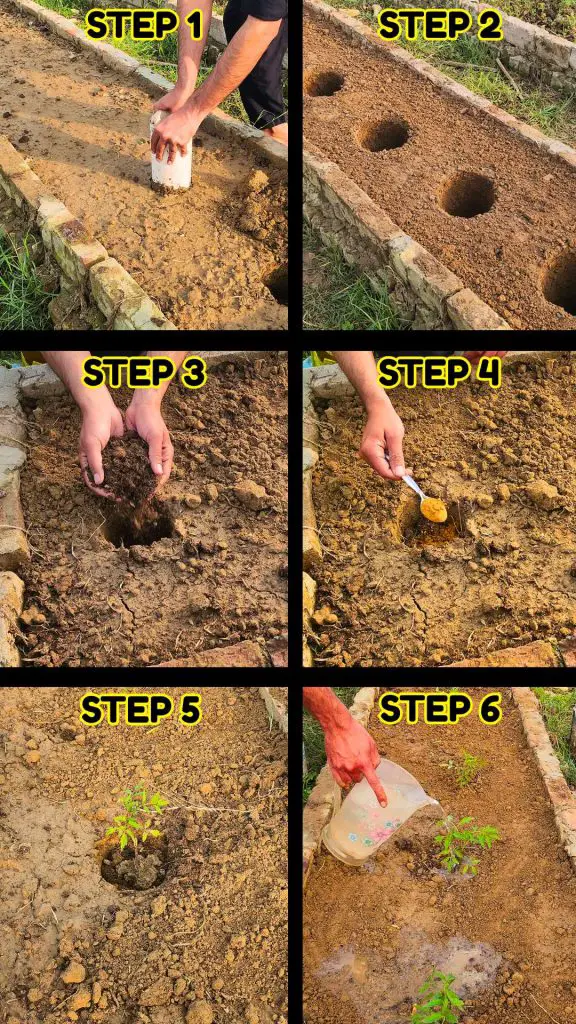
Making Perfect Planting Holes
Once the soil is ready, the next step is making planting holes. A simple and effective method is to use an old plastic pipe. Push the pipe into the soil about half a foot deep, twist it slightly, and then remove it. This creates a clean, uniform hole and brings out a small amount of soil, which can be used later around the plant.
The holes should be spaced according to the tomato variety. Determinate or bush varieties can be planted closer together, around 18 to 24 inches apart, while indeterminate or tall varieties need 24 to 36 inches of spacing. Proper spacing ensures good airflow between plants, reducing the risk of fungal infections and promoting healthy growth.
Adding Compost for Healthy Growth
Compost is essential for tomato planting. A handful of compost in each planting hole provides a slow-release source of nutrients. It improves soil structure, helps retain moisture, and encourages beneficial microbes. These microbes break down nutrients and make them available to the plant roots, which is vital for the overall health of the tomato plant. With compost, plants are less likely to suffer from nutrient deficiencies, and they can grow faster and stronger from the beginning.
Compost also improves water retention in the soil. During dry periods, the soil holds moisture better, preventing the roots from drying out. Strong roots are crucial for a thick, sturdy stem, as the plant draws water and nutrients from the roots to support growth above ground.
Using Turmeric for Root Protection
Turmeric is not only a kitchen spice; it is also beneficial for tomato planting. Mixing a teaspoon of turmeric powder into each planting hole helps protect young roots from fungal infections. Turmeric has natural antifungal and antibacterial properties that reduce the risk of root rot and other soil-borne diseases. This is especially helpful during the initial stage when the plant is most vulnerable. By using turmeric, you give your tomato plant a healthy start and reduce the chance of losing seedlings due to disease.
Preparing the Tomato Plant
Before planting, prepare the tomato seedling carefully. Remove the lower leaves from the stem, leaving only the top few healthy leaves. Tomatoes have a unique ability: the buried part of the stem can produce roots. This means that when you plant the tomato deep, almost half of the plant goes into the soil, allowing the stem to develop additional roots. More roots mean a stronger base for the plant, better water and nutrient absorption, and thicker, sturdier stems.
Handle the seedling gently to avoid damaging the delicate roots. Avoid pulling or bending the stem, as it can stress the plant and slow growth. Healthy seedlings are essential for strong, productive plants, so take your time during this step.
Planting Deep for Strong Roots
Place the tomato plant in the hole and cover the stem with soil up to the remaining leaves. Press the soil gently around the base, ensuring there are no air pockets but the soil remains loose for root expansion. Deep planting encourages the stem to grow roots along its buried portion. These additional roots increase the plant’s stability and nutrient uptake, which results in a thick, strong stem capable of supporting abundant tomatoes later.
Deep planting also helps prevent the plant from falling over in strong winds or heavy rain. A strong root system is especially important for tall or indeterminate tomato varieties that can grow several feet high.
Watering After Planting
After planting, water the tomato plants immediately. This helps settle the soil around the roots and reduces transplant shock. Water should reach deep into the soil so that the newly developing roots get enough moisture. Keep the soil slightly moist for the first 7 to 10 days as the plant adjusts to its new environment. Avoid overwatering, as waterlogged soil can lead to root rot and other fungal infections.
Transplant shock is a common problem after planting seedlings. Plants may appear droopy or slow in growth initially, but consistent watering and care help them recover quickly. Healthy roots and a moist environment allow the plant to stabilize and start growing vigorously within a week or two.
Recent Posts
Planting Tomatoes This Way Changed Everything – Deep Hole Method for Bigger Tomato Plants
Before planting a new crop, it is always a good idea to prepare the bed properly. In this case the bed was previously used for growing sweet peas. The plants produced well and once the harvest was...
48-hour seed test that reveals which cucumber seeds are alive — try this tonight
Germinating cucumber seeds is an important first step for any gardener. Starting seeds before planting them in soil ensures higher success rates and saves time. By germinating seeds first, you can...