
Tomatoes are one of the most popular vegetables grown in home gardens. Many gardeners try different tricks and techniques to make their tomato plants grow stronger, develop deeper roots, and produce better harvests.
Small improvements in the early stages of growth can make a big difference later in the season. Simple methods like improving root development, providing better support, and using organic fertilizers can help tomato plants grow healthier without relying on complicated systems or expensive materials.
One of the most effective ways to improve tomato plant growth is to focus on the early weeks after planting. During this period, the plant is building its root system and establishing itself in the soil. If the plant develops strong roots early, it will be able to absorb more nutrients and water, making it more resilient and productive as it matures.
Tomato Seedlings Growth After 20 Days
Tomato seedlings planted about twenty days ago begin to show noticeable growth. At this stage the plants are still young but they have started adjusting to the soil and growing steadily. The leaves become broader and greener, and the stems slowly start getting thicker. Healthy seedlings during this stage indicate that the soil conditions and watering schedule are working well.
The first few weeks after planting are very important because this is when the plant begins building its foundation. A strong foundation allows the tomato plant to support future growth, flowers, and fruit production. Gardeners often observe their plants closely during this stage to ensure there are no problems with pests, watering, or soil quality.
Weed Management for Healthy Tomato Plants
As tomato plants grow, weeds often appear around them. This is common in any garden bed because weed seeds are usually present in the soil. Once watering and sunlight are available, these seeds quickly begin to grow.
Weeds compete with tomato plants for important resources such as nutrients, water, and sunlight. If weeds are left growing near the plants, they can slow down the development of tomato seedlings and weaken them over time.
Removing weeds regularly helps the tomato plants grow more efficiently. The best way to remove weeds is to pull them out along with their roots. Simply cutting the top part of the weed may allow it to grow again very quickly. Pulling the entire root reduces the chances of the weed returning soon.
Keeping the soil around tomato plants clean also improves air circulation and allows the plants to access nutrients more easily. A well-maintained garden bed gives tomato plants the space they need to grow without unnecessary competition.
Reusing Plastic Bottles as Plant Support
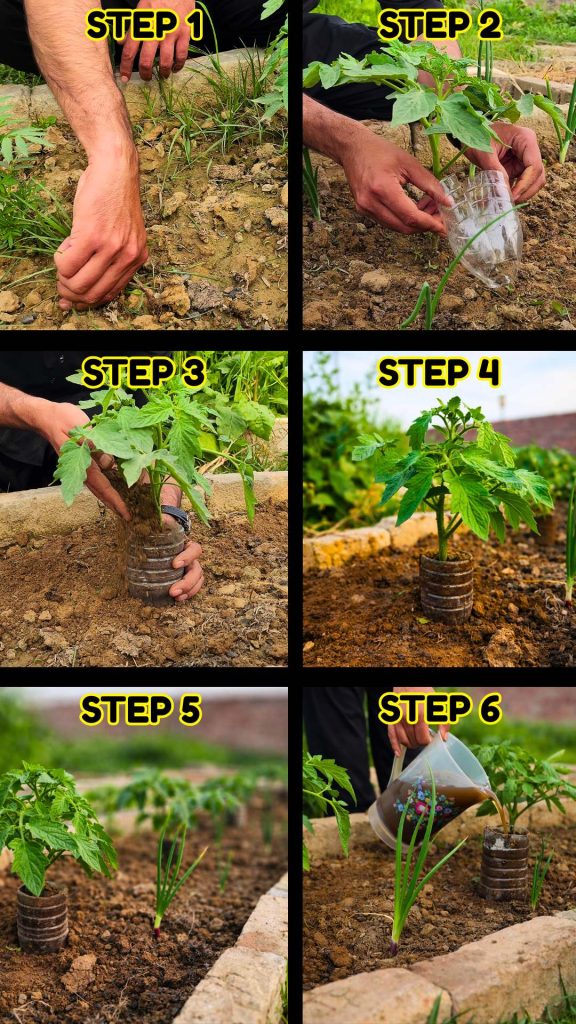
A simple and creative gardening trick involves using discarded plastic bottles as support structures for tomato plants. Instead of throwing these bottles away, they can be reused in the garden to help plants grow stronger.
The process is simple. First remove the bottom and top parts of the bottle so both ends remain open. Then make a large cut along the side of the bottle so that it can open slightly and be placed around the plant. This creates a cylinder-like structure that fits around the tomato stem.
This bottle structure sits around the base of the plant and acts as a protective ring. It helps keep soil in place and also gives the plant some support as it grows taller.
Reusing plastic bottles in this way is also an environmentally friendly practice. It reduces plastic waste while providing a useful tool for gardening.
Filling the Bottle with Compost and Soil
After placing the bottle structure around the tomato plant, the next step is to fill it with a mixture of compost and garden soil. This mixture provides nutrients and improves the soil environment around the stem.
The compost supplies organic matter and essential nutrients that help the plant grow. Garden soil helps maintain the structure and stability of the mixture inside the bottle.
While filling the bottle, the soil mixture should be added slowly so it settles properly around the stem. Lightly pressing the soil helps remove large air pockets and keeps the structure stable.
This small addition of soil around the stem can significantly improve the growing conditions for the plant.
Encouraging More Root Growth Along the Stem
Tomato plants have a unique ability compared to many other vegetables. When their stems come into contact with soil, they can produce additional roots along the buried portion of the stem.
This natural characteristic makes tomatoes very responsive to techniques that increase stem-to-soil contact. By adding soil around the lower part of the stem, gardeners encourage the plant to produce new roots.
More roots provide several benefits. The plant becomes stronger and can absorb more water and nutrients from the soil. This improves overall plant health and supports better growth.
When tomato seedlings are planted while still small, there is often not enough stem length available to bury deeply in the soil. As the plant grows, additional soil around the stem helps compensate for this by allowing new roots to form.
Advantages of Additional Root Development
The development of additional roots can greatly improve the strength and performance of tomato plants. A larger root system allows the plant to access nutrients more efficiently and remain stable even as it grows larger.
Plants with stronger root systems are also more resilient during periods of stress, such as hot weather or irregular watering. The extra roots help maintain moisture balance and nutrient uptake.
Another advantage is improved stem strength. When the lower part of the stem is supported by soil, the plant becomes less likely to bend or fall over. This stability becomes especially important later when the plant begins producing heavy fruit clusters.
Encouraging strong roots during the early stages of growth can significantly influence the final productivity of the plant.
Plant Tomatoes Like This and Watch Their Stems Turn Bulletproof!
Stop Buying Fertilizer! Make This Powerful Plant Booster at Home
A Simple Container Vegetable Garden with a Built-In Composting System
Nitrogen-Rich Compost Tea Application
After improving the soil around the plant, providing additional nutrients helps support further growth. One effective method is applying nitrogen-rich compost tea.
Compost tea is made by soaking compost in water for a period of time so that nutrients dissolve into the liquid. This nutrient-rich solution can then be poured around the base of plants.
Nitrogen plays a major role in early plant growth. It supports the development of healthy green leaves and encourages strong stem growth. During the early vegetative stage, tomato plants benefit from nitrogen because it helps them produce more foliage and energy.
When compost tea is applied around the base of the plant, the nutrients move into the soil and become available to the roots. This natural fertilizer improves soil life and supports steady plant growth.
Organic fertilizers like compost tea also contribute to long-term soil health. They introduce beneficial microorganisms and organic matter that improve the soil structure over time.
Recent Posts
You don't need to buy a lot of compost or fertilizer to prepare a good garden bed. If you have leaves, kitchen scraps, and other plant waste, you can use them to improve your soil and feed future...
I had an old rice storage sack that I wasn't using anymore, so I decided to turn it into two small raised garden beds. I cut the sack in half, used some bamboo sticks to hold everything in place, and...