
This method is based on a very simple idea: instead of throwing kitchen waste away, you give it a dedicated place inside your garden where it slowly turns into plant food. A PVC pipe is used as a controlled compost chamber buried in soil. Because it has holes all around, it connects directly with the surrounding soil, allowing moisture, air, worms, and microbes to move in and out freely.
Over time, this pipe becomes a steady source of organic nutrients. Unlike a traditional compost pile that needs turning and space, this system works quietly underground. You keep adding kitchen scraps from the top, and nature handles the rest. It is especially useful for small gardens, raised beds, and container setups where space is limited but soil quality still matters a lot.
Materials You Need to Get Started
The setup does not require anything expensive or difficult to find. The main item is an old PVC pipe. It can be medium or large diameter, depending on how much waste you produce daily. The pipe should be strong enough to stay upright once buried in soil.
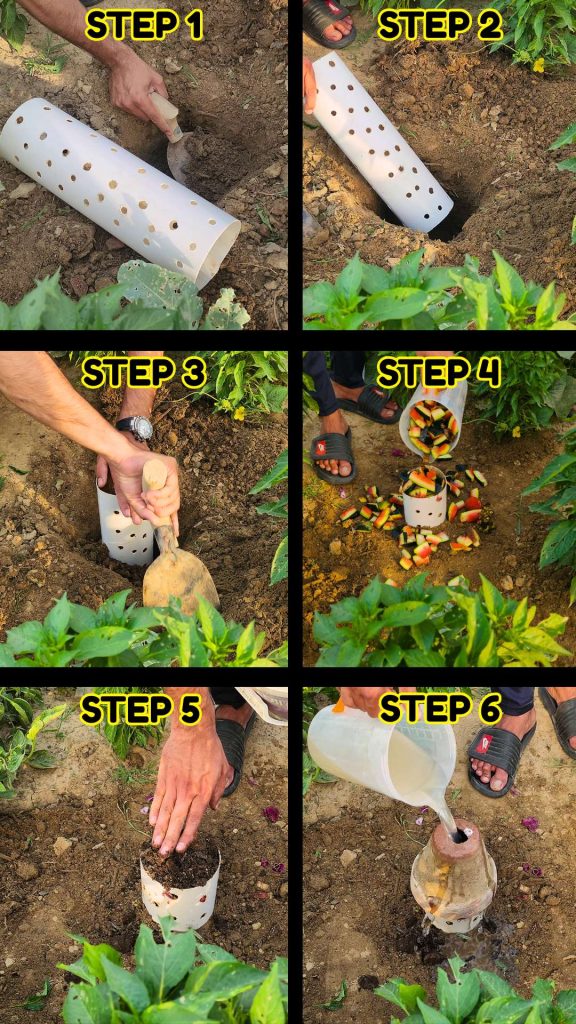
You will also need a soldering iron or any heated tool to make holes in the pipe. These holes are important because they allow airflow and create entry points for earthworms. Apart from that, you only need basic garden tools like a shovel for digging and soil for filling.
For composting material, collect kitchen waste such as fruit peels, vegetable scraps, tea leaves, and coffee grounds. Having a small amount of compost or vermicompost is also helpful because it speeds up decomposition. A terracotta pot or simple lid can be used to cover the top and protect the system from pests and direct exposure.
How to Install the PVC Pipe in Garden Soil
Start by selecting a good spot in your garden bed or container. Dig a hole deep enough so that most of the pipe can go underground. The pipe should sit firmly, with only 3 to 4 inches remaining above the soil surface. This exposed part will be used for adding waste later.
Once the pipe is placed in the hole, fill the surrounding area with soil and press it gently. The goal is to make sure the pipe stands straight and stable. If it tilts, the waste inside may not distribute evenly, so proper installation matters.
After setting it up, you essentially have a vertical compost chamber built inside your garden. It does not take up much surface space, but it connects directly with plant roots around it. This is what makes the system so efficient compared to traditional composting methods.
What Kitchen Waste Works Best for This System
Not all kitchen waste behaves the same, so choosing the right materials helps maintain balance inside the pipe. Soft organic waste works best. This includes vegetable peels, fruit skins, leftover cooked vegetables without oil, tea leaves, coffee grounds, and crushed eggshells.
It is better to chop everything into smaller pieces before adding it. Smaller pieces break down faster and reduce the chance of smell or slow decomposition. Avoid adding too much oily food, meat, or dairy products, as these can attract pests and create unwanted odors.
Dry materials can also be added occasionally to balance moisture. Things like dry leaves or shredded paper help keep airflow and prevent the inside from becoming too wet. A balanced mix of wet and dry waste keeps the system healthy and active for longer periods.
How Decomposition Happens Inside the Pipe
Once kitchen waste is inside the pipe, the breakdown process begins naturally. Moisture from watering or rain enters through the top opening and slowly moves through the organic material. This moisture activates microbial activity, which starts breaking down the waste.
At the same time, oxygen enters through the small holes in the pipe. This prevents the waste from becoming compact and smelly. The combination of air, moisture, and organic matter creates ideal conditions for decomposition. Over time, the waste softens, breaks apart, and turns into nutrient-rich compost material.
Unlike surface compost piles, this process is more contained and stable. The underground environment helps maintain temperature and moisture, which speeds up decomposition without requiring frequent turning or manual effort.
Role of Earthworms and Microorganisms
Earthworms play a major role in this system. Because of the holes in the pipe, worms from surrounding soil can easily enter and exit. Once inside, they feed on decomposing kitchen waste and convert it into nutrient-rich castings. These castings are one of the best natural fertilizers for plants.
Microorganisms such as bacteria and fungi also work continuously inside the pipe. They break down complex organic matter into simpler forms that plants can absorb. Together with worms, they form a complete natural recycling system underground.
The more active this biological system becomes, the faster the waste turns into usable nutrients. This is why adding a small amount of compost or vermicompost at the start is helpful—it introduces beneficial organisms that speed up the entire process.
How Nutrients Spread to Nearby Plants
One of the most useful parts of this system is how nutrients move into surrounding soil. When water enters the pipe, it mixes with decomposed organic matter and forms a nutrient-rich liquid. This liquid slowly seeps out through the holes into nearby soil layers.
Plant roots growing around the pipe naturally absorb these nutrients. Over time, this creates a feeding zone where plants receive a continuous supply of organic fertilizer. This process is often compared to compost tea because it works in a similar way, delivering dissolved nutrients directly into the root zone.
This steady release of nutrition helps plants grow stronger, greener, and more productive without the need for chemical fertilizers.
Recent Posts
Watering a garden may seem like a simple task, but doing it efficiently can make a big difference in plant health and water usage. Many gardeners spend money on sprinklers, irrigation systems, and...
I Mixed Dish Soap, Vinegar & Oil and Sprayed My Plants… The Results Shocked Me
Many home gardeners look for simple and affordable ways to keep their plants healthy without relying on strong chemical pesticides. One popular method is a homemade plant spray made from everyday...