
Keeping garden plants safe from pests is not always easy. Young fruit trees and soft vegetable plants are especially at risk. Birds can peck at new leaves and fruits, while slugs and snails slowly destroy plants from the ground. Many people look for safe and low-cost solutions that do not involve chemicals. One simple material that can help is aluminum foil.
Aluminum foil is cheap, easy to find, and very flexible in use. With a little creativity, it can act as a protective tool for your garden. Two simple methods stand out: using foil as a bird deterrent and using it as a barrier against crawling pests like slugs and snails. Both methods are easy to set up and work well in home gardens.
Why Aluminum Foil Works in the Garden
Aluminum foil has a shiny surface that reflects light strongly. This reflection can confuse or scare certain pests, especially birds. When sunlight hits moving foil, it creates flashing light patterns that change quickly. Many birds do not like sudden light changes, so they stay away from the area.
Another useful feature of foil is its smooth and slippery surface. Soft-bodied pests like slugs and snails find it difficult to crawl across it. They prefer rough, damp surfaces where they can grip easily. Foil creates a surface they avoid, which helps protect plant stems and lower leaves.
Because it is cheap and easy to replace, aluminum foil is a practical option for small gardens, backyard plants, and fruit trees.
Protecting Fruit Trees from Birds Using Foil
Birds often become a problem when fruit trees start producing new leaves or small fruits. They peck at tender parts of the plant and can damage an entire branch. Instead of using nets or chemicals, a simple foil method can help reduce this issue.
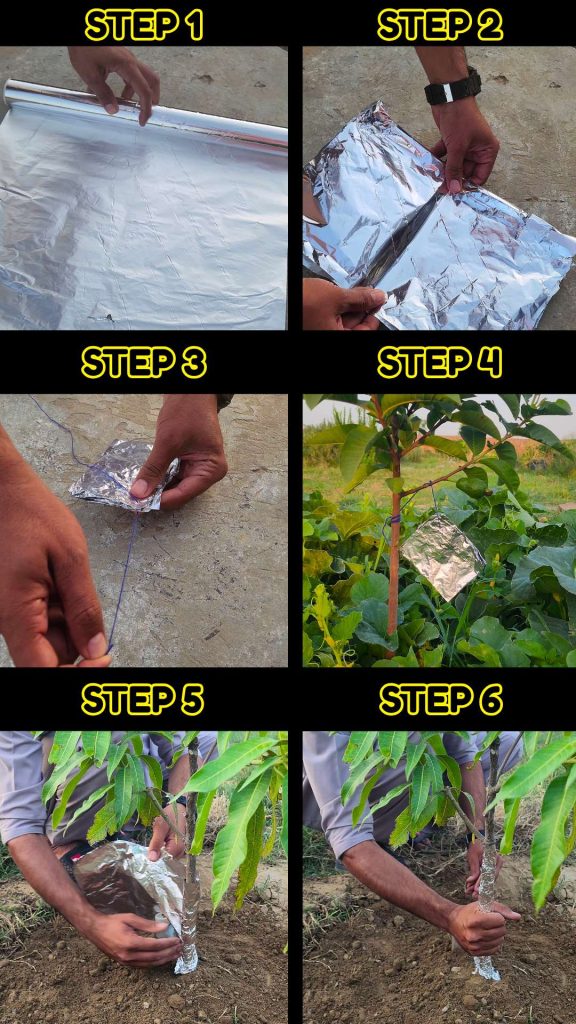
To make a bird deterrent, take a sheet of aluminum foil and fold it several times. Folding gives it strength so it does not tear easily in wind. After folding, cut a small hole in one corner using a pin or toothpick. Pass a piece of string or thread through the hole and tie it tightly.
Hang this foil piece on branches of the fruit tree. You can also hang several pieces around the tree for better coverage. Make sure they can move freely in the air.
When the wind blows, the foil starts spinning and shaking. As it moves, it reflects sunlight in different directions. These quick flashes of light make birds uncomfortable. They see the movement and light as a warning sign and often avoid landing on the tree.
This method works best during the early growing stage of fruit trees when they are most vulnerable. It does not harm the plant or the birds. It simply discourages them from coming too close.
Using Foil as a Slug and Snail Barrier
Slugs and snails are common garden pests that cause damage at night. They move slowly but can destroy young plants by eating leaves and stems. They are most active in damp soil and shaded areas.
To stop them, aluminum foil can be wrapped around the base of plant stems. Start from the ground and wrap a small section upward. The foil should be firm but not tight enough to damage the plant.
This creates a physical barrier that is hard for slugs and snails to cross. Their soft bodies do not move well on smooth and sharp surfaces. The foil makes it difficult for them to grip and climb.
In many cases, they turn away before reaching the leaves. This helps protect vegetables, herbs, and young plants growing close to the ground.
This method works especially well in small vegetable gardens and potted plants. It is also useful for protecting seedlings, which are often the most vulnerable stage of plant growth.
Combining Both Methods for Better Protection
Using only one method may help, but combining both gives better results. Hanging foil protects the upper parts of fruit trees from birds. At the same time, foil wrapped around stems protects the lower parts from crawling pests.
This creates a simple full-plant protection system. The top of the plant is guarded against flying pests, while the base is protected from ground pests. Together, they reduce the chances of damage from different directions.
Gardeners can adjust the number of foil pieces depending on plant size. Larger trees may need more hanging pieces, while small plants may only need stem wrapping.
Recent Posts
The Secret Homemade Liquid Fertilizer That Can Boost Flowering, Fruiting, and Plant Growth Naturally
Many of the materials we throw away in the kitchen still contain nutrients that can be useful in the garden. Onion peels and potato peels are good examples. Instead of sending them to the trash, you...
I Mixed Yogurt, Molasses & Compost Tea for 24 Hours… The Results Changed My Garden Soil
Healthy soil is much more than a mixture of sand, silt, clay, and organic matter. It is a living ecosystem filled with bacteria, fungi, protozoa, nematodes, and many other microscopic organisms....