
Many home gardeners look for simple and affordable ways to keep their plants healthy without relying on strong chemical pesticides. One popular method is a homemade plant spray made from everyday household ingredients like dishwashing soap, white vinegar, cooking oil, and water. This mixture is often used in home gardens and vegetable patches to manage small insect problems and support general plant care. It is easy to prepare, budget-friendly, and uses items most people already have at home.
This type of spray is especially useful for gardeners who prefer natural pest control methods. Instead of buying commercial products, they create a simple solution that can be mixed in minutes and applied when needed. It is commonly used for small insects like aphids and soft-bodied pests that usually attack leaves and stems.
Ingredients and Their Role in the Mixture
Each ingredient in this homemade spray has a specific purpose, and understanding them helps in using the mixture correctly.
Dishwashing soap is the main cleaning and insect-contact ingredient. When diluted, it helps break down the protective outer layer of small insects, making it harder for them to survive on plant surfaces. Soap also helps the entire mixture spread evenly on leaves instead of sliding off. However, it must always be used in small amounts because too much can damage sensitive plants.
White vinegar is another important part of the mixture. It helps balance the solution and improves its spreading ability on plant surfaces. Vinegar also contributes to the overall effectiveness of the spray when dealing with minor pest issues. It should always be measured carefully because a high concentration can be too strong for delicate plants.
Cooking oil is added to help the mixture stick to leaves for a longer time. Oil creates a thin coating that allows the spray to remain on the plant surface instead of evaporating quickly. It also helps cover insects more effectively when sprayed directly. Any common cooking oil can be used, such as sunflower or vegetable oil.
Water is the base of the mixture. It dilutes all the ingredients so they are safe for plants when applied properly. Without water, the mixture would be too strong and could harm plant leaves. Water also helps make the spray easy to apply through a spray bottle.
Step-by-Step Preparation Process
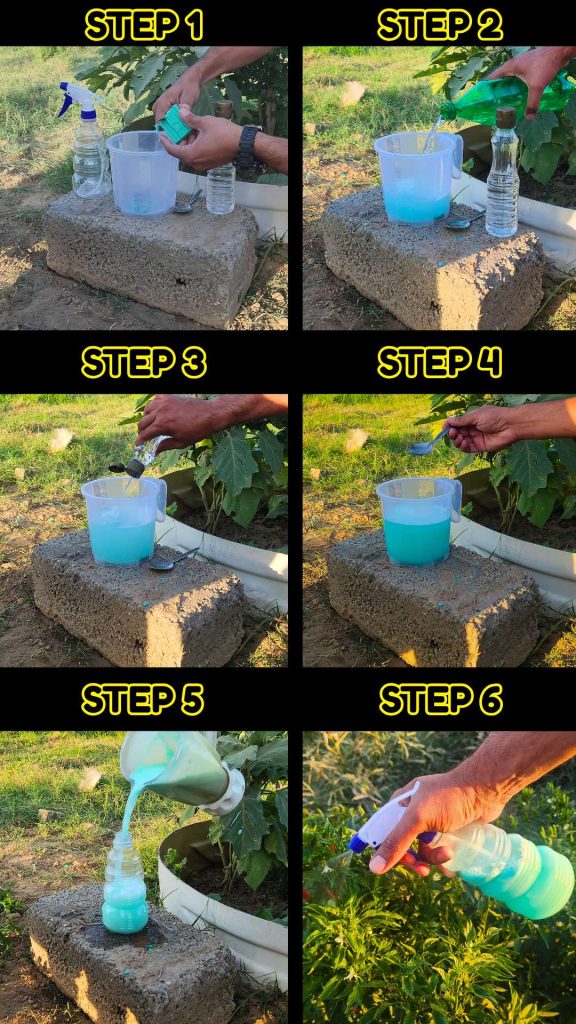
Preparing this homemade plant spray is simple and does not require any special tools. A clean container is needed first, preferably one that can hold at least one liter of liquid. Cleanliness is important because leftover chemicals or dirt can affect the final mixture.
Start by adding three to four tablespoons of dishwashing soap shavings into the container. It is better to use small soap pieces so they dissolve faster. Large chunks can cause clogging in the spray bottle later, which makes application difficult.
Next, pour in one liter of clean water. This helps dissolve the soap and forms the base of the mixture. After that, add around 100 milliliters of white vinegar. The vinegar should be measured carefully to avoid making the solution too strong.
Then add about two tablespoons of cooking oil. At this stage, the mixture will start to show separation because oil and water do not naturally mix. This is normal and will be fixed in the next step.
Mixing is the most important part of preparation. The solution should be blended thoroughly using a spoon, whisk, or even a blender if available. The goal is to create a smooth, even liquid without visible oil layers or soap chunks. If needed, blending for a short time helps combine everything properly.
Once the mixture looks uniform, it should be checked carefully. If any solid soap pieces remain, it is better to strain the liquid through a cloth or fine mesh. This prevents clogging in spray bottles and ensures smooth spraying during use.
Finally, pour the mixture into a clean spray bottle. The bottle should be free from any old chemicals or residues. The spray is now ready to use in the garden.
How to Use the Spray in the Garden
Proper application is just as important as preparation. The spray should be used directly on plant leaves, targeting both the upper and lower surfaces. Many insects tend to hide under leaves, so covering both sides improves effectiveness.
It is better to spray lightly rather than soaking the plant completely. A thin, even coating is enough to get the desired effect. Over-spraying can sometimes stress plants, especially in hot weather.
The best time to apply the spray is early morning or late afternoon. During these hours, the sun is not too strong, which reduces the risk of leaf damage and allows the solution to stay longer on the plant surface. Spraying during extreme heat should be avoided.
Before applying it to the entire garden, it is always recommended to test the spray on a small section of a plant first. Wait at least 24 hours and observe the result. If there is no damage or discoloration, it can be safely used on other plants.
Regular inspection of plants is also helpful. If pests return, the spray can be applied again after a few days. It works best as part of a routine plant care system rather than a one-time solution.
Recent Posts
You don't need to buy a lot of compost or fertilizer to prepare a good garden bed. If you have leaves, kitchen scraps, and other plant waste, you can use them to improve your soil and feed future...
I had an old rice storage sack that I wasn't using anymore, so I decided to turn it into two small raised garden beds. I cut the sack in half, used some bamboo sticks to hold everything in place, and...