
Banana peels and coffee grounds are usually thrown away without a second thought, but they are actually full of nutrients that plants can use. When used correctly, they can be turned into a simple liquid fertilizer that supports healthier soil and stronger plant growth. This method is useful for home gardens, vegetable beds, and even small pots on balconies or rooftops. It is a practical way to recycle waste and reduce the need for chemical fertilizers.
Banana peels contain potassium, phosphorus, calcium, and small amounts of magnesium. These nutrients help plants develop strong roots, improve flowering, and support better fruit production. Coffee grounds add nitrogen, which is important for green leaf growth. When these two ingredients are combined in water and left to break down, they release nutrients into a liquid form that plants can easily absorb through the soil.
This approach is simple, low-cost, and suitable for anyone who wants to improve plant growth using natural materials found at home.
Preparing Banana Peels for Fertilizer
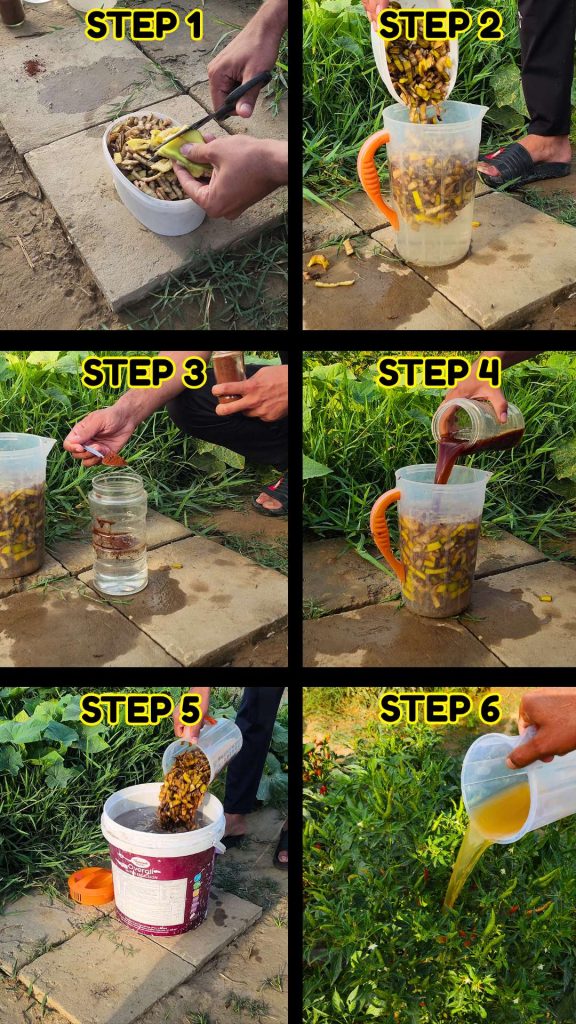
The first step is collecting banana peels. Around 10 banana peels are enough for a small batch. It is better to use fresh peels because they break down faster and release nutrients more effectively. After collecting them, cut the peels into small pieces. This step is important because smaller pieces increase the surface area, helping nutrients dissolve into water more quickly.
Once chopped, place the banana pieces into a clean container. Add about 1.5 liters of water to the container. The water helps start the breakdown process and allows nutrients to slowly release from the peels. At this stage, the mixture already begins to soften the banana material, preparing it for fermentation.
Using a proper container is important. It should be large enough to allow mixing and leave space at the top so the liquid does not overflow during fermentation. A plastic or glass container works well for this process.
Adding Coffee for Extra Nutrients
The next step is preparing the coffee mixture. Take half a liter of water and add around 3 tablespoons of expired coffee or used coffee grounds. Used coffee grounds are better because they still contain useful nitrogen and organic matter that supports plant growth.
Stir the coffee mixture well until it is evenly distributed in the water. Once ready, pour it into the container with banana peels and water. Mix everything properly so that the coffee and banana peels combine well.
At this point, two important nutrient sources are working together. Banana peels provide potassium and phosphorus, while coffee provides nitrogen. This combination helps create a balanced natural fertilizer that supports both root growth and leafy development.
Fermentation Process and Waiting Period
After mixing everything, cover the container loosely. It is important not to seal it tightly because gases will form during the decomposition process. A loose cover allows air circulation while keeping insects and dust out.
Place the container in a shaded area away from direct sunlight. Sunlight can affect the fermentation process and may cause the mixture to spoil too quickly. The ideal waiting time is at least 48 hours. During this period, the water slowly absorbs nutrients from both banana peels and coffee.
As the mixture sits, natural microbes begin breaking down the organic material. This process releases nutrients into the water and creates a mild-smelling liquid that is rich in plant food. The longer it sits (within reason), the stronger the solution becomes.
Filtering and Preparing the Liquid Fertilizer
After 48 hours, the mixture is ready for use. The liquid will likely have changed color and may have a stronger smell. This is normal and indicates that fermentation has taken place.
Pour the mixture into a larger container. You can strain out the solid banana pieces if you prefer a cleaner liquid. These leftover solids can also be added to compost or buried in soil where they will continue to break down and feed the ground.
The liquid collected at this stage is a concentrated organic fertilizer. It should not be used directly on plants because it is too strong and may damage roots if applied without dilution.
Dilution and Safe Application for Plants
Before using the fertilizer, it must be diluted with clean water. A good starting ratio is one part fertilizer to three to five parts water. This helps reduce strength and makes it safe for plants to absorb nutrients gradually.
For young plants or seedlings, use more water to make the solution weaker. For mature vegetable plants or fruiting plants, a slightly stronger mix can be used. It is always better to start with a weaker solution and adjust based on plant response.
Apply the diluted mixture directly to the soil around the base of plants. Avoid pouring it on leaves because the roots are responsible for nutrient absorption. Watering early in the morning or late in the evening is best because the soil can absorb nutrients more effectively during cooler temperatures.
Benefits for Vegetable and Home Gardens
This natural fertilizer works well for many types of plants, especially vegetables. Tomato plants, chili plants, cucumbers, spinach, and other leafy greens respond well to this type of feeding. Over time, plants become greener, stronger, and more productive.
One of the main advantages is improved soil health. Regular use helps increase microbial activity in the soil, which improves nutrient cycling and soil structure. This leads to better water retention and healthier root systems.
Another benefit is reduced dependency on chemical fertilizers. Many store-bought fertilizers provide quick results but can damage soil over time if overused. This natural alternative supports long-term soil balance and sustainability.
Regular Use and Long-Term Results
This fertilizer can be used every 10 to 15 days depending on plant needs. There is no need to apply it too frequently. Overuse is not recommended because even natural fertilizers can create imbalance if applied in excess.
With consistent use, visible improvements can be seen in plant growth. Leaves become greener, stems become stronger, and flowering improves in many plants. Fruit-bearing plants often produce better yields when supported with balanced nutrients.
The results may not be instant, but they build gradually over time. Healthy soil leads to healthy plants, and this method helps support that natural cycle.
Recent Posts
The Secret Homemade Liquid Fertilizer That Can Boost Flowering, Fruiting, and Plant Growth Naturally
Many of the materials we throw away in the kitchen still contain nutrients that can be useful in the garden. Onion peels and potato peels are good examples. Instead of sending them to the trash, you...
I Mixed Yogurt, Molasses & Compost Tea for 24 Hours… The Results Changed My Garden Soil
Healthy soil is much more than a mixture of sand, silt, clay, and organic matter. It is a living ecosystem filled with bacteria, fungi, protozoa, nematodes, and many other microscopic organisms....