
Watering plants might seem simple, but doing it the right way makes a big difference in how healthy your garden grows. Many gardeners struggle with two common problems: overwatering and water waste. When water is poured from the top, a lot of it evaporates quickly, especially in hot weather. Some of it also runs off before it reaches the roots. That means plants don’t always get the steady moisture they actually need.
Plastic bottle drip irrigation solves this problem in a very simple way. Instead of giving water all at once, it releases water slowly, drop by drop, right into the soil. This keeps the root zone consistently moist without flooding it. It also reduces the need for daily watering, which saves both time and effort.
Another reason this method is so useful is that it uses materials you already have at home. Old plastic bottles, syringe needles, or basic watering spikes can be reused instead of being thrown away. This makes it not only practical but also environmentally friendly.
Basic Idea Behind Slow Drip Watering
The concept behind drip irrigation is straightforward. Plants absorb water best when it reaches their roots slowly and steadily. When water is delivered too quickly, the soil becomes saturated on top but dry underneath. This forces roots to stay near the surface, making plants weaker and more sensitive to heat.
Slow drip watering changes this pattern. By releasing water gradually, it allows moisture to seep deep into the soil. This encourages roots to grow downward, making plants stronger and more stable. It also reduces evaporation because water is not sitting on the surface for too long.
Plastic bottles work perfectly for this system because they can store water and release it in a controlled way. Depending on how you set them up, they can drip for hours or even days without needing attention.
First Method Using a Watering Spike System
One of the easiest ways to create a drip system is by using a plastic bottle with a watering spike attachment. This method gives better control over water flow and is ideal for regular garden plants.
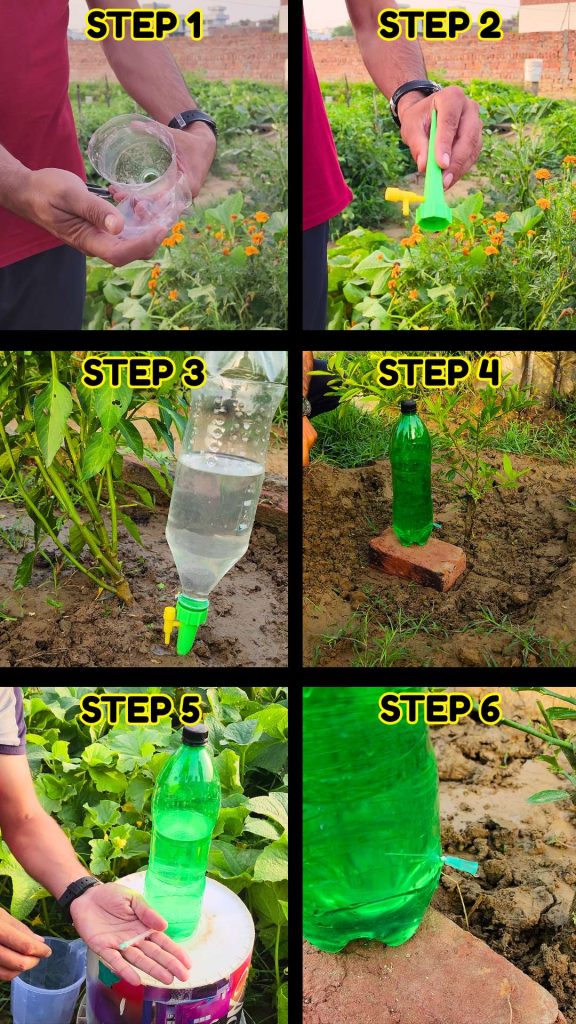
Start by taking an empty plastic bottle. Carefully cut around the bottom part of the bottle, but do not cut it completely off. Leave a small section attached so the bottom acts like a flap. This flap will help you refill the bottle easily without removing it from the soil.
Next, remove the bottle cap and attach a watering spike to the opening. These spikes are designed to regulate water flow and are usually pointed so they can be inserted into the soil. Make sure the spike is tightly fixed so there are no leaks.
Once the spike is attached, turn the bottle upside down. The spike should face downward toward the soil. Push it into the ground next to your plant. Make sure it is stable and standing straight so it does not fall over when filled.
After that, open the flap at the bottom and fill the bottle with water. Once it is full, close the flap again. Most spikes come with a small valve that lets you adjust how fast the water drips. Turn it slowly until you get a steady, slow release.
This setup is useful because it gives full control. You can adjust the water speed depending on the plant’s needs and weather conditions. In hot weather, you can increase the flow slightly, and in cooler weather, you can slow it down.
Second Method Using a Needle Drip System
The second method is even simpler and requires almost no extra equipment. It works well for small gardens or individual plants where you want a low-cost solution.
Start with a clean plastic bottle filled with water. Keep the cap on while filling it so there is no leakage. Once the bottle is full, take a small syringe needle and carefully insert it into the side of the bottle near the bottom. The hole should be very small so that water only drips slowly.
The needle stays fixed in place and acts as a controlled outlet. After inserting it, place a brick or any stable object under the bottle. This raises the bottle slightly above the ground.
Position the bottle near the plant roots and make sure it is stable. The raised height helps create natural pressure inside the bottle. Gravity pushes the water out slowly through the needle.
Once set up, water will start dripping gradually into the soil. The drip rate is very slow, which is exactly what makes this method effective. It keeps the soil moist without flooding it and works continuously until the bottle becomes empty.
This method is especially useful for people who want a simple system without spending money on extra tools. It may not offer adjustment control like the first method, but it still provides steady hydration for plants.
Benefits of Using Bottle-Based Irrigation Systems
One of the biggest benefits of these systems is water saving. Since water goes directly into the soil, very little is wasted through evaporation. This is especially helpful in hot climates where water dries quickly.
Another advantage is time saving. Instead of watering plants multiple times a day, you can fill a bottle and let it handle watering for hours or even a full day. This makes gardening easier, especially for people who have busy schedules.
These systems also improve plant health. Because water is delivered slowly, roots grow deeper into the soil. Deep roots make plants stronger and more resistant to heat and drought conditions.
Cost is another major benefit. There is almost no expense involved. Most materials are recycled from household waste, making it a budget-friendly gardening solution.
Best Situations to Use These Methods
Plastic bottle drip irrigation works best in home gardens, vegetable patches, and potted plants. It is especially useful during summer when soil dries out quickly and plants need constant moisture.
It is also helpful for people who travel often or cannot water their plants regularly. Once set up, the system continues working without daily attention.
For larger gardens, multiple bottles can be placed around different plants to create a simple network of slow watering points. Each plant can receive water based on its individual needs.
Recent Posts
You don't need to buy a lot of compost or fertilizer to prepare a good garden bed. If you have leaves, kitchen scraps, and other plant waste, you can use them to improve your soil and feed future...
I had an old rice storage sack that I wasn't using anymore, so I decided to turn it into two small raised garden beds. I cut the sack in half, used some bamboo sticks to hold everything in place, and...