
The tomato bed started with a simple plan. We thought the plants were determinate tomatoes, so we expected them to stay small and compact. But as the days passed, it became clear that something was different. The plants kept growing taller and wider without stopping. They spread in every direction, almost like they had their own plan. Instead of staying inside the bed, they started moving outwards and taking over the nearby walking space.
What made it more interesting was the amount of growth happening at the same time. Flowers were coming in continuously, and small green tomatoes were forming all over the plant. So even though the plants looked healthy and productive, the structure of the bed became messy. The branches started overlapping, and it became difficult to walk around without touching the plants.
This kind of growth is common when tomato varieties are not what we expect. Indeterminate types especially grow without a fixed limit. They keep producing vines, flowers, and fruits together. Without support, they easily turn into a tangled mess. That is exactly what happened here, and it became clear that we needed to take control before the bed became completely unmanageable.
Cleaning the Bed and Removing Weeds
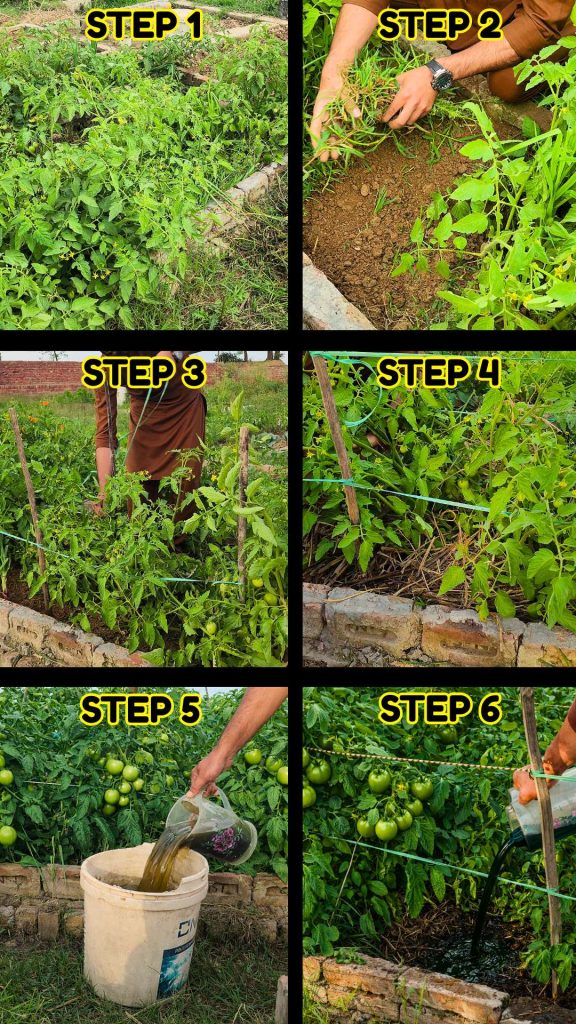
The first step to fix the situation was cleaning the entire bed. We started by removing all the weeds growing between the tomato plants. In a garden like this, weeds are not just small unwanted plants. They grow fast, take strong hold in the soil, and compete directly with vegetables for water and nutrients.
We made sure to pull out each weed properly, including the roots. If the roots are left behind, they grow again very quickly. The idea was to give the tomato plants full space and nutrition without any competition. As we cleaned, the difference was already visible. The soil looked more open, and air could move freely between the plants.
Cleaning also helped us understand the actual structure of the tomato bed. Sometimes when weeds take over, it becomes hard to see how the main plants are growing. Once everything was cleared, we could clearly see which branches needed support and which areas were too crowded.
This step may look simple, but it makes a huge difference in vegetable gardening. A clean bed always performs better because the main plants get full access to resources. Without this step, any further effort like fertilizing or supporting does not give full results.
Building Bamboo Support for Control
After cleaning, the next important step was to bring structure into the bed. The tomato plants were already spreading into pathways, so we needed a proper support system. Instead of using expensive materials, we used bamboo sticks and rope, which are easily available and strong enough for garden use.
We placed bamboo sticks around the bed and tied them together to form a simple cage-like structure. This acted like a boundary for the plants. Once the frame was ready, we gently guided the tomato branches inside it. This helped control their direction and stopped them from falling outside the bed.
Tomato plants become heavy when they start producing fruits. Without support, branches bend and sometimes break. This not only affects plant health but also reduces production. The bamboo structure helps keep everything upright. It also improves air circulation between plants, which reduces chances of fungal problems.
One good thing about this method is flexibility. As the plants grow taller, we can easily adjust ropes and add more support. It does not require complicated tools or techniques. Just simple materials and a little time can completely change how the bed looks and performs.
Mulching to Protect Fruits and Soil
Once the structure was in place, attention shifted to the soil surface. We added a thick layer of straw mulch around the tomato plants. This step is often ignored, but it plays a very important role in healthy tomato growth.
When tomato fruits grow and become heavy, they often hang close to the soil. If they touch wet soil, they can start rotting or developing diseases. Mulch creates a protective layer between the fruit and the soil. This keeps the tomatoes clean and safe even during watering.
Straw mulch also helps in moisture control. It reduces water evaporation from the soil, which means the soil stays moist for longer periods. This is very helpful during hot weather when plants need consistent water supply.
Another benefit is weed control. After mulching, new weeds find it difficult to grow because sunlight does not reach the soil easily. This reduces maintenance work in the long run.
Over time, the mulch slowly breaks down and adds organic matter back into the soil. This improves soil structure and supports better plant growth naturally. It is a simple step, but it brings long-term benefits for any vegetable garden.
Homemade Liquid Fertilizer for Strong Growth
After fixing structure and soil protection, we focused on plant nutrition. For this, we used a homemade liquid fertilizer made from garden waste. We collect weeds removed from the garden and combine them with compost tea. This mixture is left to break down in water until it becomes rich in nutrients.
This liquid fertilizer is very useful because it recycles waste back into the garden. Instead of throwing weeds away, we turn them into plant food. It is natural, cost-free, and effective for vegetable plants like tomatoes.
When applied to the soil, the plants respond quickly. Leaves become greener, growth becomes stronger, and flowering improves. Since tomatoes are heavy feeders, they benefit a lot from regular feeding like this.
Unlike chemical fertilizers, this homemade version improves soil health over time. It encourages natural microbial activity in the soil, which helps plants absorb nutrients better. It is a slow but steady improvement that builds a stronger garden system.
We use this fertilizer for almost all plants in our garden. It keeps the soil alive and reduces dependency on external inputs. Over time, the garden becomes more balanced and self-sustaining.
Recent Posts
Watering a garden may seem like a simple task, but doing it efficiently can make a big difference in plant health and water usage. Many gardeners spend money on sprinklers, irrigation systems, and...
I Mixed Dish Soap, Vinegar & Oil and Sprayed My Plants… The Results Shocked Me
Many home gardeners look for simple and affordable ways to keep their plants healthy without relying on strong chemical pesticides. One popular method is a homemade plant spray made from everyday...