
Tomatoes are one of the most rewarding plants to grow at home, but they are also sensitive right after transplanting. Many gardeners notice that seedlings look healthy in pots, but once they are moved into the soil, they suddenly slow down, droop, or stop growing for several days. This is mainly because of transplant shock. The plant struggles to adjust from controlled conditions to open soil, temperature changes, and new moisture levels.
This method is designed to solve that problem from the very beginning. Instead of just placing the plant in the soil and hoping it adapts, we create a controlled environment around the root zone. This helps the plant settle faster and start growing without stress. At the same time, we also give it extra support so that wind or heavy growth does not cause bending or damage later.
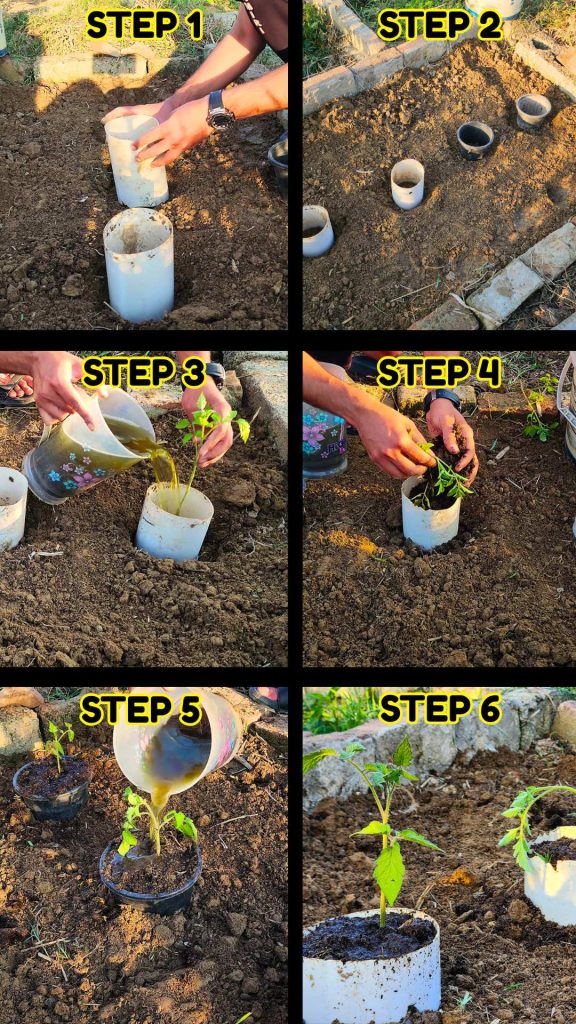
Preparing the Garden Bed Properly
The first step is preparing the garden bed in the right way. Tomatoes always perform better in loose, well-drained, and nutrient-rich soil. So before planting anything, the soil should be turned and loosened properly. Removing stones, weeds, and hard clumps is important because young roots need soft soil to spread easily.
After preparing the bed, small planting holes are made where each tomato plant will go. These holes should not be too shallow. A little extra depth is important because we are going to use a pipe or container inside the hole. This depth also allows the plant to develop a stronger root base from the beginning.
Good soil preparation is often ignored, but it is one of the biggest reasons behind healthy tomato growth. When soil is rich and loose, plants adjust faster and show better early development.
Using a Pipe or Container for Structure and Support
One unique part of this method is the use of a plastic pipe, cut bottle, or small container. This is placed inside the planting hole. The main purpose of this structure is to create a guided space for the plant’s early growth.
The pipe should be open from both ends so roots can move freely downward and outward. It should also stand straight and firm inside the hole. This simple structure works in two ways. First, it supports the plant physically so it does not fall over. Second, it creates a protected zone where soil and moisture stay more stable.
For young tomato seedlings, this kind of protection makes a big difference. Instead of struggling with external conditions immediately, the plant gets a smoother transition into soil life.
Placing the Tomato Seedling Carefully
Once the structure is ready, the tomato seedling is placed inside the pipe. At this stage, handling should be very gentle. Tomato stems and roots are soft, and any damage can slow down growth later.
The plant should be positioned in the center so it grows straight upward. Keeping it straight is important because crooked plants often become weak when they start producing fruit later.
Before adding soil, a small amount of water is poured inside the pipe. This step helps reduce transplant stress. The roots get immediate moisture, which makes the plant feel more stable in its new environment. This early hydration is one of the key reasons this method works better than normal planting.
Filling the Pipe with Soil and Compost Mix
After watering, the pipe is filled with a mixture of garden soil and compost. The soil should be loose, soft, and rich in organic matter. Compost improves nutrient content and also supports beneficial microbes in the soil.
As the soil is added, it should be gently pressed so that there are no air gaps. Air pockets can cause uneven root growth and reduce plant stability. However, the soil should not be packed too tightly. Roots need space and air to grow properly.
This combination of soil and compost creates a balanced environment. It provides nutrients while also keeping the structure light enough for roots to expand easily.
Deep Planting for Stronger Root Development
One of the most powerful parts of this method is deep planting. More than half of the tomato plant is buried inside the soil. Many beginners feel this is too much, but tomatoes are special plants.
Tomatoes can grow new roots from their buried stem. This means the deeper you plant them, the more root points they create. A larger root system leads to better water absorption, stronger nutrient uptake, and overall healthier growth.
Deep planting also improves stability. When wind blows, shallow-rooted plants often fall or bend. But a deeply rooted tomato plant stays firm and upright. Over time, this results in stronger plants that can support heavy fruit without collapsing.
Watering After Planting and Soil Settling
Once planting is complete, another round of watering is done. This is important because it helps the soil settle properly around the roots. Water removes any remaining air pockets and ensures that the roots are in full contact with moist soil.
This stage is also critical for reducing transplant shock. A well-watered plant adjusts faster and begins root expansion sooner. In the first few days after planting, consistent moisture helps the plant recover and stabilize.
However, overwatering should be avoided. The goal is to keep the soil moist, not waterlogged. Balanced watering is key for healthy tomato growth.
Using Natural Nutrient-Rich Water for Feeding
In this method, a special type of water is also used. It is rainwater collected in a bucket and mixed with garden weeds. Over time, the weeds start decomposing and release nutrients into the water. This turns it into a mild natural fertilizer.
When this water is used for irrigation, it provides organic nutrients directly to the soil. It also improves microbial activity, which is important for long-term soil health. Healthy soil microbes help break down organic matter and make nutrients more available to plants.
This natural feeding method supports early growth without using chemical fertilizers. It is especially useful in home gardens where organic growing is preferred.
Early Growth and Plant Stability
After a few days, the plant starts adjusting to its new environment. Instead of drooping or showing stress, it begins to stand stronger. The roots slowly expand inside the pipe and surrounding soil, creating a stable base.
Because of deep planting and protected structure, the plant develops faster compared to normal transplanting methods. Leaves appear healthier, stems become thicker, and overall growth becomes more consistent.
The support structure also helps protect the plant from wind damage. Even young plants remain upright, which is very important in open garden areas.
Long-Term Benefits of This Method
As the plant grows, the advantages of this method become more visible. Strong root systems lead to better flowering and fruit production. Plants can handle stress better during heat or wind. They also require less maintenance because they are naturally more stable.
Another major benefit is improved yield. Since the plant starts strong from the beginning, it continues growing without interruption. This often results in more flowers, better fruit set, and higher overall production.
This method is especially helpful for beginners who struggle with plant survival after transplanting. It simplifies early care and reduces common mistakes.
Recent Posts
Why I Am Burying Plastic Pipes In My Garden Beds (And Why You Should Too)
Every gardener wants rich, dark soil that helps plants grow big and strong. While buying bagged fertilizer is easy, the best way to feed your garden is by working with nature. Soil is not just dirt;...
How to Make a DIY Drip Irrigation System for $0 Using Old Plastic Bottles!
Commercial drip irrigation setups are often praised as the ultimate solution to this problem, and for good right reasons. They deliver moisture slowly and precisely. However, these commercial systems...