
Every time a lawn is mowed or weeds are pulled from the garden, most people think they are dealing with waste. Bags get filled, piles are burned, or everything is dumped somewhere far from the garden. What many gardeners fail to realize is that grass clippings and soft green weeds are one of the easiest sources of free organic material available right at home. Instead of throwing them away, they can be turned into fertilizer, mulch, and even rich planting beds.
Fresh lawn grass contains nitrogen, moisture, and minerals that plants need for healthy growth. Many common weeds also pull nutrients from deep inside the soil and store them in their leaves and stems. Once these materials break down, those nutrients become available again for vegetables, herbs, flowers, and fruit plants.
Using grass and weeds in the garden is not only useful for plant growth, but it also helps reduce waste, improve soil structure, increase microbial activity, and save money. A healthy garden does not always depend on expensive fertilizers and store-bought products. Often the best materials are already lying around in the yard.
There are three very practical ways to use lawn clippings and weeds effectively. Each method works differently, but all of them help build healthier soil and stronger plants naturally.
Making a Powerful Liquid Fertilizer Using Grass and Weeds
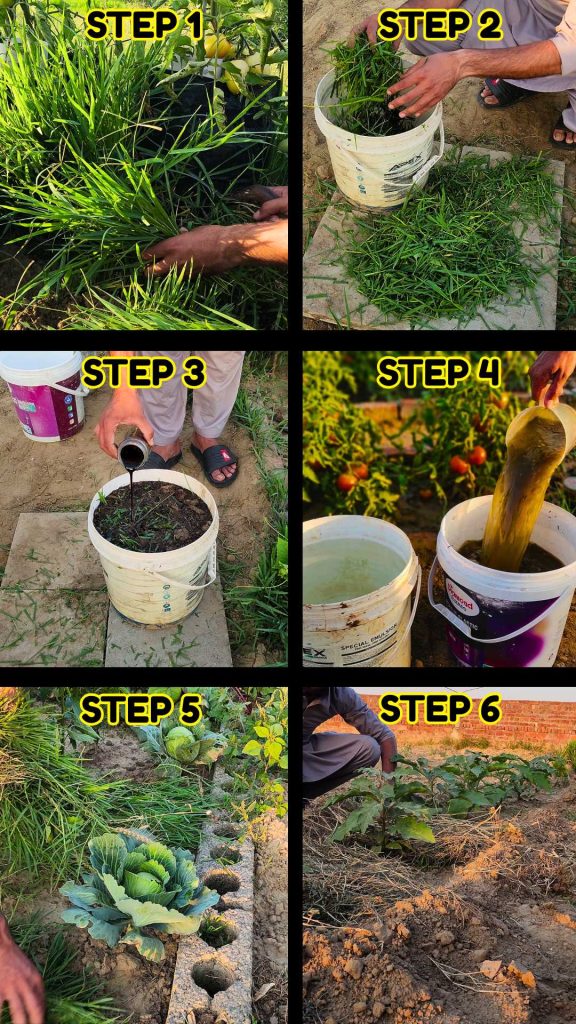
One of the best uses for lawn clippings and weeds is turning them into a nutrient-rich liquid fertilizer. This method is simple, inexpensive, and highly effective for feeding plants naturally. Grass breaks down quickly in water and releases nutrients that plants can absorb easily through their roots.
To make this fertilizer, start with a large container such as a 5-gallon bucket, plastic drum, or any similar container. Fill the container with fresh lawn clippings, weeds, or a mixture of both. Soft green weeds work especially well because they decompose faster and release nutrients quickly into the water.
After filling the container with plant material, add around 10 liters of water or enough to fully submerge everything. Once the water is added, mix in a small amount of fully decomposed manure. This helps introduce beneficial microbes and adds extra nutrients to the mixture.
The final ingredient is molasses. A few tablespoons are enough. Molasses acts as food for beneficial microorganisms and helps speed up the fermentation process. Stir everything properly so the ingredients mix evenly.
Cover the container loosely and leave it in a shaded area for at least two to three weeks. During this period, the grass and weeds begin decomposing in the water. The liquid gradually turns dark as nutrients and organic compounds are released. A strong smell may develop, which is completely normal during fermentation.
Once the mixture is ready, strain the liquid if desired and store it in containers for regular use. Since the fertilizer is concentrated, it should always be diluted before applying to plants. A ratio of one part fertilizer to ten parts water works well for most garden plants.
This liquid fertilizer can be applied every two weeks around vegetables, flowers, herbs, and fruit plants. Leafy vegetables respond especially well because grass-based fertilizer contains plenty of nitrogen, which supports green growth. Tomatoes, peppers, cucumbers, eggplants, and many other crops also benefit from regular feeding.
One major advantage of liquid fertilizer is that nutrients become available quickly. Plants do not need to wait for solid materials to break down slowly in the soil. Roots absorb the nutrients almost immediately, often resulting in greener leaves and stronger growth within days.
This method also helps recycle weeds that would otherwise go to waste. Instead of fighting nature constantly, gardeners can put those weeds back to work in a productive way.
Using Grass Clippings as Mulch
Mulching is one of the simplest and most effective gardening practices, and lawn grass works surprisingly well for this purpose. Both fresh green grass and dried grass clippings can be used as mulch around plants, trees, and garden beds.
Mulch acts like a protective blanket over the soil surface. One of its biggest benefits is moisture retention. Bare soil loses water quickly under direct sunlight, especially during hot weather. A layer of grass mulch helps slow evaporation and keeps moisture inside the soil for a longer time. This means plants require less frequent watering.
In regions with strong summer heat, mulch also protects plant roots from temperature extremes. Soil covered with grass stays cooler during the day and more stable overall. Healthy roots lead to healthier plants, better nutrient uptake, and improved growth.
Grass mulch also helps reduce weed growth. When the soil surface is covered properly, sunlight cannot easily reach weed seeds underneath. As a result, fewer weeds germinate and grow. This reduces the amount of time spent pulling unwanted plants from the garden.
Another important benefit is soil improvement. Over time, grass mulch slowly breaks down and becomes part of the soil itself. As decomposition happens, nutrients are released gradually into the ground. Organic matter increases, improving soil texture and fertility naturally.
Earthworms and beneficial microorganisms are also attracted to mulched soil. Worms help loosen compacted soil and improve aeration while microbes assist in breaking down organic matter into plant-available nutrients.
Fresh green grass contains more nitrogen and decomposes quickly, but it should be applied carefully. Thick layers of wet grass can become compacted and slimy, reducing airflow. Thin layers work best for fresh clippings. Dried grass clippings are easier to manage and can be spread more thickly without causing problems.
Weeds can also be used as mulch, provided they have not developed mature seeds. Seed-bearing weeds may spread unwanted plants throughout the garden. Soft weeds without seeds break down quickly and provide many of the same benefits as lawn grass.
Mulching around tomatoes, peppers, cucumbers, squash, fruit trees, and flowering plants can significantly improve plant health while reducing maintenance work.
Building Rich Garden Beds With Grass and Weeds
Grass clippings and weeds can also be used to create rich planting beds. This method works especially well for new garden areas or poor soil that needs improvement.
Instead of removing organic material from the garden, it can be buried underneath the soil where it slowly decomposes and feeds future plants. This creates a natural composting system directly inside the garden bed.
To begin, remove the top two to three inches of soil from the planting area and set it aside. After exposing the lower soil layer, spread a thick layer of grass clippings or weeds across the bed. Both green and dried material work well.
Once the organic material is spread evenly, place the removed soil back on top. After that, add compost or fully decomposed manure over the surface. Water the entire bed thoroughly so decomposition can begin properly.
As the buried grass and weeds break down beneath the soil, they release nutrients gradually into the root zone. This process also improves soil structure by increasing organic matter. The soil becomes softer, looser, and easier for roots to grow through.
Buried organic matter also supports microbial activity. Beneficial fungi, bacteria, and earthworms begin working on the decomposing materials, helping create living soil that supports long-term fertility.
After about ten days, the bed is usually ready for transplanting seedlings. Seeds can often be sown immediately because they are less affected by the initial decomposition process.
This method works very well for vegetable gardens because it creates a nutrient-rich environment directly where roots will grow. Plants often establish faster and produce stronger growth in beds improved with buried organic matter.
Over time, repeated layering of grass, weeds, compost, and soil can transform poor ground into highly productive garden soil.
Recent Posts
You don't need to buy a lot of compost or fertilizer to prepare a good garden bed. If you have leaves, kitchen scraps, and other plant waste, you can use them to improve your soil and feed future...
I had an old rice storage sack that I wasn't using anymore, so I decided to turn it into two small raised garden beds. I cut the sack in half, used some bamboo sticks to hold everything in place, and...