
Heavy rain can be a blessing for a vegetable garden, but it can also create new challenges. Eggplants respond well to moisture, yet the same conditions that encourage healthy growth also promote weeds, pests, and diseases. After a few days of rain, it is common to find an eggplant bed looking much different than before. Weeds may have spread across the soil, insects may have multiplied, and some fruits may show signs of damage.
Instead of leaving the plants to recover on their own, it is worth spending a little time restoring the bed. Removing weeds, pruning the plants, feeding them with natural nutrients, and controlling pests can make a noticeable difference in plant health and future harvests.
A well-maintained eggplant bed allows plants to grow stronger, produce more flowers, and develop healthier fruits throughout the season.
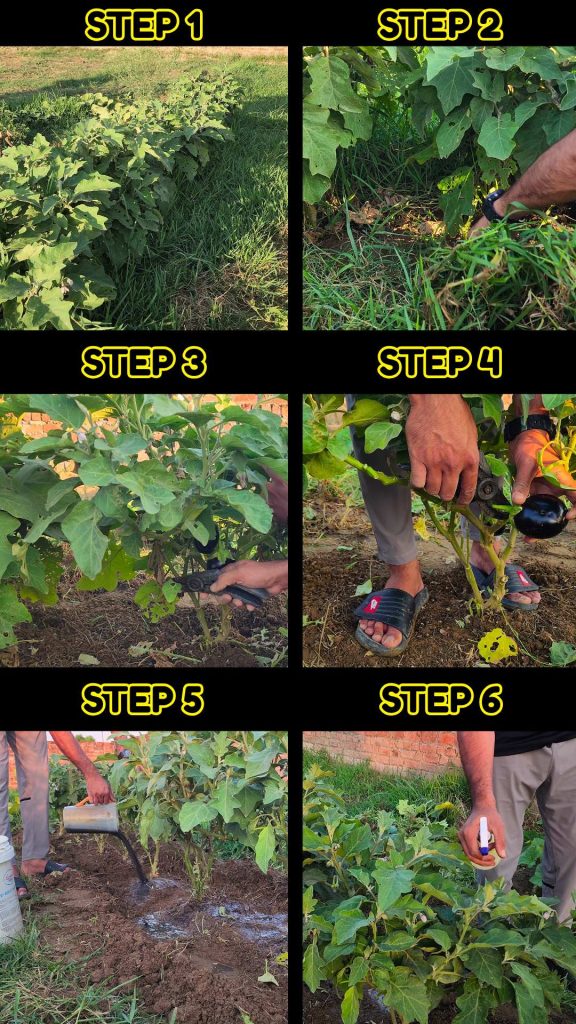
Remove Weeds Before They Take Over
The first task after a rainy period is removing weeds. Rain provides enough moisture for weed seeds to germinate quickly, and within a few days they can cover large sections of a garden bed.
Weeds compete directly with eggplants for water, nutrients, sunlight, and space. Every handful of weeds left growing means fewer resources are available for the crop. Young weeds are especially important to remove because they establish themselves quickly and become much harder to pull once their roots spread deeper into the soil.
Besides competing for nutrients, weeds also reduce airflow around the plants. Thick weed growth traps moisture near the soil surface, creating conditions that encourage fungal diseases. Dense weeds also provide shelter for insects, making pest problems more difficult to control.
Regular weeding keeps the soil open, improves air movement, and allows water and fertilizer to reach the eggplant roots more efficiently. It also makes routine inspections much easier, allowing gardeners to notice pest or disease problems before they become severe.
Pull weeds carefully to remove as much of the root system as possible. Leaving roots behind often allows certain weeds to grow back quickly. After weeding, dispose of flowering weeds away from the garden so they do not spread more seeds.
Prune Plants for Better Airflow and Health
Once the weeds are removed, attention can shift to the eggplants themselves. Rain often encourages rapid vegetative growth, causing plants to become crowded with leaves and branches.
Dense foliage limits air circulation. When leaves stay wet for long periods after rain or watering, fungal diseases become more likely to develop. Opening up the plant through pruning helps leaves dry faster and improves overall plant health.
Start by removing older leaves that touch the soil. These leaves are more likely to collect soil-borne pathogens and are often the first to become damaged.
Next, trim overcrowded branches that block sunlight from reaching the center of the plant. Better light penetration improves photosynthesis and encourages stronger flowering and fruit production.
Avoid removing too many healthy leaves at one time. The leaves are still responsible for producing energy, so moderate pruning is much better than heavy pruning.
Clean pruning tools before moving from one plant to another, especially if disease is suspected. This simple habit helps prevent the spread of infections throughout the garden.
Remove Pest-Damaged Leaves
Healthy leaves are essential for plant growth, but badly damaged leaves no longer contribute much to the plant.
Leaves attacked by chewing insects often develop large holes, curled edges, or yellow patches. Sap-sucking pests may leave leaves distorted or sticky. Severely damaged leaves attract more pests and sometimes become entry points for fungal infections.
Removing these leaves improves the appearance of the plant while allowing it to focus its energy on producing fresh, healthy growth.
As damaged leaves are removed, carefully inspect both sides for insects, eggs, or larvae. Many common eggplant pests prefer hiding underneath leaves where they are protected from direct sunlight.
Regular inspections make pest management easier because small infestations are much simpler to control than large ones.
Remove Damaged and Infected Fruits
Pests do not only attack leaves. They often damage developing eggplants as well.
Small holes, soft spots, discoloration, or rotting sections usually indicate insect feeding or disease. Once fruits become badly damaged, they rarely recover. Keeping infected fruits on the plant can encourage more insects and may increase disease pressure.
Removing affected fruits allows the plant to direct its energy toward producing healthy replacements instead of supporting damaged ones.
Collect damaged fruits and dispose of them away from the garden rather than leaving them on the soil surface. Rotting fruits can attract additional pests and may harbor disease-causing organisms.
Frequent harvesting also encourages continuous fruit production and prevents mature fruits from slowing down the plant’s growth.
A Clean Garden Bed Supports Healthier Plants
After removing weeds, pruning excess growth, and clearing away damaged leaves and fruits, the transformation is usually obvious.
The bed looks cleaner, plants receive more sunlight, and airflow improves significantly. Maintenance tasks such as watering, fertilizing, harvesting, and pest inspection also become much easier.
A tidy garden is more than just attractive. It creates conditions that naturally reduce many common problems while helping crops use available resources more efficiently.
Good garden hygiene remains one of the simplest and most effective practices for producing healthy vegetables.
Feed Eggplants With Eggshell and Wood Ash
Once the plants are cleaned up, they benefit from a fresh supply of nutrients.
A simple homemade fertilizer made from crushed eggshells and wood ash provides valuable minerals that support healthy growth.
Eggshells are rich in calcium. Calcium strengthens plant cell walls, supports root development, and contributes to firm, healthy fruits. Although eggshells release nutrients slowly, they continue improving the soil over time as they break down.
Finely crushing the shells allows them to decompose faster than leaving large pieces intact.
Wood ash supplies potassium, one of the most important nutrients for flowering and fruit production. Potassium helps regulate water movement within plants, supports strong stems, improves fruit quality, and enhances overall plant vigor.
Wood ash also contains smaller amounts of calcium, magnesium, phosphorus, and other trace minerals that contribute to healthy plant growth.
Apply the mixture around the base of the plant instead of directly against the stem. Lightly mixing it into the top layer of soil allows nutrients to gradually become available to the roots.
Only use ash from clean, untreated wood. Ash from painted, stained, or chemically treated wood should never be added to vegetable gardens.
Because wood ash can raise soil pH, moderate applications are usually best, especially in alkaline soils.
Control Pests With Neem Oil Spray
Even after cleaning the bed, pests can continue feeding on eggplants if left untreated.
Neem oil remains one of the most popular natural pest management options for home gardens. It helps control many common insects, including aphids, whiteflies, mites, flea beetles, and other soft-bodied pests.
To prepare the spray, mix neem oil with lukewarm water according to the product directions. A small amount of mild liquid soap is often added as an emulsifier to help the oil mix evenly with water.
Spray both the upper and lower surfaces of the leaves because insects frequently hide underneath.
Rather than spraying randomly, inspect each plant carefully. When pests are found, spray them directly for better control.
Apply neem oil during the early morning or late evening when temperatures are lower and beneficial insects are less active. Avoid spraying during the hottest part of the day, as strong sunlight may increase the chance of leaf burn.
Repeat applications as needed if pest activity continues.
Recent Posts
This garden bed has been growing vegetables throughout the summer, and now the soil needs some attention before we plant the next crop. We also had very heavy monsoon rain, and water stayed on the...
How We Renew Old Potting Soil Without Buying New Soil Every Season
Buying new potting soil every season can get expensive, especially when you have a lot of containers in your garden. And honestly, changing all that soil is a lot of work. You have to empty every...