
Tomatoes and peppers are warm-season crops, but there is a limit to how much heat they can handle. When temperatures stay very high for many days in a row, especially during June, July, and August, plants start to struggle. The soil dries out faster, leaves lose water quickly, and roots cannot absorb moisture fast enough to keep up. This leads to wilting during the hottest part of the day, even if the soil was watered recently.
One of the first signs of heat stress is drooping leaves in the afternoon. Many gardeners think the plant needs more water, but often the real issue is heat intensity combined with fast evaporation. Flowers also start dropping before turning into fruits, which reduces yield. In severe heat, tomatoes can get sunscald, where parts of the fruit turn pale or white due to direct sunlight exposure. Peppers may also stop forming properly or become smaller than usual.
Understanding these problems is important because it helps you react early. Instead of waiting for damage, simple adjustments in watering, soil care, and plant protection can keep the garden productive even during extreme temperatures.
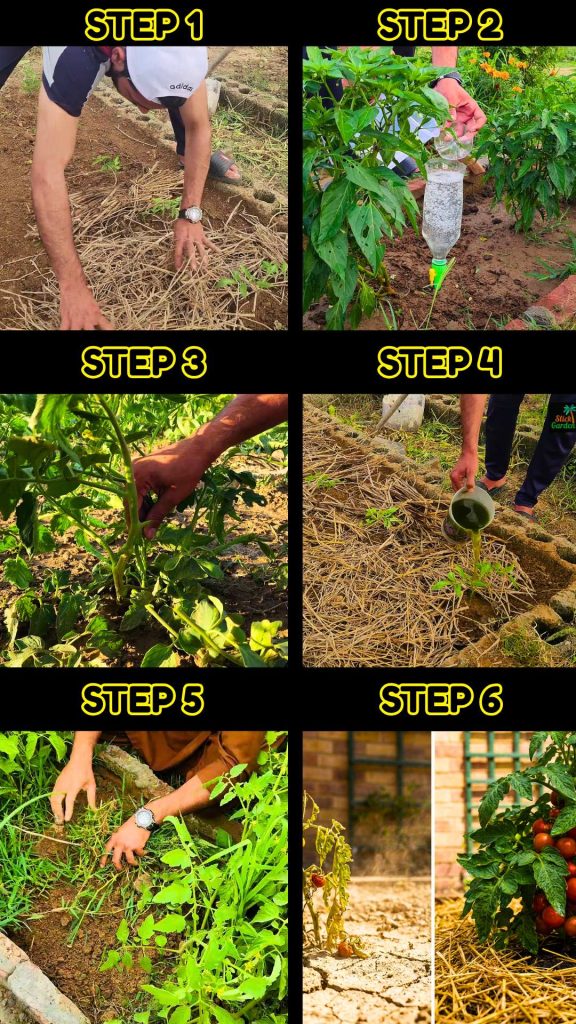
How Mulch Helps Keep Soil Cool and Moist
Mulch is one of the simplest and most powerful tools for summer gardening. It works by covering the soil surface, protecting it from direct sunlight. When soil is exposed, it heats up quickly and loses moisture through evaporation. Mulch slows down this process and creates a more stable environment for roots.
Organic materials like straw, dried grass, leaves, or compost can be used as mulch. A layer of about 2 to 4 inches is usually enough. Once applied, the soil underneath stays cooler for longer periods, even during peak afternoon heat. This helps reduce water stress on tomato and pepper plants.
Another benefit of mulch is that it improves soil over time. As it breaks down, it adds organic matter, which increases the soil’s ability to hold water. This means plants can access moisture more easily during dry spells. Mulch also reduces weed growth, which helps your vegetables get more water and nutrients without competition.
Drip Irrigation and DIY Bottle Watering Methods
Watering methods play a major role in plant survival during summer heat. Instead of flooding the soil quickly, slow and steady watering works much better. Drip irrigation is designed exactly for this purpose. It delivers water directly to the root zone, drop by drop, reducing waste and evaporation.
When water is applied slowly, the soil absorbs it more efficiently. This encourages roots to grow deeper instead of staying near the surface. Deep roots make plants stronger and more resistant to heat stress. Even if temperatures rise, plants can still find moisture deeper in the soil.
For home gardeners, a simple DIY bottle drip system is also effective. A plastic bottle filled with water, with small holes near the bottom, can release water slowly into the soil. When placed near the base of a plant, it provides continuous moisture for several hours. This is especially helpful when you cannot water frequently during the day.
Both drip irrigation and bottle systems help maintain steady soil moisture, which is one of the most important factors in preventing heat damage in tomatoes and peppers.
Importance of Morning Watering During Hot Weather
The timing of watering is just as important as the amount of water used. Early morning is the best time to water vegetable plants during summer. At this time, temperatures are lower, and evaporation is minimal. Water has a better chance of reaching the root zone instead of being lost to heat.
When plants are watered in the morning, they absorb moisture before the sun becomes strong. This helps them stay hydrated throughout the day. As temperatures rise, the plant already has stored water in its tissues, which reduces wilting and stress.
Watering during midday is not very effective because most of the water evaporates quickly. Evening watering can sometimes leave leaves damp overnight, which may increase the risk of fungal problems. Morning watering gives the best balance of absorption and safety for plant health.
Why Heavy Pruning in Summer Can Harm Plants
Pruning is useful in gardening, but it must be done carefully during extreme heat. Tomato and pepper plants rely on their leaves to protect themselves from the sun. Leaves act like natural shade, covering fruits and stems from direct exposure.
When too many leaves are removed during hot weather, fruits are left exposed. This increases the risk of sunscald, which appears as white or pale patches on tomatoes. Peppers can also suffer from sun damage and become weak or discolored.
Leaves also help regulate temperature around the plant. They create a small shaded environment that reduces heat stress. During summer, it is better to avoid heavy pruning. Only remove leaves that are yellow, damaged, or diseased. Keeping healthy foliage intact helps the plant survive extreme temperatures more easily.
Weed Control and Its Role in Heat Protection
Weeds are more than just unwanted plants. In summer, they become strong competitors for water and nutrients. When soil moisture is already limited due to heat, weeds take away resources that your vegetables need the most.
Some weeds grow very fast and develop deep root systems. These roots absorb water from the same soil zone as tomatoes and peppers. As a result, your crops may not get enough moisture, even if you are watering regularly. This leads to weak plants and poor fruit development.
Weeds also reduce airflow around plants. Poor airflow can make the garden feel hotter and more humid, which increases stress on vegetables. Keeping the garden weed-free ensures that water, nutrients, and space are fully available for your main crops.
Regular weeding combined with mulch is one of the best ways to maintain a healthy garden during hot months.
Recent Posts
You don't need to buy a lot of compost or fertilizer to prepare a good garden bed. If you have leaves, kitchen scraps, and other plant waste, you can use them to improve your soil and feed future...
I had an old rice storage sack that I wasn't using anymore, so I decided to turn it into two small raised garden beds. I cut the sack in half, used some bamboo sticks to hold everything in place, and...