
Growing cucumbers is usually quite rewarding because the plants grow fast and can produce a large amount of fruit in a relatively small space. However, many gardeners notice that their cucumber vines become long and leafy but do not produce as many cucumbers as expected. In many cases, the problem is not a lack of water or fertilizer. It is often the way the vine is managed during its early growth stages.
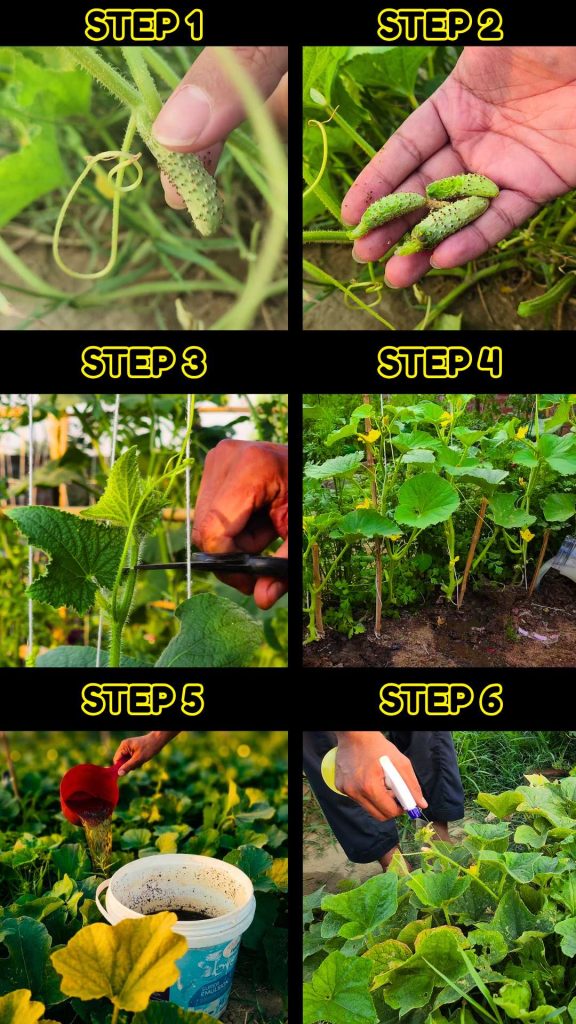
Two simple techniques can help improve cucumber production significantly. The first is pinching the growing tip of the vine when it reaches about two to three feet in length. The second is removing the first few baby cucumbers that appear on young plants. Although these methods may seem unusual at first, they can encourage stronger growth and lead to a larger harvest later in the season.
Why Cucumber Plants Focus on Vine Growth
Like many climbing plants, cucumbers naturally want to spread as far as possible. Their main vine grows rapidly, producing leaves, tendrils, and flowers along the way. During the early stages of growth, the plant’s priority is establishing itself and finding enough space to capture sunlight.
If left completely untouched, the main vine often continues growing longer and longer. While this may look impressive, it does not always result in the highest fruit production. A large portion of the plant’s energy goes toward extending the vine rather than developing side branches that can support additional flowers and fruit.
Understanding how the cucumber plant uses its energy helps explain why simple pruning can make such a difference.
The Benefits of Pinching the Top of the Vine
When the main cucumber vine reaches approximately two to three feet long, pinching or cutting off the growing tip can encourage the plant to grow differently.
The growing tip contains hormones that direct the plant’s energy toward upward and outward growth. Once that tip is removed, the plant responds by producing side shoots. These side shoots become additional branches capable of carrying flowers and fruit.
Instead of putting all its energy into one long stem, the cucumber plant begins creating multiple growing points. This often results in a fuller and more productive plant.
Many cucumber varieties produce a larger number of female flowers on side branches. Since female flowers are the ones that develop into cucumbers, encouraging side growth can increase the number of potential fruits.
A plant with several branches also tends to make better use of available space. Whether grown on a trellis or allowed to spread across the ground, the additional growth can support a greater number of flowers throughout the season.
More Branches Mean More Cucumbers
One of the biggest advantages of pinching the vine is the increase in branching.
Each side branch has the potential to produce multiple flowers. More flowers create more opportunities for pollination and fruit development. Instead of relying on a single vine for production, the plant develops several productive areas.
Gardeners often notice that cucumber plants become much bushier after the main tip is removed. While the plant may temporarily slow its upward growth, it quickly redirects energy into new branches.
As these branches mature, they begin producing flowers and fruit of their own. Over time, the total harvest can be much greater than that of an unpruned vine.
This is especially useful in small gardens where every plant needs to perform at its best.
Improved Air Circulation and Plant Health
Pinching cucumber vines can also improve overall plant health.
A plant with controlled growth often has better spacing between leaves and stems. Improved air circulation helps leaves dry more quickly after rain, watering, or morning dew.
Wet leaves that remain damp for long periods are more likely to develop fungal diseases. Good airflow reduces this risk and helps keep the plant healthier throughout the growing season.
Healthier plants generally produce more flowers and maintain fruit production for a longer period. Disease-free leaves are able to continue capturing sunlight and producing energy, which directly supports cucumber development.
Better airflow can also make it easier to inspect plants for pests and other problems before they become serious.
Why Early Baby Cucumbers Should Be Removed
The second technique involves removing the first few baby cucumbers that develop on young plants.
Many gardeners find this difficult because they are eager to harvest their first cucumbers. However, allowing a very young plant to support fruit too early can reduce its future productivity.
Producing fruit requires a significant amount of energy. When a small cucumber plant starts growing cucumbers, it immediately begins directing nutrients and resources toward those fruits.
As a result, less energy is available for root growth, stem development, and leaf production.
By removing the first few baby cucumbers, the plant is encouraged to focus on becoming larger and stronger before entering full production mode.
Building a Strong Root System
Roots are the foundation of every healthy cucumber plant.
A larger root system allows the plant to absorb more water and nutrients from the soil. This becomes especially important during hot weather when cucumbers require consistent moisture to avoid stress.
When early fruits are removed, the plant can invest more energy into expanding its roots. Strong roots support vigorous growth above ground and help the plant recover more quickly from heat, wind, and dry conditions.
A well-developed root system also improves the plant’s ability to access nutrients stored deeper in the soil. This often results in greener leaves, stronger stems, and better fruit production later in the season.
The benefits of a strong root system continue throughout the life of the plant.
Encouraging Stronger Vines and More Leaves
Removing early cucumbers allows the plant to develop thicker stems and additional foliage.
Leaves act as solar panels for the plant. They capture sunlight and convert it into energy through photosynthesis. The more healthy leaves a plant has, the more energy it can produce.
That energy is later used to create flowers and support fruit development.
A cucumber plant that spends its early weeks building stems and leaves is usually capable of supporting a much heavier fruit load later. Instead of struggling to grow while carrying cucumbers, the plant becomes fully established before production begins.
This often leads to healthier growth and a more consistent harvest.
The Long-Term Harvest Advantage
The goal of removing early cucumbers is not to reduce harvests. It is actually the opposite.
Giving up a few small cucumbers early in the season often results in many more cucumbers over the following weeks. Once the plant reaches full size, it can support numerous flowers and fruits without becoming stressed.
Gardeners frequently notice that plants allowed to mature before carrying fruit continue producing for longer periods. The harvest becomes more consistent and reliable.
Rather than getting a few early cucumbers and then watching production slow down, the plant is capable of maintaining steady output throughout much of the growing season.
This long-term approach often produces the greatest overall yield.
Combining Both Techniques for Maximum Results
Pinching the main vine and removing early baby cucumbers work especially well when used together.
The first technique encourages branching and increases the number of future flowering sites. The second technique helps the plant develop strong roots and healthy growth before it begins carrying a heavy fruit load.
Together, these methods create a stronger, more productive cucumber plant.
The plant develops multiple branches, abundant foliage, and a root system capable of supporting large numbers of cucumbers. As flowering increases, the plant has the resources needed to maintain healthy fruit production.
These simple actions take only a few minutes but can have a noticeable impact on harvest size.
Recent Posts
You don't need to buy a lot of compost or fertilizer to prepare a good garden bed. If you have leaves, kitchen scraps, and other plant waste, you can use them to improve your soil and feed future...
I had an old rice storage sack that I wasn't using anymore, so I decided to turn it into two small raised garden beds. I cut the sack in half, used some bamboo sticks to hold everything in place, and...