
Tomatoes and cucumbers are not like slow-growing plants that can survive on light feeding. These two are fast growers, heavy producers, and they keep pushing new leaves, flowers, and fruits almost continuously. Because of this constant activity, they quickly pull nutrients from the soil. If the soil is not rich enough or feeding is not regular, the plant starts showing stress very fast.
You will notice signs like yellowing leaves, weak stems, slow flowering, and poor fruit formation. In cucumbers, fruits may become small or bitter. In tomatoes, flowers may drop before forming fruit. This is not always a pest problem. Most of the time, it is simply a nutrition imbalance.
Chemical fertilizers can fix this, but they often give a short-term boost and then leave the soil weaker over time. That is why many gardeners prefer homemade liquid fertilizers. They are cheap, easy, and they improve soil life instead of damaging it.
Understanding the Power of Yeast in Plant Growth
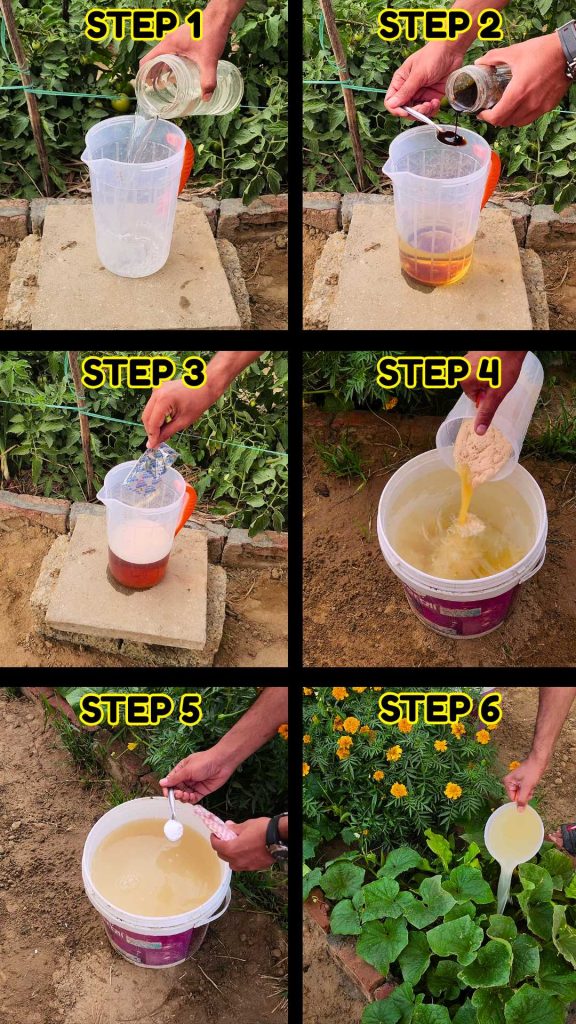
Yeast is usually known for baking and cooking, but in gardening, it plays a very interesting role. When yeast is mixed with sugar sources like molasses and kept in warm water, it starts fermentation. This is a natural biological process where yeast consumes sugar and produces carbon dioxide, enzymes, and beneficial compounds.
These compounds are not directly plant food like NPK fertilizers, but they work as growth stimulators. They help improve root activity, activate soil microbes, and speed up nutrient absorption.
When yeast is added to soil through liquid fertilizer, it encourages microbial life. And healthy soil microbes are extremely important for plant growth. They break down organic matter and make nutrients available in a form plants can absorb easily.
This is why yeast-based fertilizers often show visible improvement in plant growth within days.
Role of Molasses as a Natural Energy Source
Molasses is a thick, dark liquid that is left after sugar extraction. It might look simple, but it is full of natural sugars and trace minerals like calcium, magnesium, potassium, and iron.
In this mixture, molasses works as food for yeast. Without molasses, yeast cannot multiply effectively. Once yeast starts consuming molasses, fermentation becomes active and powerful.
But molasses also helps soil when applied to plants. The sugars feed beneficial bacteria in the soil. These microbes multiply and improve soil structure and fertility over time.
Better microbial activity means better nutrient cycling. In simple words, the soil becomes more “alive,” and plants become stronger without needing chemical support.
Why Lukewarm Water Matters in the Process
Water temperature plays an important role in activating yeast. If water is too cold, yeast becomes slow and inactive. If water is too hot, yeast can die completely.
That is why lukewarm water is used. It creates the perfect environment for yeast to wake up and start fermentation quickly.
When yeast becomes active, you can actually see changes in the mixture. Tiny bubbles form, foam appears, and the liquid starts expanding slightly. These are all signs that microbial activity has started.
This early reaction is important because it confirms that the mixture will work properly when added to plants.
Fermentation Reaction and What It Means for Plants
Once yeast is mixed with molasses and kept in lukewarm water, fermentation begins. This is the same natural process used in bread making and brewing.
During fermentation, yeast breaks down sugars and releases carbon dioxide along with several biological compounds. You may notice bubbling, foam, and sometimes a slight smell. This is completely normal.
For plants, this fermentation liquid acts like a microbial booster. It does not feed plants directly like fertilizer salts, but it enhances the soil environment. It increases microbial diversity and activity, which helps plants absorb nutrients more efficiently.
In gardening terms, this is like improving the digestive system of the soil. When soil digestion improves, plant health automatically improves.
Adding Baking Soda and Its Role in Plant Protection
Baking soda is often used in home gardening for managing fungal problems. Tomatoes and cucumbers are very prone to fungal infections, especially in humid conditions or when plants are overcrowded.
When baking soda is added to the mixture, it slightly changes the pH level of the solution. This can help reduce the spread of certain fungal spores when applied to plants.
It is not a chemical pesticide, but it acts as a mild protective support. Many gardeners use baking soda sprays for powdery mildew control, especially on cucumber leaves.
In this mixture, baking soda also helps balance the fermentation solution before application.
How This Liquid Fertilizer Works in Soil
Once this mixture is applied to soil, several things start happening at the same time.
First, the yeast and molasses introduce active microbes into the soil environment. These microbes begin interacting with existing soil bacteria and organic matter.
Second, microbial activity increases nutrient breakdown. Organic materials in the soil start decomposing faster, releasing nutrients in plant-available form.
Third, roots become more active. Plants naturally respond to improved soil conditions by expanding their root systems. Stronger roots mean better water and nutrient absorption.
This is why plants often look greener and more vigorous within a short time after application.
Recent Posts
Don't Throw Away Expired Bread: Turn It Into a Simple Homemade Fertilizer
Most people throw away expired bread without thinking twice. While bread is no longer safe to eat once it has spoiled, it can still be useful in the garden. Instead of adding it to the trash, you can...
My Eggplants Were Covered in Weeds and Pests—These Simple Steps Brought Them Back to Life
Heavy rain can be a blessing for a vegetable garden, but it can also create new challenges. Eggplants respond well to moisture, yet the same conditions that encourage healthy growth also promote...