
Many of the materials we throw away in the kitchen still contain nutrients that can be useful in the garden. Onion peels and potato peels are good examples. Instead of sending them to the trash, you can use them to make a simple liquid fertilizer that helps recycle kitchen waste while returning some nutrients to your plants.
This homemade fertilizer is inexpensive, easy to prepare, and requires only water, two common kitchen scraps, and a little patience. While it should not replace compost or a balanced fertilizer program, it can be a useful supplement for vegetables, herbs, flowers, and many container plants.
The process is simple enough for beginners and requires no special equipment.
Why Onion and Potato Peels Are Worth Saving
Most people think of onion and potato peels as waste, but they still contain minerals that can be extracted into water. The dry outer layers of onions contain small amounts of potassium, calcium, sulfur, and trace minerals. Potato peels also contain potassium along with phosphorus, magnesium, and several micronutrients.
These nutrients play different roles in plant growth. Potassium helps regulate water movement, supports flowering and fruit development, and contributes to stronger stems. Calcium is involved in healthy cell growth, while magnesium is an essential part of chlorophyll, allowing plants to produce energy through photosynthesis.
Although the nutrient concentrations in homemade peel fertilizers are much lower than commercial products, using them is a practical way to recycle organic waste and provide plants with a gentle nutritional boost.
Materials You Will Need
The recipe uses ingredients that are already available in most kitchens.
Collect the dry outer peels from about 2 pounds of onions and the peels from about 2 pounds of potatoes. You will also need two clean containers with lids, each capable of holding at least 5 liters of water, and one larger container for mixing the finished fertilizer.
Clean water is all that is needed. No sugar, yeast, molasses, or additional ingredients are required.
Preparing the Onion Peel Solution
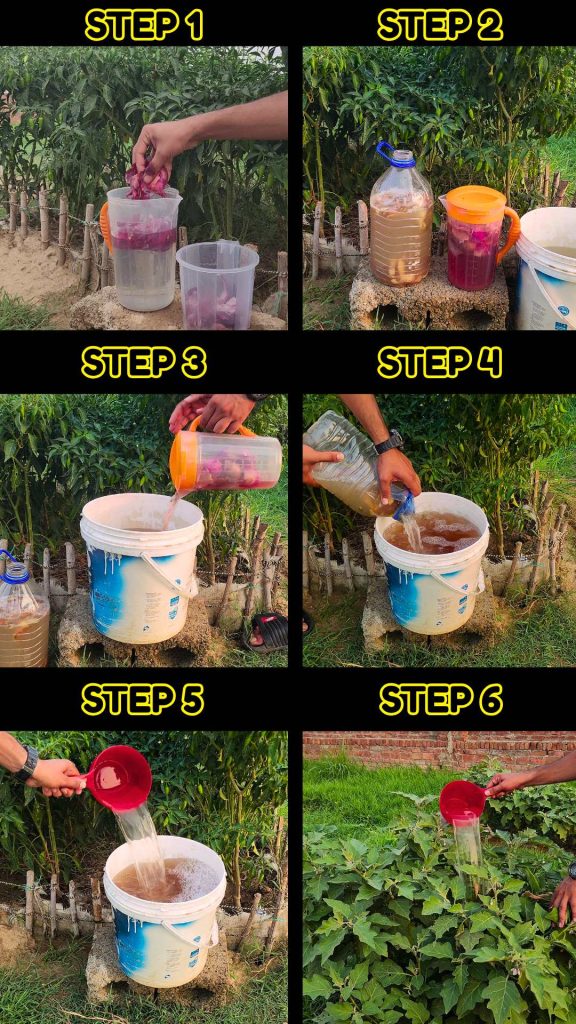
Place the onion peels into one container and pour in approximately 5 liters of water. Stir the mixture once so every peel becomes fully soaked.
Close the container with a lid to reduce contamination and evaporation. Move it to a location that receives partial shade rather than direct sunlight. Excessive heat can speed unwanted decomposition and produce stronger odors, while partial shade allows a slower extraction process.
Leave the container undisturbed for at least 48 hours.
Preparing the Potato Peel Solution
Repeat the same process using the potato peels. Place the potato peels into the second container, add about 5 liters of water, stir once, and close the lid securely. Store this container beside the onion peel container in partial shade for at least two days. Keeping both containers under similar conditions allows the extraction process to happen at a steady rate.
What Happens During the 48-Hour Soaking Period
Although the containers appear inactive from the outside, several natural processes begin taking place.
Water slowly dissolves minerals and water-soluble compounds from the peels. At the same time, naturally occurring microorganisms begin breaking down a small portion of the organic matter. This mild fermentation helps release additional soluble nutrients into the liquid.
The water gradually changes color as pigments and plant compounds move from the peels into the solution. Depending on the peels used, the liquid may become yellow, brown, or light amber.
A mild earthy or fermented smell is also normal. This does not necessarily indicate that the fertilizer has spoiled. It simply reflects natural microbial activity occurring inside the container. Since the containers remain covered, the process generally stays clean and easy to manage.
Nutrients Found in Onion Peels
Onion peels are often overlooked, but they contain several useful minerals.
Potassium is the primary nutrient extracted into the water. Plants use potassium to regulate moisture, improve stem strength, and support flower and fruit production.
Calcium contributes to healthy cell development and supports vigorous new growth. Sulfur is another important element naturally present in onion tissues. It plays a role in forming proteins and supports overall plant metabolism.
Small amounts of iron, copper, manganese, and other trace minerals may also be present. Although these nutrients are available only in modest quantities, they still contribute to a diverse nutrient solution.
Nutrients Found in Potato Peels
Potato peels are especially valued for their potassium content. Potassium supports root activity, improves water regulation inside plants, and contributes to better flower and fruit development. The peels also contain phosphorus, which is important for root growth and energy transfer inside plant cells.
Magnesium supports chlorophyll production, helping plants maintain healthy green foliage and efficient photosynthesis. Trace minerals present in potato peels add even more diversity to the final fertilizer. Combining potato peel extract with onion peel extract creates a broader range of nutrients than using either ingredient alone.
Combining Both Fertilizers
After the soaking period is complete, both liquids are ready to use.
Some gardeners prefer applying them separately, and that works perfectly well. However, combining them creates a single fertilizer that contains nutrients from both types of peels. Take a larger container and add about 5 liters of fresh water.
Pour the onion peel liquid and the potato peel liquid into the larger container. Stir thoroughly until everything is evenly mixed. Before using the fertilizer, strain out the remaining peels so only the liquid is applied to plants. The leftover solids should not be discarded.
How to Apply the Fertilizer
Apply the liquid directly to the soil around the base of your plants rather than spraying it onto leaves.
Roots absorb nutrients much more efficiently from the soil, making this the best method of application. The fertilizer can be used on tomatoes, peppers, cucumbers, eggplants, beans, herbs, leafy greens, flowering annuals, ornamentals, and many container-grown plants.
Applying the solution once every one or two weeks during active growth is usually sufficient. Avoid applying excessively large amounts at one time. Gentle, repeated applications are generally more beneficial than heavy treatments.
It is also best to apply the fertilizer when the soil already contains some moisture rather than when it is completely dry.
Recent Posts
I Mixed Yogurt, Molasses & Compost Tea for 24 Hours… The Results Changed My Garden Soil
Healthy soil is much more than a mixture of sand, silt, clay, and organic matter. It is a living ecosystem filled with bacteria, fungi, protozoa, nematodes, and many other microscopic organisms....
Don't Throw Away Expired Bread: Turn It Into a Simple Homemade Fertilizer
Most people throw away expired bread without thinking twice. While bread is no longer safe to eat once it has spoiled, it can still be useful in the garden. Instead of adding it to the trash, you can...