
Tomatoes are one of the most rewarding crops in any home garden, but they are also one of the most demanding. Once the plant starts growing well, it doesn’t slow down. It keeps producing new leaves, branches, flowers, and fruits all at the same time. All of this requires a continuous supply of nutrients from the soil.
In many gardens, tomato plants start off strong but slowly lose energy. Leaves begin to turn pale, flowering reduces, and fruit size becomes smaller. This usually happens because the soil cannot keep up with the plant’s demand. Tomatoes especially need nitrogen for leafy growth, phosphorus for flowering, potassium for fruit development, and calcium for overall plant strength.
When the soil becomes weak, the plant shows stress very quickly. Instead of depending on chemical fertilizers, many gardeners now prefer natural feeding methods that keep soil healthy for a longer time. One such method is preparing liquid fertilizer using plant waste itself. It is simple, cost-free, and very effective for long-term tomato production.
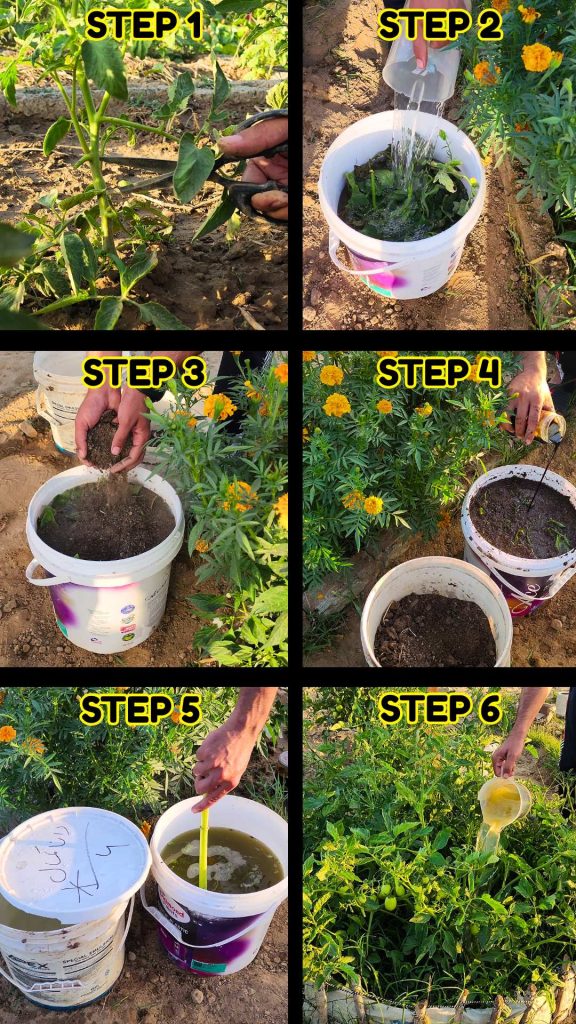
Turning Tomato Plant Waste Into Plant Food
Every time tomato plants are pruned, many gardeners throw away the cut leaves and suckers. But these parts still contain useful nutrients that the plant has already absorbed from the soil. Instead of wasting them, they can be reused to feed the next cycle of growth.
When these green parts are collected and soaked in water, they start breaking down naturally. This process allows nutrients stored inside the plant material to dissolve into the water. Over time, the liquid becomes rich in plant food that can be reused on the same or other tomato plants.
This approach is similar to recycling nutrients in a garden system. Nothing goes to waste. What the plant takes from soil is returned back in a usable form. This helps maintain balance in the garden and reduces the need for external inputs.
Role of Compost in Strengthening the Mixture
Adding compost to the mixture is one of the most important steps in preparing this liquid feed. Compost is full of beneficial microorganisms such as bacteria and fungi that play a key role in decomposition.
When compost is added to water with plant material, these microbes become active and start breaking down organic matter faster. Instead of waiting for natural decay, the process becomes quicker and more efficient. The result is a nutrient-rich liquid that plants can easily absorb.
Compost also improves the biological quality of the fertilizer. It introduces life into the mixture, which later helps improve soil health when applied to plants. Healthy soil is not just about nutrients but also about microbial activity, and compost plays a major role in that balance.
Why Molasses Makes a Big Difference
Molasses might seem like a small ingredient, but it plays a powerful role in fermentation. It acts as food for beneficial microbes present in compost and plant material.
Microorganisms need energy to multiply and break down organic matter. Molasses provides that energy in the form of natural sugars. When microbes are well-fed, they multiply faster and become more active. This speeds up the decomposition process and improves the quality of the liquid fertilizer.
As microbial activity increases, more nutrients are released into the water. This results in a richer and more effective plant feed. It also helps create a balanced microbial environment that supports plant health when applied to soil.
Fermentation Process and How It Works
Once all ingredients are mixed, the mixture is left to ferment for around two weeks. During this time, natural biological processes take place inside the container.
The tomato leaves slowly break down, compost microbes multiply, and sugars from molasses feed the entire system. As a result, the liquid gradually changes color, often turning dark green or brownish green. This color change is a clear sign that nutrients are being extracted into the water.
A strong earthy smell may develop during fermentation. This is normal and indicates active microbial breakdown. The container should not be sealed tightly because gases are released during this process and need space to escape.
By the end of fermentation, the liquid becomes highly concentrated with plant-available nutrients and beneficial microbes. At this stage, it is ready for dilution and use.
Proper Dilution Before Application
One important step that should never be skipped is dilution. The fermented liquid is very strong and cannot be used directly on plants. If applied without dilution, it can damage roots or disturb plant balance.
A safe ratio is one part liquid fertilizer to ten parts clean water. This weakens the concentration while still keeping enough nutrients for plant uptake. After mixing, it becomes a gentle but powerful plant feed.
This diluted solution can be applied around the base of tomato plants. It should not be poured directly on leaves in large amounts. Soil application allows roots to absorb nutrients gradually and efficiently.
Recent Posts
Don't Throw Away Expired Bread: Turn It Into a Simple Homemade Fertilizer
Most people throw away expired bread without thinking twice. While bread is no longer safe to eat once it has spoiled, it can still be useful in the garden. Instead of adding it to the trash, you can...
My Eggplants Were Covered in Weeds and Pests—These Simple Steps Brought Them Back to Life
Heavy rain can be a blessing for a vegetable garden, but it can also create new challenges. Eggplants respond well to moisture, yet the same conditions that encourage healthy growth also promote...