
The pursuit of the perfect tomato is a journey every gardener embarks upon, often leading to years of trial, error, and experimentation. To achieve a harvest that is truly abundant, one must look beyond the surface and focus on the hidden world beneath the soil.
While many people simply dig a small hole and drop a seedling in, those who see the highest yields understand that success is built on a foundation of deep nutrition and structural strength. By rethinking the way we plant, we can ensure that our vines remain heavy with fruit from the first warm days of summer until the final frost of autumn.
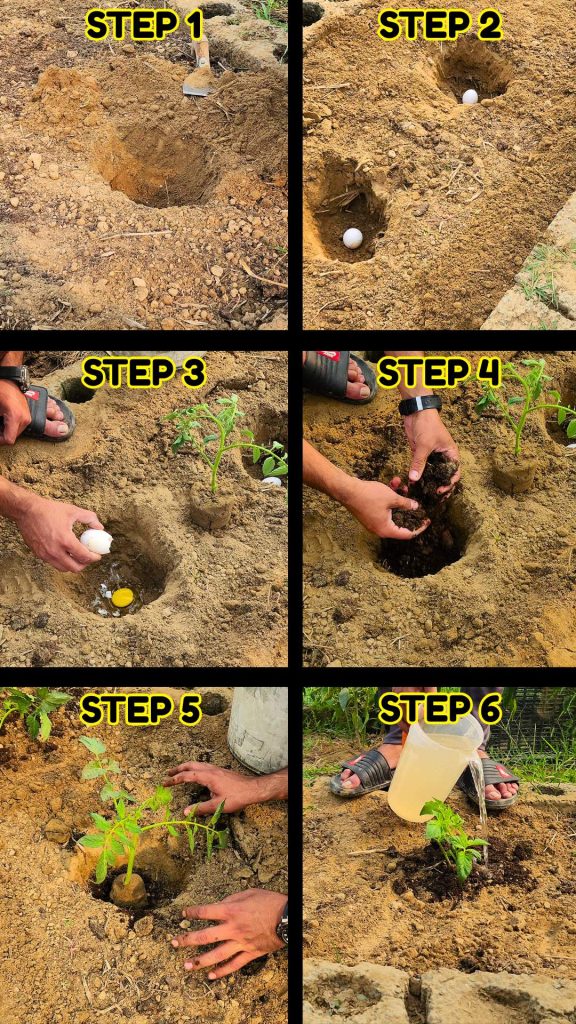
The following method combines traditional wisdom with biological principles to create an environment where a tomato plant does not just survive, but thrives with aggressive energy. By using a combination of deep-set planting, natural calcium sources, and organic matter, we can unlock the full genetic potential of any tomato variety.
The Foundation of a Deep Root System
The most common mistake made in the vegetable garden is planting a tomato seedling at the same depth it sat in its nursery pot. Unlike almost every other plant in the garden, the tomato possesses a unique biological trait: the ability to grow roots from its stem. If you look closely at a tomato stalk, you will see tiny, hair-like fuzz. Each of those hairs has the potential to become a root if it comes into contact with moist soil.
By digging a hole deep enough to bury at least half, or even two-thirds, of the plant’s stem, you are effectively doubling or tripling the size of the root zone. A plant with a massive root system is far more resilient than one with shallow roots.
It can reach deep into the earth to find moisture during a heatwave, and it has a much larger surface area to absorb the nutrients provided by the soil. This structural anchor also creates a thicker, sturdier main stalk that can support the massive weight of heavy fruit clusters without the risk of snapping under pressure.
The Role of Calcium and Slow Release Nutrition
Once the deep hole is prepared, the next step involves placing a whole egg at the very bottom. While it might seem unconventional, there is a very practical reason for this. As an egg decomposes, it releases a steady, slow-moving stream of nitrogen, phosphorus, and potassium—the primary building blocks of plant life. However, the real prize is the eggshell itself.
Tomatoes are notoriously hungry for calcium. When a plant cannot pull enough calcium from the soil, the developing fruit often suffers from blossom end rot, a condition where the bottom of the tomato turns black and leathery, ruining the harvest.
By crushing the egg and its shell directly into the planting hole, you are placing a concentrated source of calcium exactly where the roots will be. As the roots grow and expand, they will find this “calcium bank” and use it to build strong cell walls, resulting in firm, healthy tomatoes that are resistant to disease and rot.
Creating a Nutrient Power Pocket with Compost
No planting hole is complete without the addition of high-quality organic compost. Compost serves as the bridge between the raw nutrients of the egg and the delicate roots of the seedling. It acts as a biological activator, filled with beneficial fungi and bacteria that begin the process of breaking down organic matter so the plant can actually digest it.
When you place a layer of compost over the crushed egg and then fill the remainder of the hole with a compost-soil mix, you are creating what can be described as a “power pocket.” This area stays loose and friable, allowing new roots to penetrate easily without struggling against compacted earth.
Furthermore, compost has an incredible ability to regulate moisture. It acts like a sponge, holding onto water so the roots stay hydrated, but also allowing for proper drainage so the plant doesn’t suffer from “wet feet” or root rot. This balance is essential for the steady growth required to produce high-quality fruit.
The Technique of Deep Burial and Backfilling
With the hole prepared and the nutrients in place, the actual placement of the plant requires careful attention. You must strip away the lower leaves of the tomato seedling, leaving only the top cluster of foliage exposed. This might feel like you are hurting the plant, but it is actually the kindest thing you can do for it. Every node where a leaf was removed will soon become a site for new root growth.
As you place the seedling into the deep hole, you should fill the space with a mixture of native soil and more compost. Firm the soil gently with your hands as you go to ensure there is good contact between the stem and the earth.
You want to avoid leaving large air pockets, as these can cause the roots to dry out before they have a chance to establish themselves. By the time you are finished, you will have a plant that looks much shorter than it did in the pot, but underneath the surface, it is already beginning the transformation into a powerhouse of production.
The Importance of Initial Saturation
The final, and perhaps most critical, step in this planting process is a deep, thorough watering. This is not just about giving the plant a drink; it is about hydraulic settling. Water helps the soil particles move into every nook and cranny around the buried stem, ensuring that the entire underground portion of the plant is surrounded by moist, nutrient-rich earth.
A deep watering also serves to “wake up” the microbes in the compost and start the decomposition of the egg. This moisture is what triggers the chemical reactions that turn raw organic matter into available plant food.
For the first week after planting, the focus should remain on keeping this deep root zone consistently moist. Once the plant has established its new, larger root system, it will become much more self-sufficient, but this initial saturation is what sets the stage for everything that follows.
Recent Posts
This garden bed has been growing vegetables throughout the summer, and now the soil needs some attention before we plant the next crop. We also had very heavy monsoon rain, and water stayed on the...
How We Renew Old Potting Soil Without Buying New Soil Every Season
Buying new potting soil every season can get expensive, especially when you have a lot of containers in your garden. And honestly, changing all that soil is a lot of work. You have to empty every...