
Weeds are one of the most frustrating parts of gardening. They don’t wait for permission, they just grow wherever they find space. In a vegetable garden, especially in small home setups, weeds become even more aggressive. They compete directly with your crops for sunlight, water, and nutrients. If you are growing pepper plants or any other vegetable, weeds can slowly reduce their growth without you even noticing in the beginning.
The main issue with weeds is how fast they spread. Even if you clean your garden properly once, within a week or two, new weeds start appearing again. Some weeds grow from seeds already present in the soil, while others come from wind, birds, or nearby fields. Once they settle, they form strong roots and become harder to remove. This constant cycle of weeding takes a lot of time and energy, and many gardeners feel tired of it after a point.
Another hidden problem is nutrient loss. Weeds are very efficient at absorbing nutrients from the soil. They don’t just survive, they often grow faster than your actual crops. This means your pepper plants end up getting less nutrition, which leads to weak growth, fewer flowers, and lower yield. That is why controlling weeds is not just about cleanliness, but also about improving plant health and productivity.
Preparing the Garden Bed for Better Growth
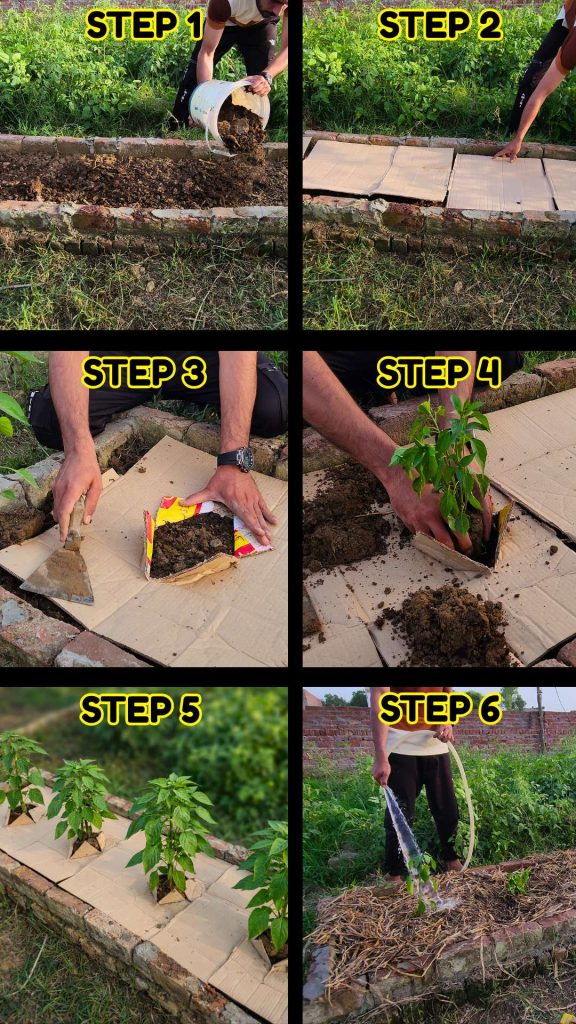
A good garden always starts with good soil preparation. Before planting anything, the soil should be improved so that it can support healthy plant growth. One of the best natural ways to do this is by adding well-decomposed manure. This type of manure is rich in organic matter and essential nutrients.
When you spread manure across the garden bed, it slowly improves soil structure. It makes the soil softer, which helps roots grow deeper and spread easily. Strong roots are very important for pepper plants because they support better fruit production later on. Manure also improves moisture retention in the soil, which means the plants can stay hydrated for longer periods.
After adding manure, it is important to mix it lightly with the top layer of soil. You don’t need to dig too deep. Just a gentle mixing is enough to distribute nutrients evenly. This step creates a rich foundation for your plants and prepares the bed for the next stage of weed control and planting.
Using Cardboard as a Natural Weed Barrier
One of the most effective and simple methods to control weeds is using cardboard sheets. This technique works very well because it blocks sunlight from reaching the soil. Without sunlight, most weed seeds cannot germinate properly.
When you place cardboard over the entire garden bed, it creates a physical barrier between the soil and the environment. This stops new weeds from growing while still allowing air and moisture to pass through. Over time, the cardboard naturally breaks down and becomes part of the soil, adding organic matter in the process.
The important thing is full coverage. The entire soil surface should be covered, not just small areas where plants will grow. If even small gaps are left open, weeds can take advantage of those spaces and start growing again. That is why overlapping the cardboard pieces slightly is a good idea.
This simple step reduces weed growth significantly and also reduces the need for frequent maintenance. It creates a clean and controlled environment for your pepper plants to grow without competition.
Smart Planting Technique for Pepper Plants
After setting up the cardboard layer, the next step is planting. Instead of removing sections of cardboard completely, a smart method is to make plus-shaped cuts where each plant will go. This allows easy planting while keeping the structure of the weed barrier intact.
A garden knife is used to make two crossing cuts, forming a small opening. This opening can be lifted gently to create space in the soil below. The pepper seedling is then placed carefully into the soil, making sure the roots are not damaged. After placing the plant, the soil is pressed lightly to hold it in position.
Once the plant is placed, the cardboard flaps are folded back around the stem. This helps seal the soil again and reduces open space where weeds could grow. This method allows plants to grow normally while still keeping most of the soil protected.
Spacing is also very important during planting. Pepper plants should not be placed too close to each other. They need enough space for air circulation, sunlight exposure, and root expansion. Proper spacing reduces disease risk and improves overall plant strength.
Importance of Mulching for Soil Protection
After planting, the next important step is mulching. Mulch is a protective layer placed on top of the soil. In this method, rice straw is used as mulch, which is a very common and effective organic material.
Mulching plays multiple roles in garden health. First, it helps retain moisture in the soil. This is especially useful during hot weather when water evaporates quickly. With mulch, the soil stays moist for a longer time, reducing the need for frequent watering.
Second, mulch adds another layer of weed protection. Even if a few weed seeds manage to survive under the cardboard, the thick mulch layer blocks their growth. It becomes very difficult for weeds to push through both cardboard and straw.
Third, mulch helps regulate soil temperature. It keeps the soil cooler during hot days and warmer during cooler nights. This stable environment is very beneficial for pepper plants, which prefer balanced growing conditions.
Over time, rice straw slowly decomposes and adds more organic matter back into the soil. This improves soil fertility naturally and supports long-term plant health.
Recent Posts
You don't need to buy a lot of compost or fertilizer to prepare a good garden bed. If you have leaves, kitchen scraps, and other plant waste, you can use them to improve your soil and feed future...
I had an old rice storage sack that I wasn't using anymore, so I decided to turn it into two small raised garden beds. I cut the sack in half, used some bamboo sticks to hold everything in place, and...