
Healthy soil is the foundation of a productive garden. But after growing vegetables for several seasons, a garden bed can start to look tired. The soil may become compacted, lose organic matter, dry out quickly, or simply stop looking as rich and loose as it once did.
Many gardeners immediately think they need bags of compost or large quantities of well-decomposed manure to fix the problem. Those materials are certainly useful, but they are not the only way to improve a garden bed.
Your garden itself can provide many of the materials you need.
Old leaves, healthy plant residues, dried foliage, small amounts of compost, and suitable mulch can all be returned to the soil. Instead of removing every bit of organic material from the garden, you can allow it to break down and become part of the soil again.
This simple approach is especially useful when you have limited compost available. It also turns garden waste into something valuable instead of sending it to the trash.
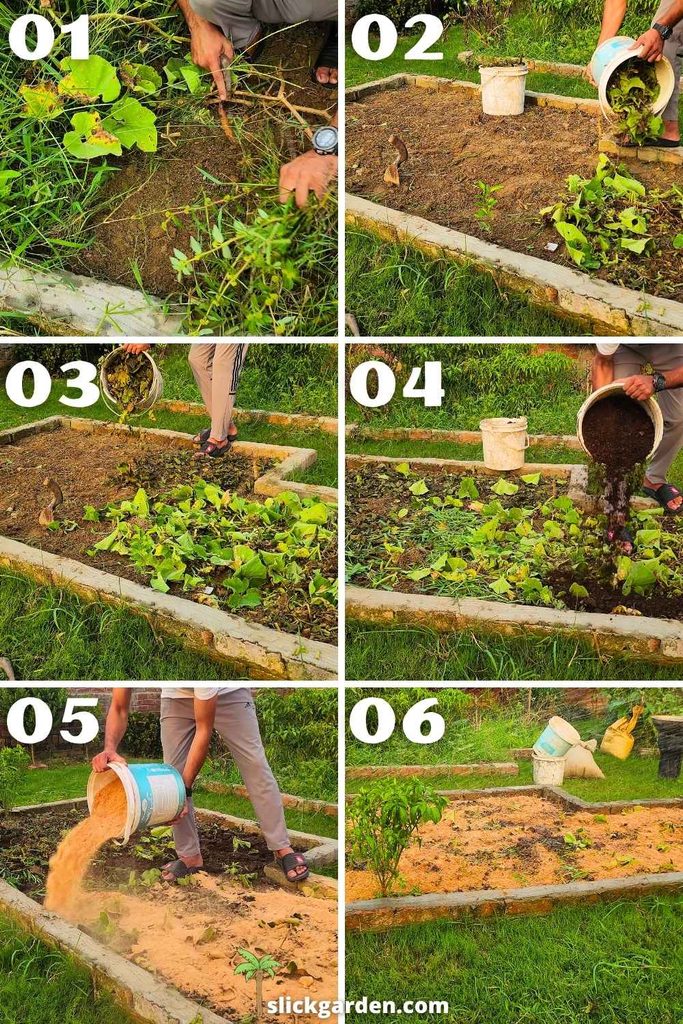
Start by Clearing the Garden Bed
Before adding anything to the soil, start with a clean garden bed.
Remove all the weeds growing in the area. Whenever possible, pull them out with their roots. Removing the roots reduces the chance of the weeds quickly growing back while you are preparing the bed.
Be careful about what you put back into the soil. Healthy plant material can be recycled, but plants that are diseased, heavily infested with insects, or carrying obvious fungal problems are better removed from the garden rather than added to your soil.
Once the weeds are gone, remove old vegetation that has finished producing. This might include old vegetable plants, leaves, stems, and other garden growth.
Don’t automatically throw this material away.
Healthy plant material contains organic matter that can eventually return to the soil. What looks like garden waste can become a useful soil amendment after decomposition.
Chop Old Plant Material Into Small Pieces
The next step is to chop the healthy vegetation into smaller pieces.
You can use pruning shears, garden scissors, a knife, or another suitable garden tool. There is no need to make every piece perfectly small. The goal is simply to reduce large leaves and stems into pieces that are easier to handle and decompose.
Why does this matter?
Smaller pieces have more surface area exposed to moisture and microorganisms. This can help decomposition happen more efficiently compared with leaving large, tough pieces lying across the soil.
Soft leaves will generally break down more quickly than thick stems, so focus especially on cutting up larger pieces of vegetation.
Once chopped, spread the material evenly across the garden bed.
This creates the first organic layer.
Use Dried Leaves From Around the Garden
Dried leaves are another excellent source of organic material.
For example, leaves collected after pruning a mulberry tree can be saved for this purpose. After drying for several days, they can be spread over the garden bed along with the chopped plant material.
You don’t need to rely on one particular type of leaf. Healthy fallen leaves from suitable trees and plants can be collected and used as part of your soil-building routine.
Leaves are valuable because they naturally contain carbon and other nutrients. As they decompose, they contribute organic matter to the soil.
You can also use the leaves from some of the weeds you removed, provided they are healthy and you are not concerned about spreading mature seeds. The important distinction is to leave the weed roots out.
You want the leaves, not a new crop of weeds.
Add the Small Amount of Compost You Have
After spreading the chopped vegetation and dried leaves, add a thin layer of mature compost.
This is where you can make the most of a limited supply.
If you only have a small amount of compost, you don’t need to use it all in one thick layer. Spread it across the organic material so that it comes into contact with as much of the surface as possible.
Mature compost contains microorganisms and partially decomposed organic matter. Adding it to the plant material can help support the decomposition process.
The compost also contributes nutrients and organic matter to the garden bed.
Think of it less as the main ingredient and more as a useful addition that helps get the process started. The bulk of the organic material is coming from the leaves and healthy garden vegetation you already have.
This is one of the biggest advantages of the method: you are not depending on a large amount of purchased compost.
Cover the Bed With Sawdust
After adding compost, cover the organic material with a thin layer of sawdust.
Sawdust can work as a carbon-rich mulch and can help cover the material underneath. A mulch layer also helps reduce direct exposure to sunlight and wind, which can cause the surface to dry out quickly.
Keeping the organic material moist is important for decomposition.
Sawdust can also help create a more protected environment on the soil surface. Over time, as organic materials break down, some of that carbon-rich material can contribute to the organic matter content of the soil.
However, there is an important point to remember.
Don’t dump a very thick layer of fresh sawdust onto the bed, especially if you plan to plant soon. Microorganisms breaking down fresh, carbon-rich sawdust can temporarily compete for available nitrogen. A thin layer is a safer approach for a bed that will be planted relatively soon.
If you have a choice, use clean sawdust from untreated wood. Avoid material contaminated with paints, finishes, oils, or other chemicals.
Water the Entire Bed
Once all the layers are in place, give the garden bed a thorough watering.
Water is one of the key ingredients needed for decomposition. The leaves and plant material should be moist enough for microorganisms to remain active.
At the same time, don’t turn the bed into a waterlogged mess.
The goal is evenly moist material with good air movement through the bed. Excessive standing water can create poor conditions for healthy decomposition.
After watering, inspect the bed over the next several days. If the weather is hot and dry and the material becomes completely dry, give it another light watering.
You don’t need to constantly soak it. Just try to prevent the organic layers from becoming completely dry.
Recent Posts
This garden bed has been growing vegetables throughout the summer, and now the soil needs some attention before we plant the next crop. We also had very heavy monsoon rain, and water stayed on the...
How We Renew Old Potting Soil Without Buying New Soil Every Season
Buying new potting soil every season can get expensive, especially when you have a lot of containers in your garden. And honestly, changing all that soil is a lot of work. You have to empty every...