
You don’t need a large garden to grow potatoes. You can grow them in containers, raised beds, or even a homemade mesh garden bed. We are growing ours in a mesh bed that we made a few months ago, and both potato plants are doing really well.
About a month ago, we planted two seed potatoes in this bed. Now the plants have grown quite a bit, and it’s time to add more soil around them. This is something we need to do as potato plants grow, especially when growing them in containers.
Let me show you what we are using and how we do it.
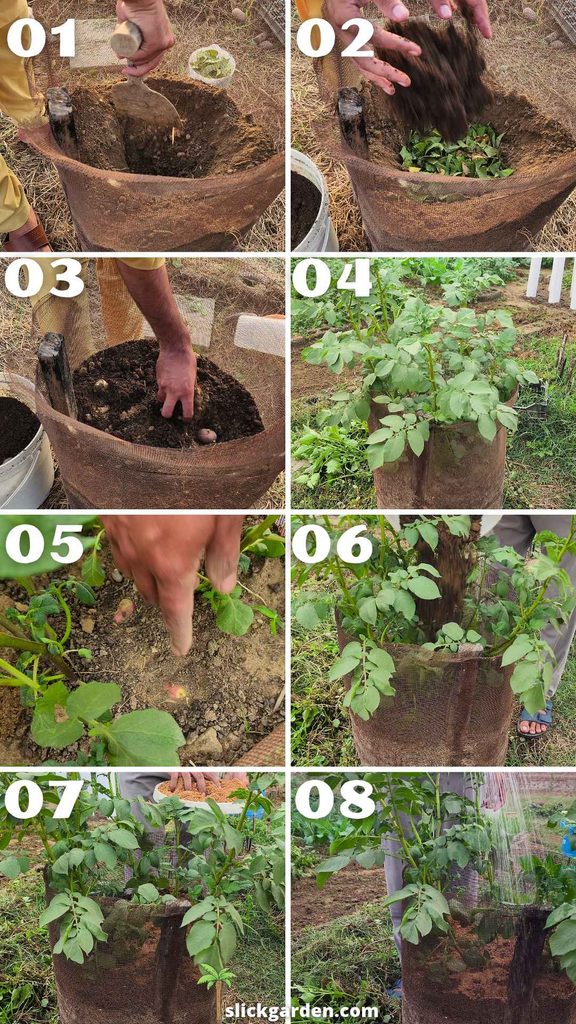
Our Homemade Mesh Garden Bed
A few months ago, we made this garden bed using mesh and a few sticks to keep it straight. It is more like a large container because it is hollow from the bottom.
We first used it to grow a tomato plant, and it did really well throughout the growing season. After the tomato crop finished, we decided to use the same bed for potatoes.
This time, we left plenty of empty space at the top. We knew we would need to add more soil as the potato plants grew, so there was no reason to fill the whole bed from the beginning.
The mesh around the bed is also helping to hold the plants upright. As they grow taller, the mesh gives them some support.
How We Prepared the Soil
Before planting, we made a large hole in the middle of the bed. We wanted to add some organic matter underneath the area where the potatoes would grow.
We had banana peels, other fruit peels, leaves, and some garden waste. We chopped everything into smaller pieces and started filling the hole.
First, we added a layer of organic matter, followed by a little compost. Then we added more organic matter and another layer of compost.
After filling the hole, we covered everything with the soil we had removed. We also added another layer of compost on top.
We buried the fresh organic matter deep in the bed because we didn’t want it touching our seed potatoes. Fresh organic matter can heat up while decomposing, so we wanted to give it some time to break down before the potato roots reached it.
After preparing the soil, we planted two seed potatoes. We made small holes, placed the potatoes inside, covered them with soil, and watered the bed.
We left the extra space at the top for adding more soil later.
Our Potato Plants After One Month
Now it has been a month since planting, and both plants are growing really well.
You can see that we still have plenty of empty space above the soil. This is exactly why we didn’t fill the bed completely when planting. We wanted to have enough room to add more soil around the plants as they grew.
Now we need to start mounding them.
Potatoes grow underground, and the developing potatoes need to stay covered. When sunlight reaches potatoes growing near the surface, they can turn green. Green potatoes may contain increased levels of natural toxins, so they should not be eaten.
Adding more soil around the lower parts of the plants helps keep the potatoes covered and protected from sunlight.
Prepare a Mixture of Garden Soil and Compost
Some people use mulch to cover their potato plants, while others simply add regular garden soil. Both methods can work, but I prefer mixing garden soil with compost.
For this, we are using 70% regular garden soil and 30% compost.
You don’t need any special equipment. Just take a bucket or any container and use it to measure both materials. For every seven buckets of garden soil, add three buckets of compost.
Mix everything properly until the compost is spread throughout the soil. Try to break up any large lumps so you have a nice, loose mixture that is easy to add around the plants.
Make sure you use well-decomposed compost. We don’t want fresh organic waste or compost that is still heating up around the potato plants.
The reason I like this mixture is that we get two benefits from it. Garden soil gives us more material to cover the lower stems, while compost adds organic matter and nutrients.
Since we are growing potatoes in a container, adding more soil also gives the plants extra room for their roots and developing potatoes.
How to Add Soil Around Potato Plants
Now our mixture is ready, and we can start adding it around the plants.
Take some of the mixture and carefully spread it around the lower stems. You don’t need to cover the whole plant. Just add enough soil to cover part of the lower growth while keeping the green leaves above the soil.
Be careful when adding the mixture. Don’t throw large amounts directly onto the leaves or damage the stems.
Also, don’t fill the entire bed at once. Add some soil now and wait for the plants to grow taller. When they have grown more, add another layer around the lower stems.
Keep repeating this process while there is enough room in your bed. This way, you can make use of all that empty space at the top.
One thing to remember is that the leaves need sunlight to grow properly. So, never bury the entire plant. Leave the upper green growth exposed and only cover the lower parts.
You can use the same method in large pots, grow bags, wooden boxes, or other deep containers. Just make sure there is enough space for the plants to grow.
Can You Use Mulch Instead?
Yes, you can also use mulch for mounding potatoes. Some gardeners use straw, dried leaves, or other suitable materials to cover the lower parts of their plants.
Mulch helps keep the soil moist and prevents direct sunlight from reaching the soil surface. But I prefer using garden soil mixed with compost because it also adds nutrients and gives us more soil to work with.
You can even use both. First add the soil and compost mixture around the plants, then put some mulch on top.
If you are using loose mulch, check it regularly. Sometimes it moves around when watering or because of wind, leaving potatoes exposed. Just make sure everything stays covered.
Keep the Soil Moist
After adding more soil, check the moisture in your bed.
Potatoes need regular water while they are growing, especially when they start producing tubers. If the soil becomes too dry, the plants can struggle to grow properly.
I usually check the soil with my fingers. If the upper layer feels dry, I give the plants some water. If it is still moist, I leave it for another day.
Don’t keep the bed too wet either. Excess water can cause problems for the roots and developing potatoes.
Our mesh bed is open from the bottom, so extra water can drain away more easily. Still, we need to check the soil regularly because containers can dry out faster than garden beds, especially during warm weather.
Keep Adding Soil as the Plants Grow
We still have plenty of empty space at the top of this mesh bed, so we will keep adding our garden soil and compost mixture as the plants grow taller.
This is one of the reasons I like this type of bed. We don’t need a very wide space to grow potatoes, and we can keep adding soil without disturbing the plants.
We planted only two seed potatoes, and both are growing well so far. Mounding will help keep the developing potatoes covered, while the compost gives the soil some extra organic matter and nutrients.
Of course, adding more soil doesn’t guarantee a bigger harvest. The number and size of potatoes also depend on the variety, sunlight, water, and how healthy the plants remain.
For now, we will keep adding more soil when needed and make sure the bed doesn’t dry out. Let’s see how many potatoes we can get from these two plants.
Related Posts

Recent Posts
How to Prepare Garden Soil for Spring Planting Using Organic Matter
One of our garden beds is completely covered with weeds and unwanted plants. We are going to clean it up and prepare it for spring planting. Since we still have a few months before the growing season...
A few months ago, back in spring, we made a simple composting system using two containers. We made holes all around one of the containers, buried it in the garden bed, and filled it with different...