
One of our garden beds is completely covered with weeds and unwanted plants. We are going to clean it up and prepare it for spring planting. Since we still have a few months before the growing season starts, this is a good time to add organic matter and improve the soil.
We don’t need expensive fertilizers or bags of compost for this job. We already have some useful materials in the garden, including dry leaves, peanut shells and rice straw. We are going to use all these things to prepare the bed and give the organic matter enough time to start decomposing before spring.
1. Clean the Garden Bed From Weeds
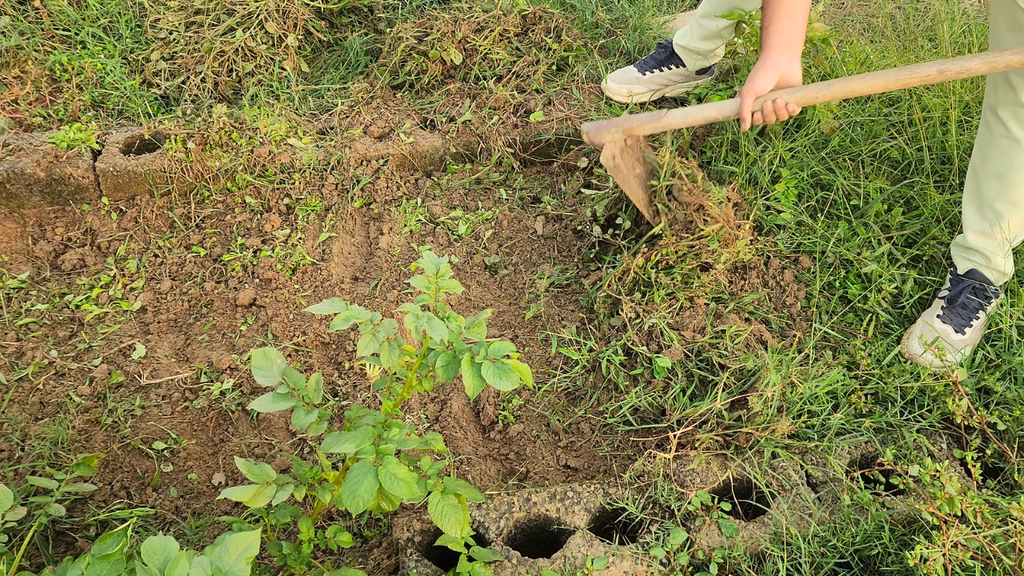
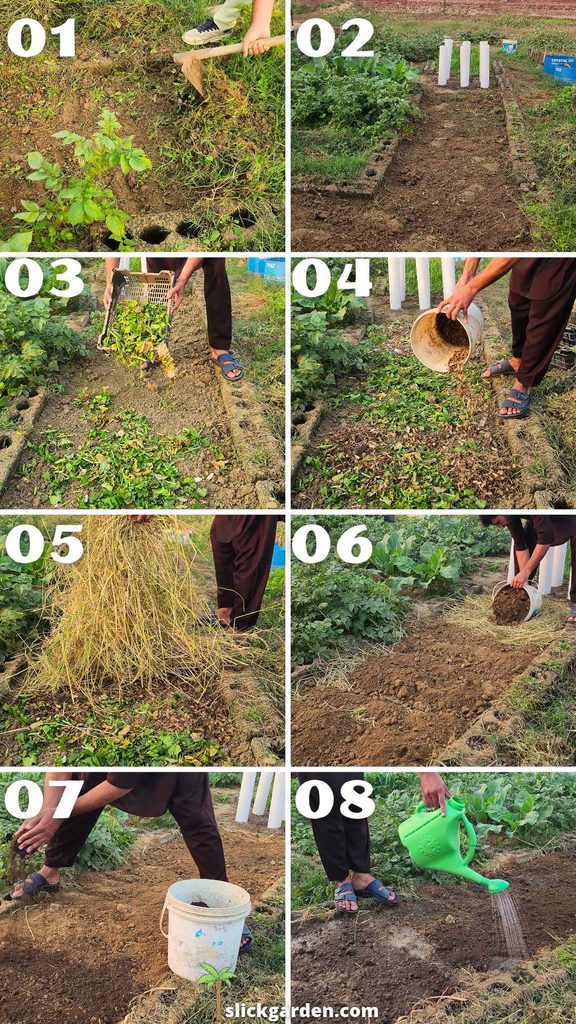
First, remove all the weeds and unwanted plants from the bed. Try to remove their roots as well because some weeds can grow back even from small pieces of roots.
If you leave these plants in the bed, you may have the same problem again when spring arrives. So, it’s better to clean everything now rather than spending time removing weeds when we should be planting vegetables.
Remove the unwanted plant material and clear the surface. If you find weeds carrying mature seeds, keep them out of the bed so you don’t introduce more weed seeds into the soil.
Once the bed is clean, we can start adding organic matter.
2. Collect Organic Materials From Your Garden
For this bed, we have collected three different materials: dry leaves, peanut shells and rice straw.
We usually have plenty of fallen leaves in the garden. Instead of throwing them away or burning them, we can use them to improve our garden soil.
Peanut shells are another useful material. They take longer to decompose, but there is no reason to waste them when we can put them to good use in the garden.
We also have some rice straw. This is another good source of organic matter, and it will slowly break down in the soil.
You don’t have to use exactly the same materials. If you have vegetable scraps, fruit peels, dried grass or other healthy plant waste, you can use those too.
Just avoid diseased plants and weeds that have already produced seeds.
The idea is to use whatever suitable organic materials are available instead of buying everything from outside.
3. Add Organic Matter Layer by Layer
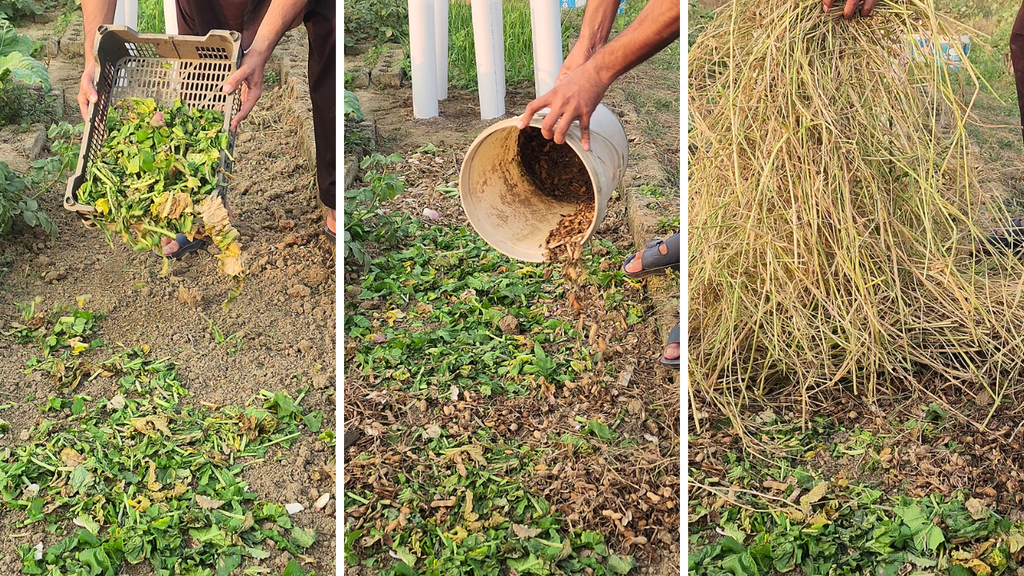
Now we can start adding everything to the garden bed.
First, spread a layer of dry leaves over the bed. Add some peanut shells on top, followed by rice straw. Keep adding these materials layer by layer until you have used everything.
You don’t need exact measurements for this. Just use whatever quantity you have and spread it across the bed.
If you have larger pieces of plant material, you can chop them into smaller pieces before adding them. Smaller pieces generally decompose faster, but it’s not necessary to spend too much time preparing everything.
You can also add other organic materials if you have them. For example, fruit peels and vegetable scraps from the kitchen can be added between the layers.
Once all the materials are spread across the bed, we can cover everything with soil.
4. Cover Everything With Garden Soil
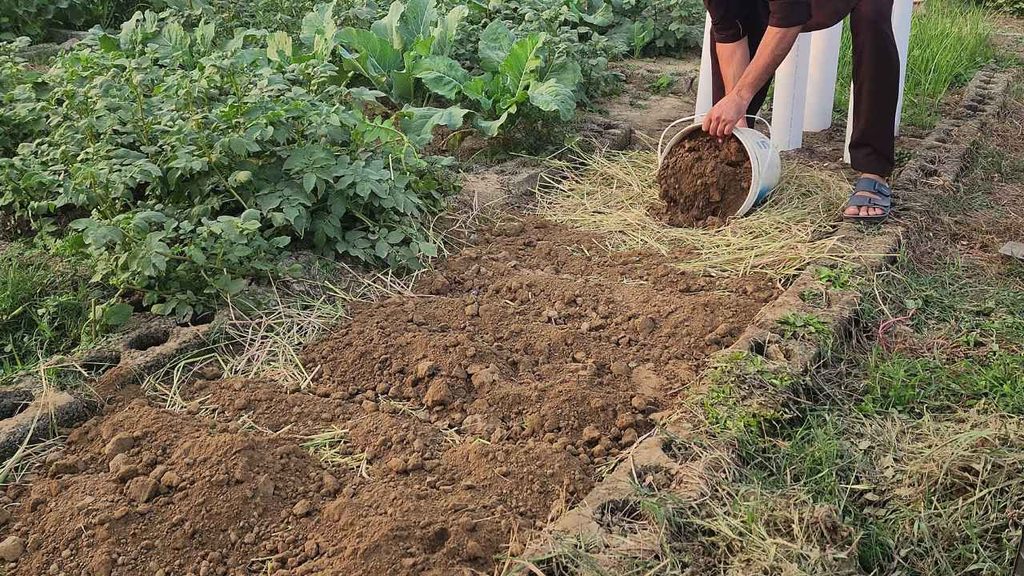
After adding the organic matter, cover it with regular garden soil. Add enough soil to bury the leaves, peanut shells and rice straw properly.
We are using the soil that is already available in our garden. There is no need to buy special soil for this job.
After covering the organic materials, add some more garden soil on top and level the entire bed.
Keeping the organic matter under the soil helps maintain moisture and brings it into contact with soil microorganisms. This will help the materials decompose over time.
The bed may look a little higher now because we have added several layers of organic matter and soil. That’s fine. As the materials break down, their volume will gradually reduce and the soil will settle.
5. Add a Little Compost to Start Decomposition
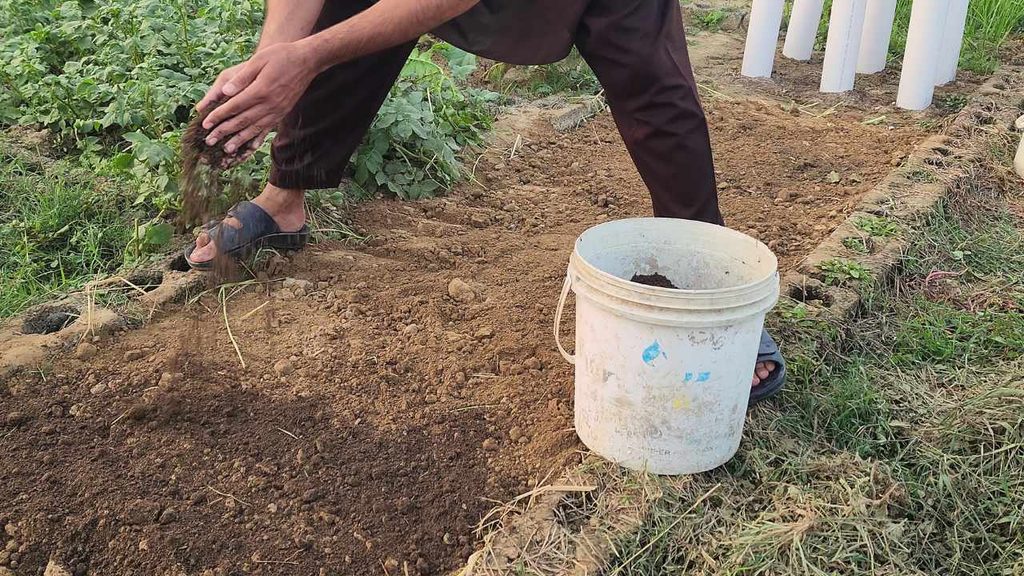
After leveling the soil, we can add some compost.
A small amount will do the job. We don’t need to fill the bed with compost because the main purpose here is to introduce decomposing microbes into the soil.
These microbes will help break down the leaves, peanut shells and rice straw we added earlier.
If you don’t have compost, you can also use fully decomposed manure or vermicompost. Even partially decomposed manure can be used, provided it has already started breaking down and is not fresh.
All these materials can help get the decomposition process started.
Just spread a little compost over the bed and mix it lightly into the upper layer of soil. That’s enough for now.
6. Give the Garden Bed Some Water
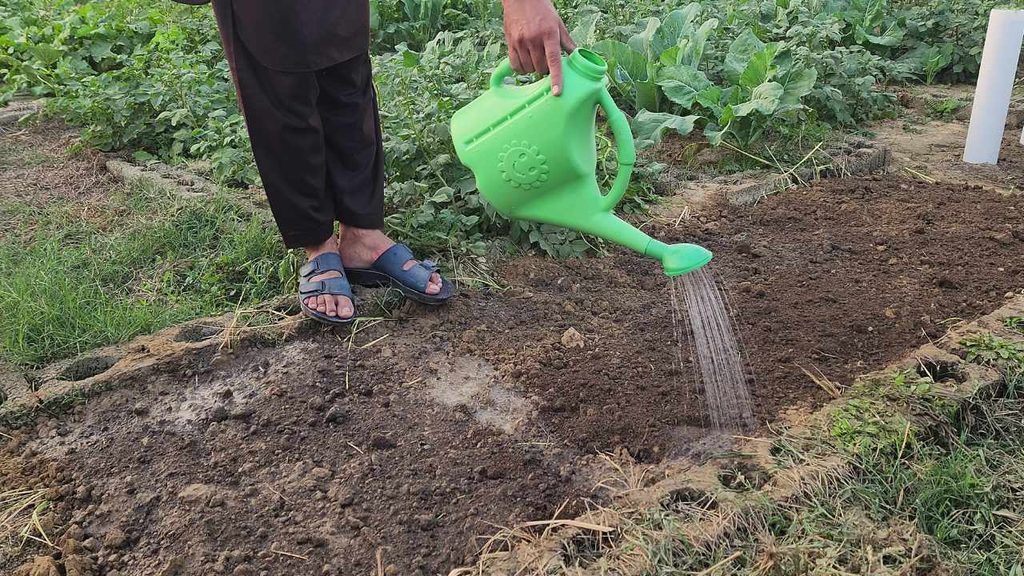
Now give the whole bed a good watering.
Make sure the water reaches the organic materials underneath the soil. We are giving water to the microbes so they can start breaking down everything we added.
Don’t let the bed become completely dry during the coming weeks. Check it occasionally, and if the soil gets too dry, give it some more water.
At the same time, don’t add so much water that the bed stays soaked. The materials need moisture, but they also need some air to decompose properly.
After watering, we can leave the bed alone for a while.
7. Leave the Bed for 4 to 6 Weeks
Now we just need to give the organic materials some time.
Leave the bed for around 4 to 6 weeks. During this period, the dry leaves will start decomposing, while peanut shells and rice straw may take a little longer.
Don’t expect everything to disappear completely. Some larger pieces may still be visible after several weeks. That’s normal.
Since it’s winter, we have enough time before spring planting. We can leave the bed undisturbed and check the moisture occasionally.
If the soil gets too dry, give it some water. Other than that, there isn’t much work to do.
When spring arrives, check the bed before planting. If the organic matter has started breaking down, the soil will be in better condition. Any larger pieces that are still decomposing can be moved away from the immediate planting spots.
We can also add a little finished compost around the planting areas if needed. This is especially useful if some of the organic materials are still breaking down.
Get Your Garden Beds Ready Before Spring
We have finished preparing this garden bed for now. Instead of waiting until spring to clean it and improve the soil, we have done the work during winter.
We used dry leaves, peanut shells, rice straw, regular garden soil and a little compost. All these materials were already available, so there was no need to spend money on expensive soil amendments.
Now we will leave the bed for the next 4 to 6 weeks and let the organic materials start decomposing. When spring arrives, we can come back, check the soil and get the bed ready for planting vegetables.
If you have an empty garden bed covered with weeds, this is a good time to prepare it too. Collect whatever organic materials you have and put them to good use before the next growing season.
Related Posts
Recent Posts
You don't need a large garden to grow potatoes. You can grow them in containers, raised beds, or even a homemade mesh garden bed. We are growing ours in a mesh bed that we made a few months ago, and...
A few months ago, back in spring, we made a simple composting system using two containers. We made holes all around one of the containers, buried it in the garden bed, and filled it with different...