
Ants climbing up fruit trees can become a frustrating problem, especially when they keep moving between the soil, trunk, branches, and leaves. In many cases, ants are not directly damaging the tree, but their presence can be a sign that other pests are around. Ants are especially attracted to aphids, scale insects, and other sap-sucking insects because these pests produce a sweet substance called honeydew.
If you want to reduce the number of ants reaching the upper parts of your fruit trees, you can make a simple physical barrier around the stem. This method uses a piece of cloth, an old plastic bottle, and some grease. These are inexpensive materials that are easy to find around the house.
The purpose is simple. Instead of trying to kill every ant in the garden, you make it difficult for them to climb from the soil to the branches.
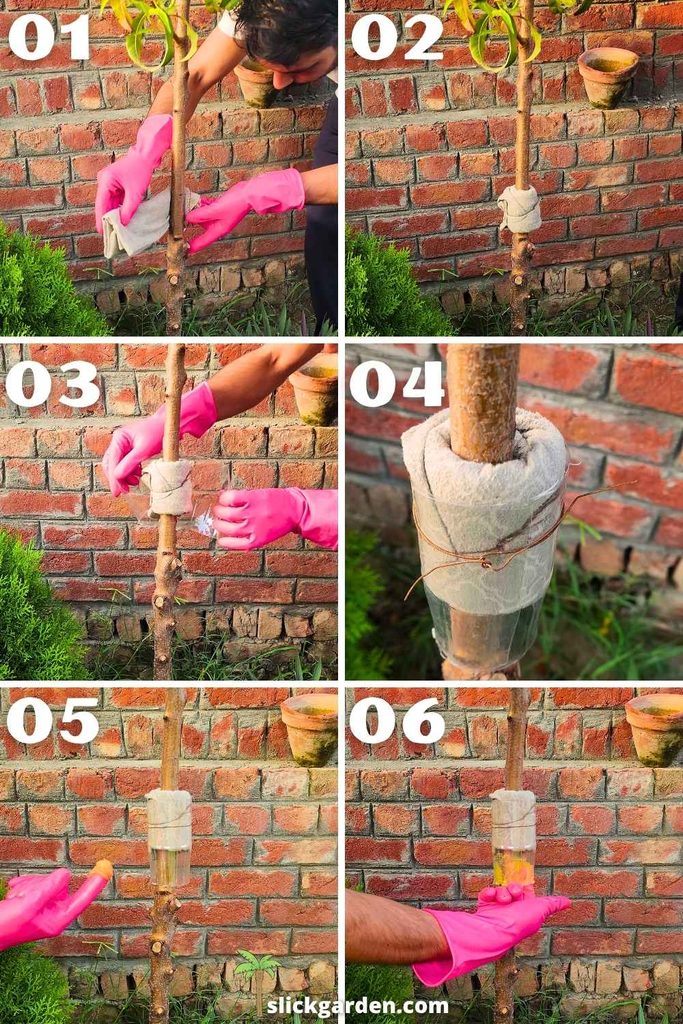
Making the Cloth Barrier
Start with a large piece of cloth. An old cotton cloth, piece of fabric, or similar material can work. Fold it several times so it becomes thick enough to wrap comfortably around the tree stem.
Wrap the folded cloth around the stem. The cloth creates a soft layer between the tree and the plastic barrier that you will add later.
Tie the cloth securely so it stays in position. It should not slide down the stem when you add the plastic bottle. At the same time, do not tie it extremely tightly. The tree will continue growing, and a tight material around the stem can eventually press into the bark.
The size of the cloth depends on the thickness of the tree. For a young fruit tree, you may only need a small piece. For an older tree with a thicker stem, use a larger piece and fold it enough to create a suitable barrier.
Check the cloth regularly, especially if you plan to leave the barrier in place for several weeks.
Adding the Plastic Bottle
Next, take an empty plastic bottle. Cut away the parts you do not need and use a section of the bottle as a protective barrier around the cloth.
Place the plastic around the cloth-covered section of the stem. Secure it with string or another suitable material so it does not fall down.
The plastic should form a smooth surface around the stem. The goal is to create a section that ants cannot easily climb across.
One important detail is to leave about one inch of empty space between the bottom edge of the plastic and the cloth. Do not fill this gap with more cloth.
This empty section gives the ants a place where they may enter, but it also creates the area where the greasy barrier will work. The exact size does not need to be perfect. You simply want enough space to apply grease and prevent the ants from finding an easy route around it.
Applying Grease to the Barrier
Once the plastic is secured, take a small amount of grease and apply it around the lower part of the plastic barrier.
The grease creates a slippery surface that makes it difficult for ants to cross. When ants climb toward the barrier, they may reach the plastic, but the greasy section prevents them from simply continuing upward.
You do not need to cover the entire bottle with grease. Apply it where the ants are most likely to cross.
This part of the method needs some maintenance. Dust, soil, leaves, and other debris can stick to the grease over time. Once enough dirt collects on the surface, ants may find a way across.
Check the barrier every few days, especially after windy weather or heavy rain. If the grease becomes covered with dirt or washes away, clean the area and apply a fresh layer.
Use enough grease to create a continuous barrier, but avoid making a large mess around the tree.
Keep the Barrier From Damaging the Tree
A homemade barrier should protect the tree without restricting its growth.
The cloth should never be tied tightly around the stem. The same applies to the string holding the plastic in place. As the tree gets thicker, a barrier that was loose at first can gradually become tight.
Check the tree regularly and adjust everything when necessary.
This is particularly important with young fruit trees because their stems can grow quickly during the growing season. If you notice the cloth pressing into the bark or the plastic becoming tight, remove it and make the barrier larger.
You should also look underneath the cloth occasionally. Moisture can collect around the stem, particularly in humid or rainy weather. Keeping the area clean and allowing the bark to stay reasonably dry can help avoid other problems.
Using Limestone Around the Tree
Another simple method is to use a small amount of limestone around the base of the tree.
Sprinkle a light amount on the soil around the stem rather than creating a thick pile directly against the trunk. You can also make a thin limestone paste and carefully apply it around the lower part of the stem.
The idea is to create another area that ants may be less willing to cross.
However, limestone should not be used excessively. Adding large amounts to the soil can raise soil pH, which can affect nutrient availability and plant growth. Different fruit trees also have different soil requirements.
For this reason, use only a small amount rather than repeatedly covering the entire root area with limestone.
The plastic and grease barrier is the main physical barrier in this method. Limestone can be treated as an additional measure rather than something that needs to be applied heavily.
Recent Posts
Garden pests can quickly become a problem, especially when they start feeding on young leaves, new shoots, and tender stems. Aphids, small beetles, mites, ants, and other insects can damage plants...
How to Prepare an Old Garden Bed Without Digging Everything Out
An old vegetable garden bed does not always need to be completely emptied and dug over before you plant again. If the bed is full of tired vegetable plants, weeds, and leftover plant material, you...